The enduring desert echo of a cinematic mirage
A California cafe's struggle illustrates the precarious nature of cultural landmarks, a pattern not alien to Asia's own iconic sites.
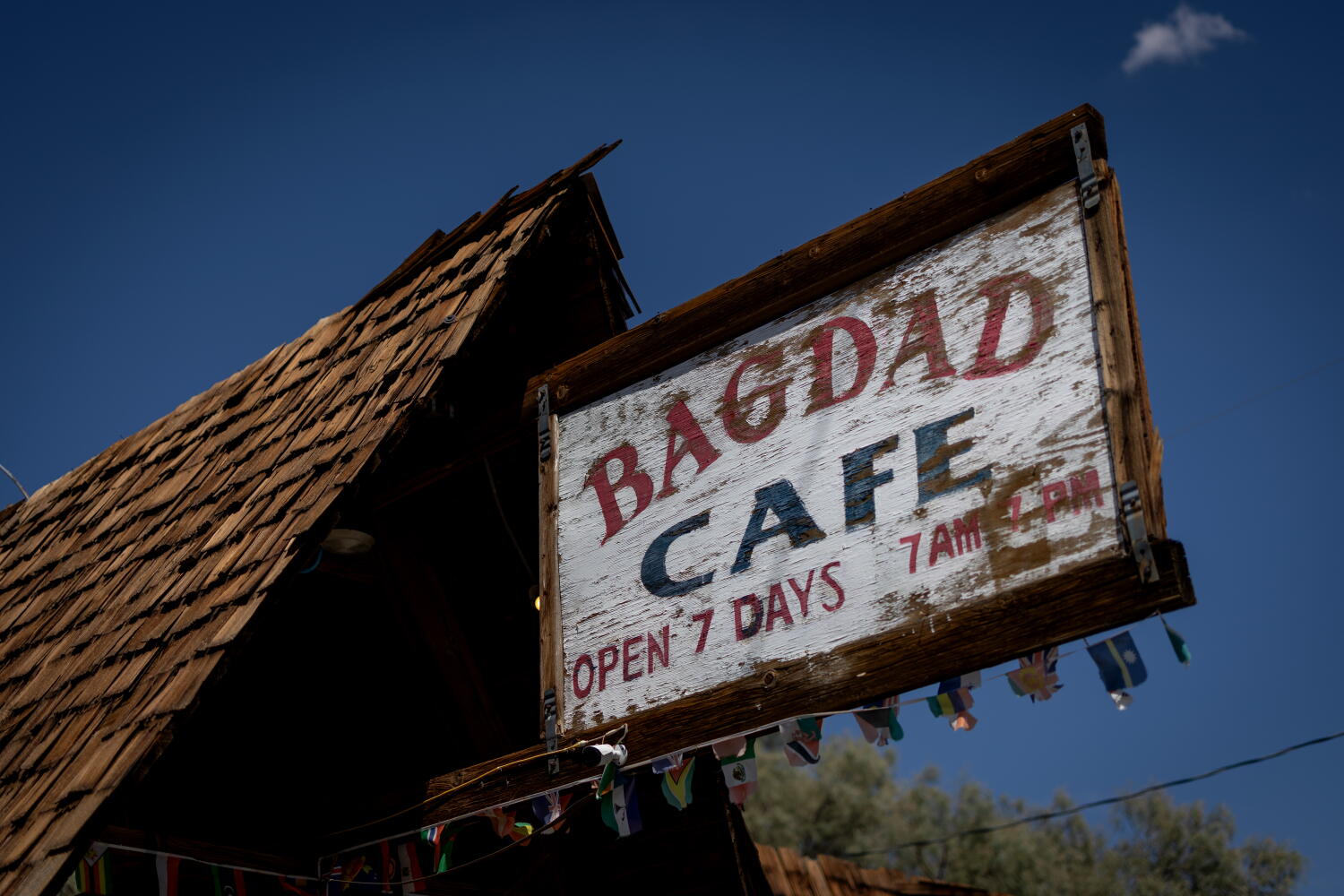
In the arid stretches of California’s Mojave Desert, a ramshackle diner in Newberry Springs has found itself at a crossroads. For four decades, the Bagdad Cafe drew international travelers, particularly from Europe and Japan, captivated by its role as the filming location for the cult hit “Bagdad Cafe.” The film, released 40 years ago, chronicled the unexpected bond between a diligent, rifle-wielding cafe owner and a German tourist arriving with a suitcase of lederhosen, a narrative that resonated far beyond its desert setting.
This specific scene, where a film's fiction becomes a destination's reality, poses a perennial question about the demands placed upon a place by those who arrive seeking a cultural echo. The cafe’s current state of limbo is a direct consequence of this dynamic, a struggle to sustain an identity born from an external artistic gaze rather than an indigenous cultural root. The phenomenon of a locale, once an organic part of its landscape, being transformed into a pilgrimage site by a piece of media is a potent force, capable of both elevating and overwhelming.
The initial wave of international tourists, arriving in busloads, transformed the cafe into an ‘icon.’ Yet, the concept of a ‘cult icon’ suggests a specific, perhaps niche, following. As the initial fervor inevitably cools, what remains is often a site burdened by expectations, yet stripped of its original utility. The challenge for such places is to evolve beyond their initial, often accidental, fame without alienating the very audience that brought them prominence. This delicate balance is rarely achieved without external support or a profound internal reinvention.
### The Fragility of Imported Fame
The Pacific Rim region, too, is dotted with places whose renown is deeply intertwined with their portrayal in film or literature, or whose existence relies on a narrative not entirely their own. Think of ancient temples or remote villages in Thailand, briefly illuminated by a travelogue or a blockbuster movie. These locations often face a similar vulnerability: how to preserve their essence when their value has been re-defined by an external lens. The risk is that the very act of seeking an authentic experience can, inadvertently, dilute or even erase it.
The Bagdad Cafe’s predicament is a reminder that the perceived timelessness of a cinematic location is often illusory. The economic realities of maintaining a business, particularly in a remote area, are stark. The film itself depicted a “lonely landscape,” a harsh environment that demands resilience. When the narrative appeal fades, or the costs of upkeep become unsustainable, the transition from ‘cult icon’ to struggling business can be swift. The California desert, an environment prone to both sudden quakes and slow erosion, mirrors this fragility. Recent seismic activity, including a 5.1-magnitude earthquake off the coast and an 8.8 magnitude event triggering tsunami waves in California, underscores the constant geological flux of the region. This natural volatility, while not directly related to the cafe’s financial state, serves as a metaphor for the unpredictability that can affect any established landmark.
Consider the contrast: 1984 saw a “second gold rush” in California, fueled by trade with the Pacific Rim. This historical context highlights periods when California has actively cultivated economic opportunities with the East, suggesting an ongoing transactional relationship. Yet, the fate of the Bagdad Cafe is not about active trade; it is about passive reception of fame, and the subsequent challenge of maintaining it.
The cafe’s struggle illustrates that the weight of an imagined past can sometimes overshadow the needs of the present, leaving a physical space to bear the burden of a popular narrative.
The cafe in Newberry Springs is not just a building in the desert; it is a repository of an international cultural memory. Its ongoing struggle is less about its isolated location and more about the universal challenge faced by places whose identity is largely dictated by external admiration. The question for such sites, whether in California or elsewhere, is how to reconcile the romanticized image with the prosaic demands of existence, and whether the journey of those who arrive truly supports what they claim to cherish.
Sources
Newsletter
Pacific Daily
A curated briefing from Thailand, Asia-Pacific and the world.