The Empty Hall and the Machine Behind the Screen
Cinemagoers in China are refusing to subsidise the commercial trial runs of synthetic cinema.
SINGAPORE
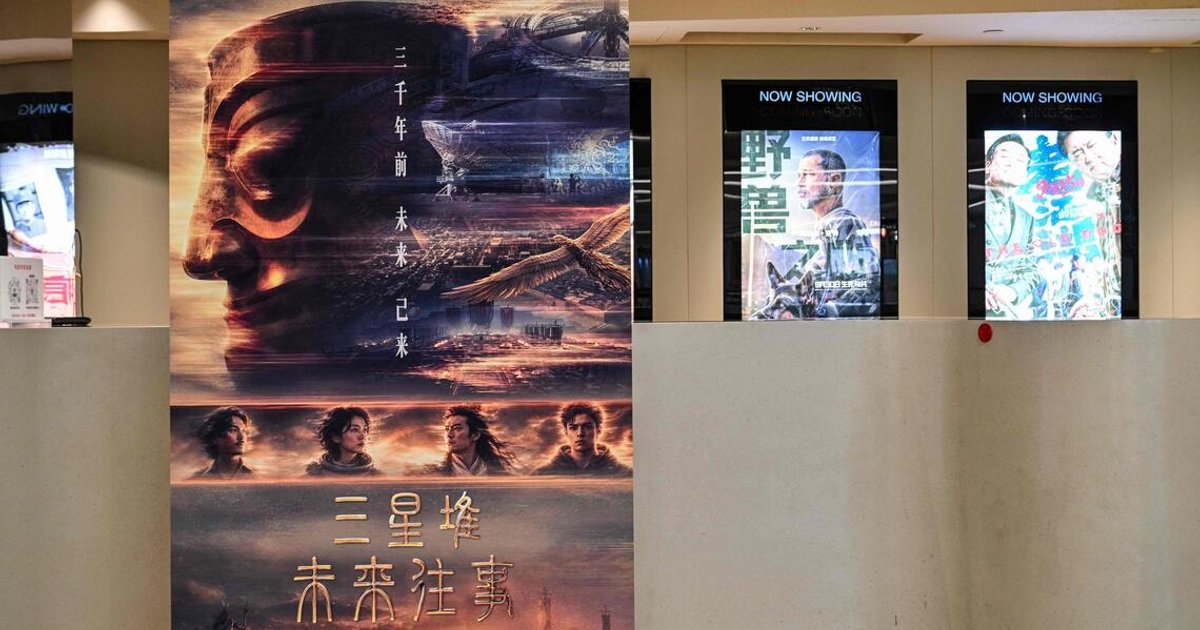
A cinema schedule is an unsparing ledger of public interest. On Oct 23, ticketing platform Maoyan logged more than 10,000 scheduled screenings across commercial halls for the science-fiction thriller Sanxingdui: Future Past. The production reached theatres carrying distinct institutional weight as China’s first fully AI-generated feature film.
Yet the auditoriums waited largely in silence. Advance sales lagged behind modest commercial benchmarks, and opening box-office takings were forecast below 150,000 yuan.
The arithmetic behind the venture exposes a conspicuous divergence between studio ambition and street-level reception. According to Bona Film Group, nearly 100 people spent more than two years and over 10 million yuan assembling the feature. Studio executive CEO Jiang Defu framed the theatrical arrival as a public trial, observing that the project was “the first to try it” and “the first to be tested by the audience.”
That public test produced an immediate verdict at the box office. Viewers and online users proved distinctly unconvinced by the proposition of paying cinema admission for machine-generated material. Algorithmic video clips circulate without cost across smartphone feeds, where transient attention is given freely between transit stops and quiet domestic routines. The communal sanctuary of the multiplex demands an entirely different social transaction. Stepping into a darkened hall asks patrons to commit focused time, collective physical presence, and hard-earned currency.
The Price of Synthetic Labor
Audiences do not gather in front of a communal screen simply to witness automated efficiency.
Cinematic appeal across Chinese theatrical spaces has long depended on intense human storytelling craft and collective emotional resonance. When a production strips away genuine human performance and the physical friction of lived artistic labour, it risks reducing narrative drama to an empty showcase of computational processing. Production houses may view algorithmic generation as a compelling mechanism to compress capital outlays and accelerate technical workflows. Spending 10 million yuan across more than two years with a crew of nearly 100 people represents a modest commitment compared to standard animation undertakings. Yet technical frugality for the investor does not create automatic perceived value for the person standing at the box-office counter. Viewers readily detect when creative risk has been outsourced to mechanical computation, and they withhold their money accordingly.
Cinemagoers understand the boundary between cultural storytelling and industrial experimentation. When Jiang Defu described the title as an effort to be tested by the audience, the phrasing described the commercial arrangement accurately, even if the reception proved chillier than expected. Commercial patrons generally resist paying standard ticket prices merely to serve as a testing cohort for emergent corporate software suites.
An Unresolved Contract
Theatrical operators from Hong Kong across the mainland are observing these commercial signals with understandable caution. Exhibition networks already contending with shifting theatrical habits cannot easily afford to dedicate prime projection slots to speculative technical experiments. By granting more than 10,000 screenings to a feature forecast to take in under 150,000 yuan, cinema proprietors absorbed the immediate cost of empty auditoriums.
Technological tools will continue to assist animation departments, visual effects teams, and post-production studios. Computational rendering has supported cinematic backgrounds and complex logistical sequences without alienating regular viewers. The rupture occurs when algorithmic generation displaces the core human effort that gives narrative its emotional weight while still demanding full admission prices.
At the box office, the unspoken contract between filmmaker and spectator remains rooted in human creative labour. Thousands of empty cinema seats on opening day deliver an unmistakable signal that novelty code cannot substitute for artistic resonance. Until computational production discovers a dramatic language that justifies the price of admission, the darkened cinema hall will remain an unforgiving space for automated images.
Sources
Newsletter
Pacific Daily
A curated briefing from Thailand, Asia-Pacific and the world.