The 'Curated' Myth: Craft Markets and Asia's Supply Chains
Vancouver's Etsy Co Fall Pop-Up, with its emphasis on Canadian-made, highlights a tension between perceived authenticity and the global logistics that underpin modern commerce. This dynamic holds implications for Thai artisans navigating regional markets.
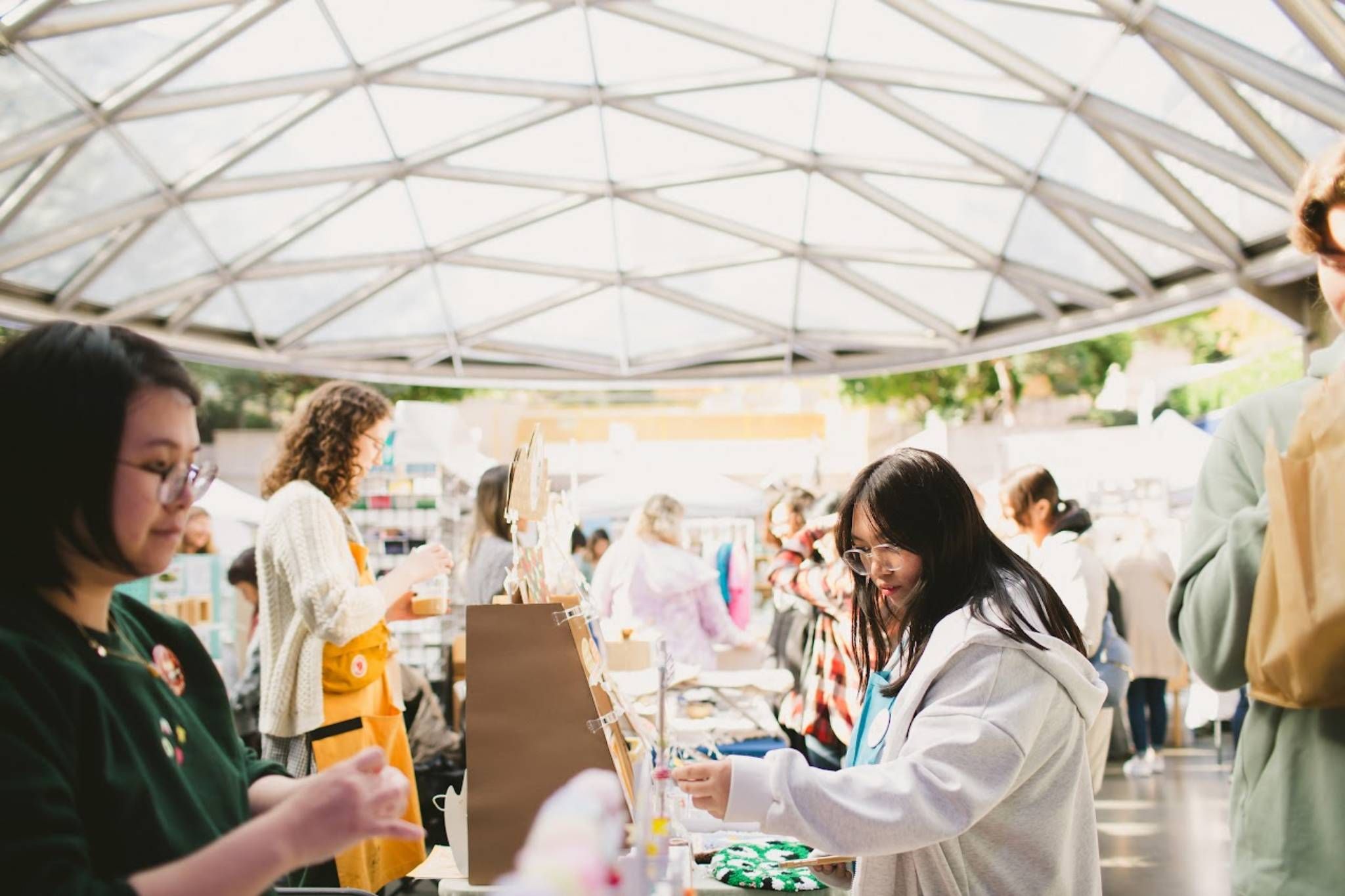
The Vancouver Etsy Co Fall Pop-Up Market, an annual event at the Robson Ice Rink, draws attention with its stated commitment to 'careful curation.' The Daily Hive Vancouver reported on September 22, 2026, that this iteration will feature over 70 artists, makers, creatives, and designers. The distinguishing factor, according to the same report, is that 'all items are designed and/or made in Canada, with nothing mass-produced or AI-generated in sight.' This framing contrasts sharply with a market landscape where, as the report notes, vendors increasingly feature 'artificially generated prints or a bunch of plastic stuff you just know was drop-shipped.'
This insistence on localized production and explicit rejection of mass-produced goods represents a powerful, if commercially narrow, proposition. For artisans, particularly those in Southeast Asia, the notion of 'local' is not always so straightforward. While the Vancouver market elevates Canadian provenance, the broader global market often prioritizes cost and volume, frequently sourced from regions like Thailand. The perceived authenticity of a 'carefully curated' market, free from the digital and logistical efficiencies of drop-shipping, comes at a cost. The consumer, in this model, is paying a premium for a clear, verifiable production narrative.
However, this clarity is not universally accessible. For Thai producers, whose goods might be considered 'mass-produced' by the Vancouver standard, the challenge lies in carving out a space for their own artisanal heritage without being categorized as undifferentiated output. The economic realities of scale production in Asia-Pacific often mean that a product designed and crafted in Thailand might still require components or raw materials from a complex international supply chain. The distinction between 'mass-produced' and 'artisanal' blurs significantly when viewed through the lens of a regional economy that often relies on these very interconnected networks.
Consider the operational complexities. Shipping firms, as Reuters reported in 2025, have begun to pull back from Hong Kong to skirt US-China risks, indicating a shifting global logistics landscape. This demonstrates that the infrastructure required to move goods globally is not static, and any commitment to localized supply carries inherent vulnerabilities. The very definition of 'crafted' or 'made' can become a contested terrain when the cost of local materials or labor drives prices beyond what a market will bear. The Vancouver model prioritizes a specific, high-value segment, but it does not resolve the tension for producers whose viability depends on accessing broader, more cost-effective supply lines. The question for many Thai craftspeople remains not merely what is grown, but what margins survive the journey through fragmented and often politically sensitive global supply chains to reach a consumer demanding 'authenticity' on a specific set of terms.
Sources
Newsletter
Pacific Daily
A curated briefing from Thailand, Asia-Pacific and the world.