The Computational Ledger
Mexico frames massive data center announcements as technological sovereign capability, but capital commitments reveal extreme asset concentration.
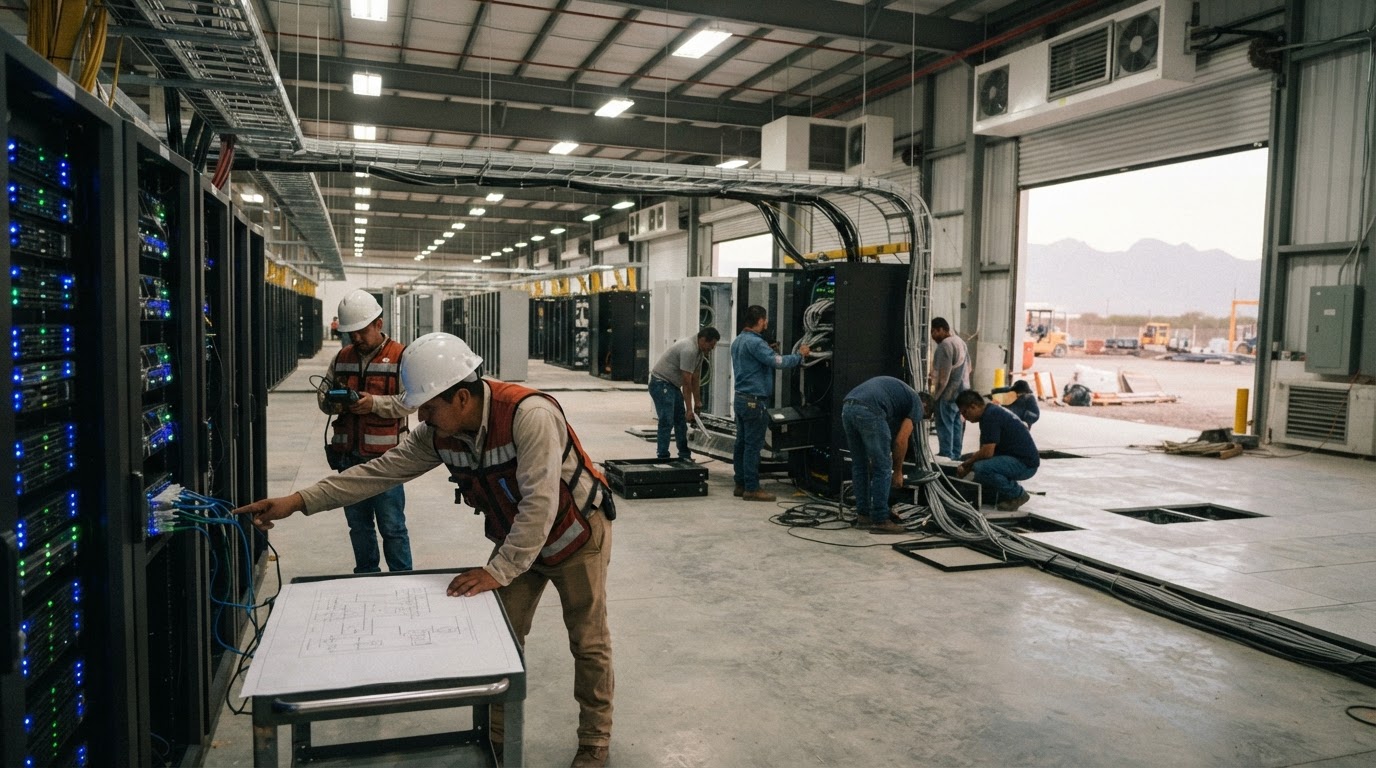
Capital commitments announced at ministerial press podiums rarely separate long-term corporate interest from disbursed funding. Economy Minister Marcelo Ebrard declared in Mexico City on Tuesday that companies have outlined plans exceeding US $8 billion for data center infrastructure, presenting the capital inflow as a pathway to domestic artificial intelligence development. The headline figure conveys rapid technological transformation. Yet the underlying investment ledger shows an asset base concentrated in a single interior corridor and dominated by two developers.
Project registries frequently compile multi-stage proposals into a singular headline sum. Of the aggregate exceeding US $8 billion cited by Ebrard, the primary commitments rest with two entities. Cloud HQ, an operator based in the United States, accounts for an estimated $4.8 billion across six data centers and complementary infrastructure on a single site in Querétaro. Mexican firm KIO has separately announced it would invest up to $1.3 billion to develop a new data center facility in the same state. Together, these two filings represent the dominant share of the entire national pipeline, leaving only a minor fraction spread across the rest of the country.
Balance Sheet Realities
Geographic concentration alters the economic premise of national infrastructure programs. Trade officials routinely argue that hosting physical facilities automatically distributes technological capability across domestic industries. Yet Querétaro absorbs almost all the capital identified in these flagship filings, while industrial centres like Guanajuato and Nuevo León remain peripheral to this specific computational pool. When critical digital infrastructure clusters so narrowly, the spillover benefits to broader regional manufacturing ecosystems remain distinctly uneven.
Physical server campuses do not distribute software enterprise by their mere presence. A $4.8 billion campus consisting of six facilities establishes an enormous physical footprint and draws heavily on regional power networks, but it does not equate to diffused computational access for local enterprise. Cloud HQ holds its development outline under active planning, meaning capital transfers remain contingent on multi-year execution milestones rather than immediate liquidity transfers. The host country provides land permits and grid access upfront, while the developer deploys capital in incremental tranches determined by corporate demand cycles.
I think we're going to continue encouraging [data centers'] installation and operation in our country, because they will allow Mexico to strengthen its technological capabilities and its participation in the development of AI.
Structural Limitations
The ministry infers that physical real estate hosting translates directly into sovereign artificial intelligence capability. This analytical leap ignores how multinational cloud operators allocate compute. Overseas operators deploy high-density server halls near regional nodes to serve corporate tenants and cross-border data routing, not to grant discounted computing power to domestic research institutions or local firms. While Ebrard asserts that these installations will allow Mexico to strengthen its technological capabilities, foreign cloud operators retain proprietary ownership over the physical hardware and the algorithmic models operating inside their perimeters. The economic value generated by high-value intellectual property flows back to corporate headquarters, leaving host jurisdictions with utility consumption and baseline property assessments.
Such dynamics reflect a familiar corporate accounting pattern across international trade. Capital expenditure pledges are recorded at peak valuation during public announcements, securing administrative support while leaving deployment timelines entirely flexible. If corporate strategy shifts or grid interconnections stall, those billions can be trimmed or deferred without public administrative sanction. The state pledges utility access and civic infrastructure upfront; the enterprise retains full discretion over capital timing and final facility scale.
The structural tension sits in this operational disconnect. Server warehouses deliver substantial real estate valuations during their construction phases, but their ongoing operational lifecycle employs relatively few specialized engineers. Unless these capital pledges materialize into accessible digital infrastructure that Mexican firms can utilize, the $8 billion pipeline remains an exercise in promotional real estate valuation rather than a genuine expansion of domestic computational capacity. Host economies that mistake heavy server concrete for national technological autonomy risk underwriting the infrastructure costs of foreign digital platforms without capturing the computational gains.
Sources
Newsletter
Pacific Daily
A curated briefing from Thailand, Asia-Pacific and the world.