The Century-Old Listening Cafe and the Survival of Shared Cultural Space
A documentary documenting Japan's ongaku kissa highlights how early twentieth-century media infrastructure survives in an era of private consumption
SINGAPORE
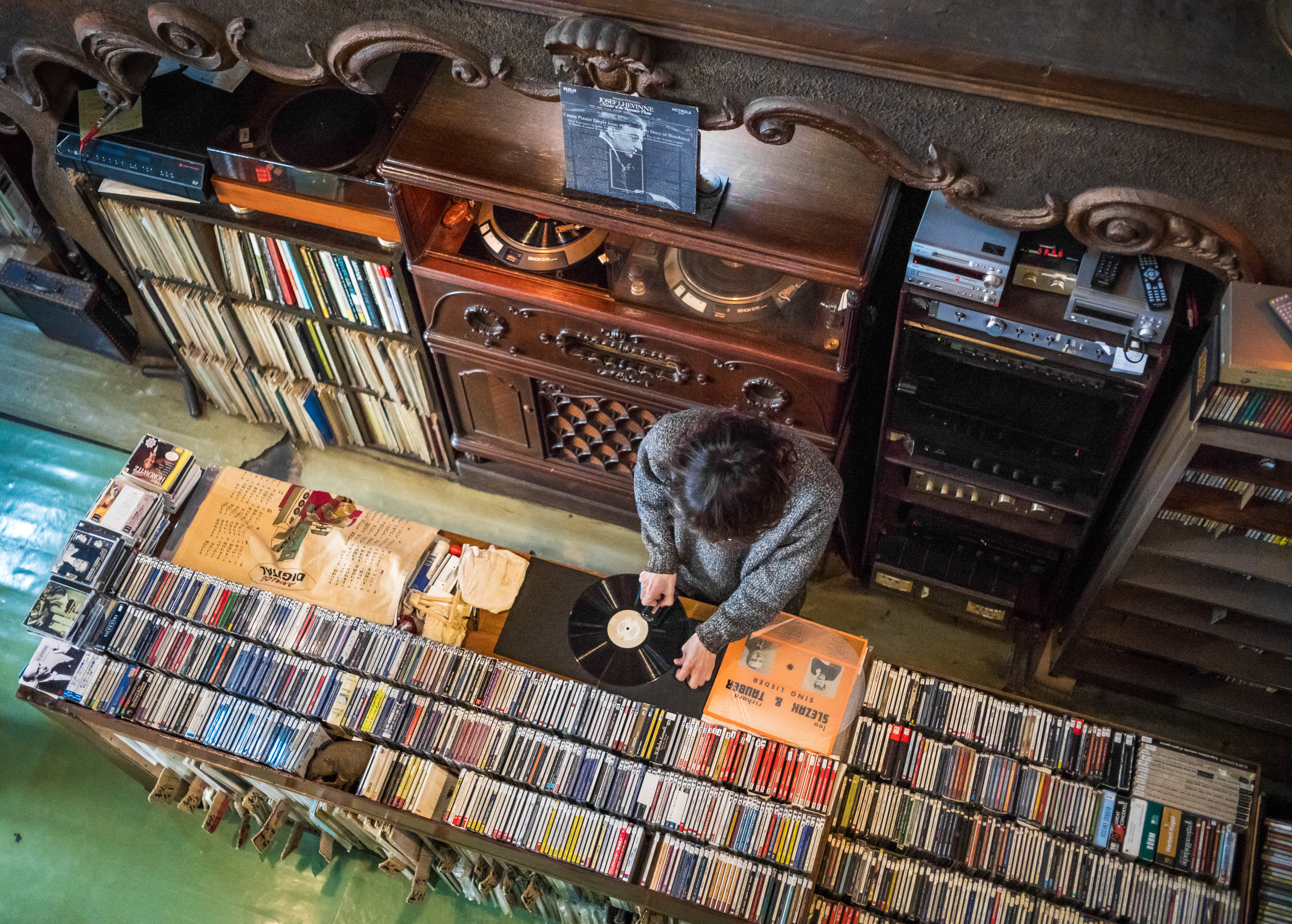
Japan's listening cafes, known as ongaku kissa, were established not as retreats from urban density, but as collective infrastructure for scarce imported culture. Originating in the 1920s, these dedicated spaces allowed patrons who could not afford expensive phonograph recordings or high-end playback equipment to gather and listen in shared silence. Over a century later, New Zealand-born filmmaker Nick Dwyer, who relocated to Tokyo in 2014, has documented this domestic phenomenon, tracing its arc across one hundred years of social change. The historical trajectory of the institution illustrates how public media consumption alters when private convenience replaces communal necessity.
At their inception, listening cafes solved an access barrier. Sound reproduction was capital-intensive, fragile, and largely out of reach for ordinary households across East Asia. The solution urban spaces devised was collective ownership: a proprietor installed custom-built sound systems, curated physical libraries of recordings, and established formal behavioural norms that prioritised acoustic fidelity over casual conversation. As consumer audio equipment proliferated in post-war decades, followed by digital transmission, the functional purpose of the ongaku kissa shifted. Spaces designed to provide basic acoustic access gradually transformed into venues preserving physical media, specialised audio architecture, and memorabilia from bygone eras.
The Architecture of Shared Attention
What sustained these establishments through shifts in consumer technology was an unwritten contract between proprietors and loyal regulars. Unlike conventional commercial hospitality, which encourages turnover and continuous expenditure, listening cafes institutionalised patience. Patrons paid for tea or coffee while listening to complete album sides, anchoring social interaction around undivided attention rather than background diversion.
That dynamic presents an instructive contrast for urban centres across the Asia-Pacific grappling with commercial gentrification and digitised leisure. Metropolitan planning throughout the region frequently equates cultural space with institutional galleries, civic performance halls, or branded retail zones. Small, vernacular communal venues sustained by private operators receive little formal protection. When commercial rents escalate or an ageing proprietor retires, these micro-institutions disappear, taking with them physical archives and communal memory that large public institutions rarely preserve.
Defenders of free-market retail argue that spaces unable to support commercial lease rates naturally yield to higher-margin tenants, and that personal streaming has liberated individuals from geographic dependence. In this view, preserving specialised audio cafes represents private sentimentality rather than urban policy. Yet this perspective discounts the social capital generated by physical venues that mandate shared attention. When individual convenience becomes absolute, cities lose intermediate public spaces where disparate generations gather without direct transactional interaction.
Unresolved Generational Handover
Preservation efforts, including documentary records, face an obvious limitation: archiving an institution is not the same as sustaining its daily operational viability. An audio sanctuary depends on physical real estate, specialised maintenance of analogue apparatus, and an incoming cohort willing to abide by communal norms rather than digital immediacy.
Whether the ongaku kissa survives another century does not depend on international appreciation or cinematic tribute. The decisive factor remains whether metropolitan economies leave sufficient physical space for activities that generate culture rather than extract rent. As Asian cities continue to redevelop inner-city districts for high-density commerce, the remaining margin for collective, slow-paced public infrastructure remains fundamentally contested.
Sources
Newsletter
Pacific Daily
A curated briefing from Thailand, Asia-Pacific and the world.