The California Burrito: A Lesson in Culinary Logistics for Asia
Its simple construction belies complex supply chain considerations that challenge broader adoption, particularly in Southeast Asia.
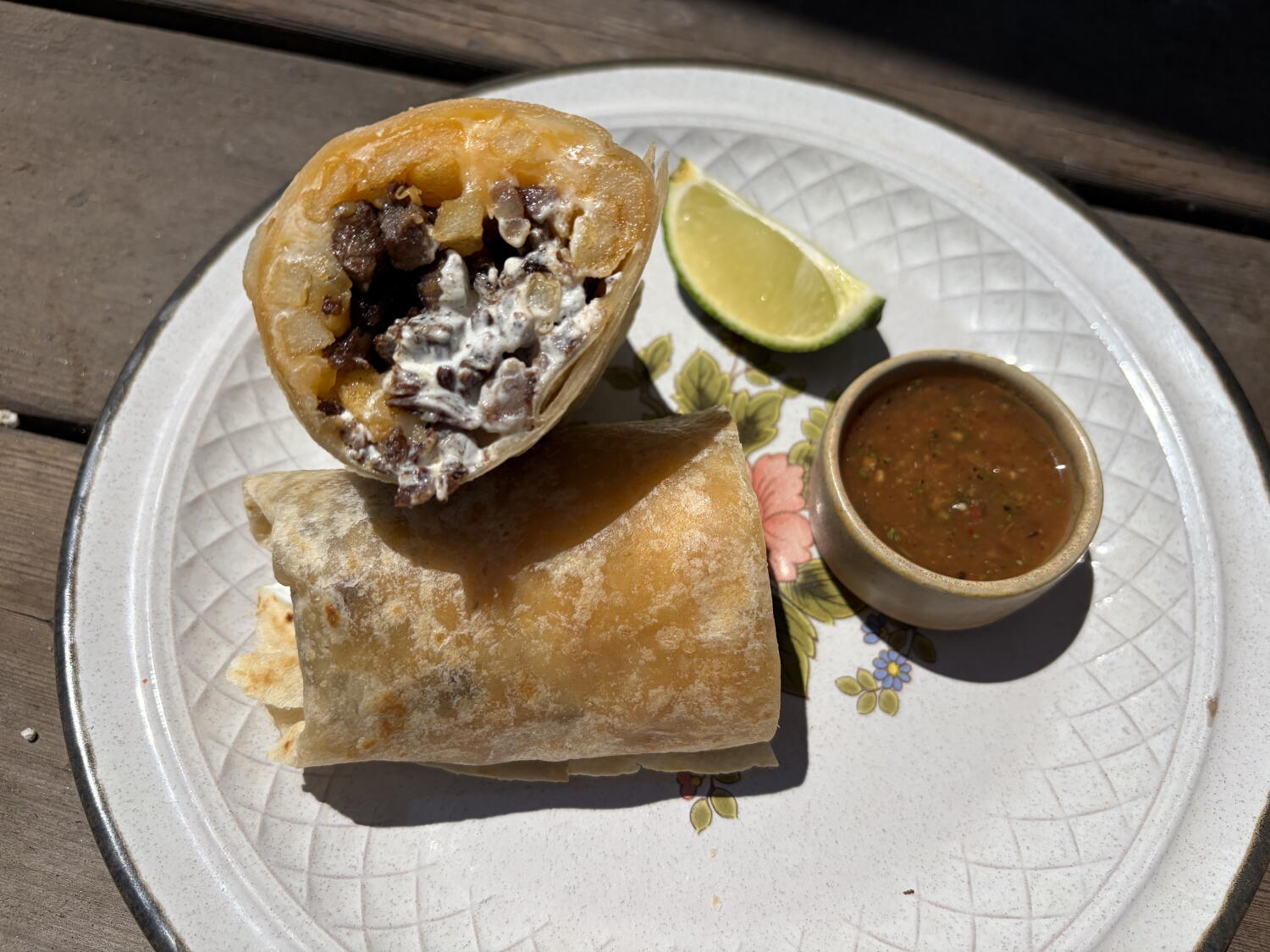
The California burrito, as defined by the Los Angeles Times Food, is a precise assembly: carne asada, cheese, sour cream, and French fries, all contained within a flour tortilla. This specific combination, particularly its reliance on a "burrito-sized (12- to 14-inch) flour tortilla" and the assertion that "the tortillas should be made with lard," presents a significant challenge to its widespread adoption in the Asia-Pacific region.
The initial claim is that this dish is fundamentally straightforward. However, the ingredients list itself highlights a critical logistical hurdle for a market like Thailand. The availability of high-quality, large format flour tortillas, ideally lard-based, is not a given. The Los Angeles Times Food specifically recommends tortillas from La Princesita, La Azteca, or La Gloria for their ideal size and composition in California, suggesting a specific, established local supply chain for this core component. While some might suggest alternatives like those from Sonoratown or Mejorada "in a pinch," these are explicitly deemed "a bit too small to achieve the full experience." This indicates a non-negotiable standard for the primary wrapper.
Furthermore, the core protein, carne asada, requires specific cuts and preparation of beef, which, while certainly available in parts of Asia, would necessitate a consistent supply of suitable quality. The inclusion of French fries and specific dairy products like sour cream and cheese also points to ingredients whose provenance and consistency can vary significantly across different markets. For a culinary critic, the "margin that survives the plate" is not merely financial but also includes the integrity of the ingredients throughout the supply chain. Importing these specialized ingredients could inflate costs to a point where the dish becomes inaccessible or non-competitive.
The counterargument might propose that local adaptations could overcome these supply issues. A claim could be made that local producers could replicate the tortillas, or that alternative protein and dairy sources could be substituted. However, the precise definition of the California burrito leaves little room for such flexibility without altering the fundamental character of the dish. To replace lard-based tortillas with vegetable shortening alternatives, or to use different beef cuts, would be to create a different product entirely. The distinctiveness, and thus the appeal, of the California burrito lies in its specific, unyielding ingredient profile.
The primary limitation for markets like Thailand, then, is not culinary technique itself—local chefs are adept at many forms of fusion and precise preparation—but the underlying agricultural and manufacturing infrastructure for these specific components. The required scale for "fantastic, burrito-sized (12- to 14-inch) flour tortillas" made with lard is not present locally, nor is the consistent supply of specific beef preparations and dairy products. Until a robust, localized supply chain for these exact ingredients can be established, the California burrito will likely remain a niche offering, dependent on costly imports, or exist only in a form that deviates significantly from its precise definition. The challenge remains one of sourcing and cost, rather than mere recipe execution.
Sources
Newsletter
Pacific Daily
A curated briefing from Thailand, Asia-Pacific and the world.