The Calculus of Cross-Strait Deterrence in the Age of Artificial Intelligence
Mike Gallagher links Beijing's territorial ambitions directly to computational dominance, but technological fragility complicates military coercion more than it enables it.
SINGAPORE
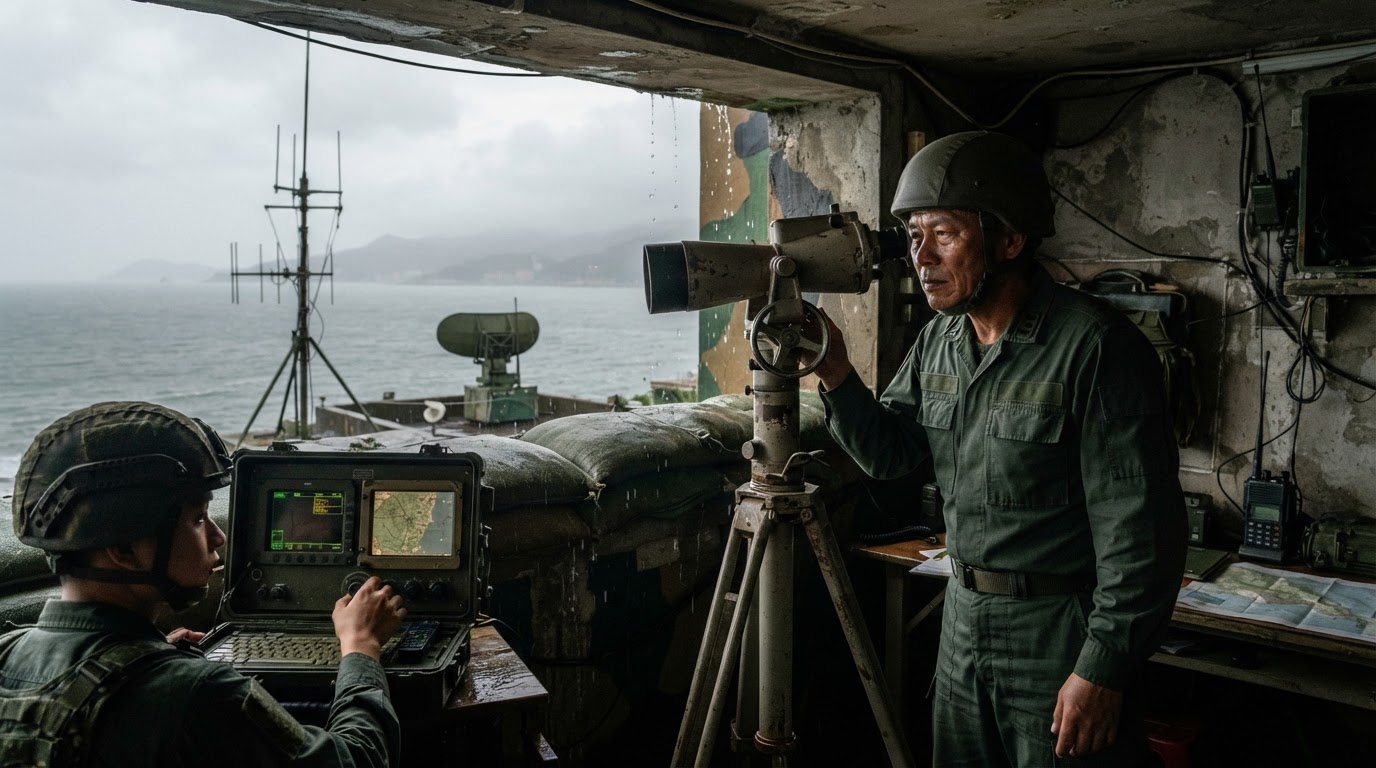
Cross-strait deterrence has historically rested on physical geography, maritime friction, and the credible threat of retaliatory economic disruption. That strategic baseline is now being reinterpreted through the prism of computational supremacy. Palantir Technologies Inc’s head of defense Mike Gallagher warned that advances in artificial intelligence capabilities have made it more compelling for Chinese President Xi Jinping to seize control of Taiwan. Gallagher, a former Republican member of the US Congress who led a committee focused on US strategic competition with China, argued that Taiwan’s importance to artificial intelligence development has grown to the point where Beijing might act on its territorial designs. The assertion repositions Taiwan from a long-standing sovereignty dispute into the primary operational choke point of the international technology sector, suggesting that the contest between the US and China alters Beijing's threshold for acceptable military risk.
Yet military capability does not automatically track technological anxiety. Strategic planners examining the Taiwan Strait must separate commercial software perspectives from the material realities of amphibious warfare. The decisive factors governing cross-strait conflict remain stubbornly physical: transport shipping capacity, missile stockpiles, staging logistics, and the extreme difficulty of moving forces across one hundred miles of contested water. None of these operational constraints disappear simply because algorithmic models require more advanced silicon.
Hardware Fragility and Strategic Restraint
Attributing an increased invasion risk to artificial intelligence presumes that physical capture yields functional technical dominance. This reasoning overlooks the acute vulnerability of advanced semiconductor manufacturing. Modern fabrication facilities are among the most intricate industrial environments ever built, relying on ultra-pure chemical supplies, continuous municipal power, imported lithography systems, and highly specialized domestic engineers. An armed assault would shatter this delicate apparatus. If Beijing launched an invasion, the physical installations powering global computing would almost certainly be disabled, sabotaged, or starved of critical components long before an occupying administration could repurpose them for domestic applications.
Physical control over territory does not secure the functional inheritance of a fragile technological ecosystem.
There is, however, a credible counterargument that warrants examination. Proponents of the Palantir assessment argue that Beijing's incentive does not rely on capturing intact fabrication plants. Instead, the pressure stems from the prospect of being permanently locked out of frontier computing. Under this formulation, if American-aligned networks establish an insurmountable lead in algorithmic architecture and advanced computing power, the conventional military balance across East Asia tilts irreversibly against China. Denying those capabilities to rivals through cross-strait disruption could appear preferable to Beijing than accepting permanent technological subordination, even if an assault guarantees enormous economic destruction.
Regional Repercussions and Non-Alignment
This conceptual shift carries substantial weight across the broader Asia-Pacific region. As Washington reassures Southeast Asia of defense commitments and pledges stronger security cooperation, regional governments observe an American strategic apparatus increasingly viewing classical geography through the lens of semiconductor supremacy. Southeast Asian capitals have spent decades cultivating trade ties with Beijing while maintaining practical security cooperation with Washington. If cross-strait stability is redefined as a zero-sum contest over artificial intelligence supremacy, the neutral diplomatic ground that regional states inhabit begins to erode.
Escalation scenarios framed around algorithmic competition obscure the reality that domestic industrial self-reliance remains China's actual response to technological isolation. Beijing continues to channel capital into indigenous research and development because cross-strait military adventure provides no viable shortcut to technological dominance. The unresolved tension across the Taiwan Strait does not stem from a newly discovered computational urgency, but from an enduring structural impasse where neither technological momentum nor conventional military power offers a guaranteed path to decisive strategic advantage.
Sources
Newsletter
Pacific Daily
A curated briefing from Thailand, Asia-Pacific and the world.