Taipei's Inclusivity Claim Tested by Police Conduct
A police raid on a gay bar and the subsequent mayoral apology highlight the gap between stated policy and practical implementation in Taiwan.
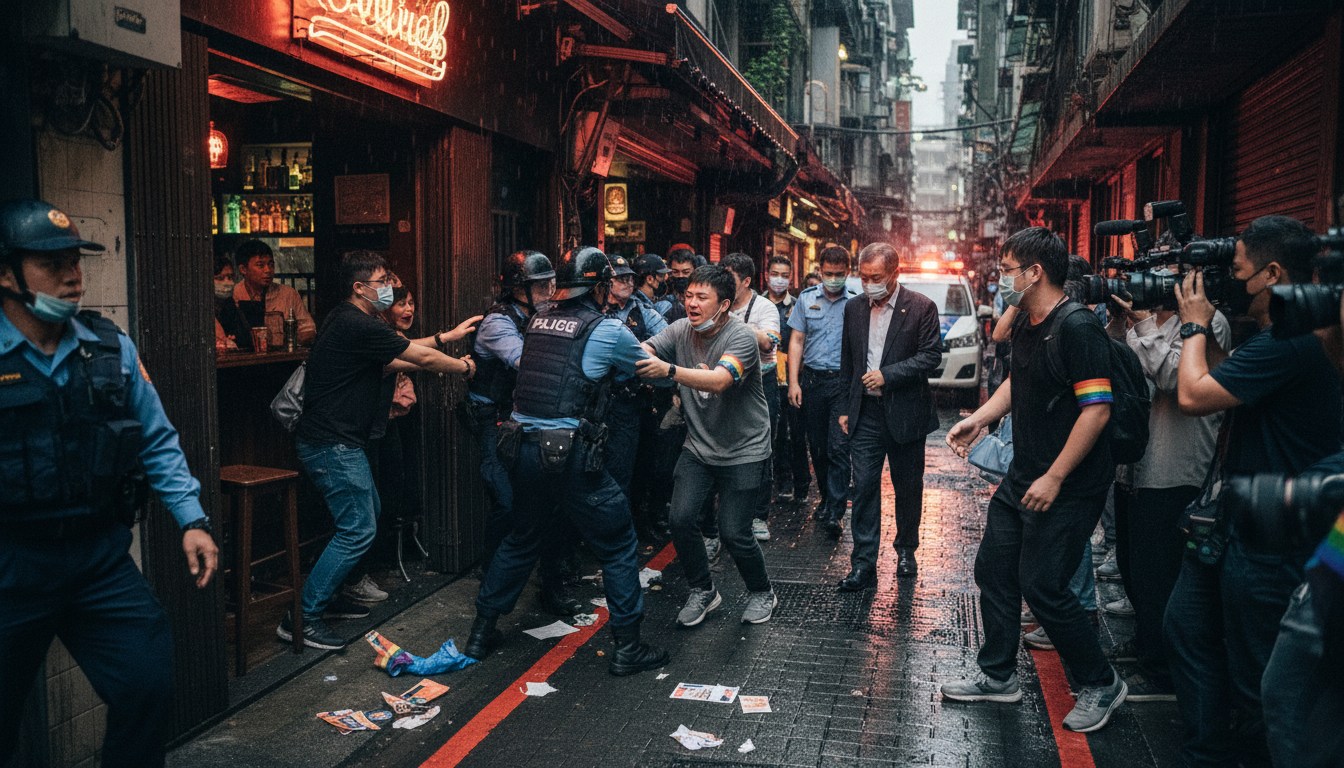
TAIPEI
Taipei Mayor Chiang Wan-an, facing re-election next month, yesterday defended the city's welcoming posture after a police raid on a gay bar sparked protests by the LGBTQ community. The mayor characterized Taiwan as diverse, inclusive, and gay-friendly, apologizing to those affected by the incident. This statement followed public outcry over alleged discrimination and official misconduct during the law enforcement action.
Evidence of the incident included a video circulated on social media, depicting a police officer questioning a customer in a wheelchair, who was in a toilet, about how disabled people “manage to have sex in there.” Such details raise immediate questions about the training and oversight of police personnel, particularly in contexts involving marginalized communities.
Chiang’s response included a commitment to thoroughly review any misconduct during law enforcement and strengthen police discipline. While an apology and a promise of review are standard political responses, the core issue lies in the operational reality that permitted such an interaction to occur. The disparity between Taipei’s stated inclusive values and the reported conduct of its law enforcement exposes a gap in policy implementation.
Taiwan has positioned itself as a leader in LGBTQ rights within Asia, having legalized same-sex marriage. This high-level policy achievement, however, does not automatically translate into consistent, respectful enforcement at the street level. The incident suggests that formal legal frameworks must be accompanied by comprehensive training and accountability mechanisms to ensure their practical application reflects legislative intent.
The mayor's re-election campaign introduces a political dimension to his response, potentially influencing the speed and depth of the promised review. Yet, the broader implication extends beyond local politics. For a region where LGBTQ rights vary significantly, incidents like this in Taiwan, a perceived progressive outlier, serve as a reminder that the path from legal recognition to societal acceptance and equitable treatment remains complex and subject to operational challenges. The unresolved tension lies in how quickly and effectively the city can translate mayoral rhetoric into tangible changes in police conduct and public trust.
Sources
Newsletter
Pacific Daily
A curated briefing from Thailand, Asia-Pacific and the world.