State-Curated Creativity and the Limits of Singaporean Holiday Leisure
Institutional arts programming channels youth leisure toward structured cultural capital, revealing an ongoing friction between regimented instruction and unscripted exploration.
SINGAPORE
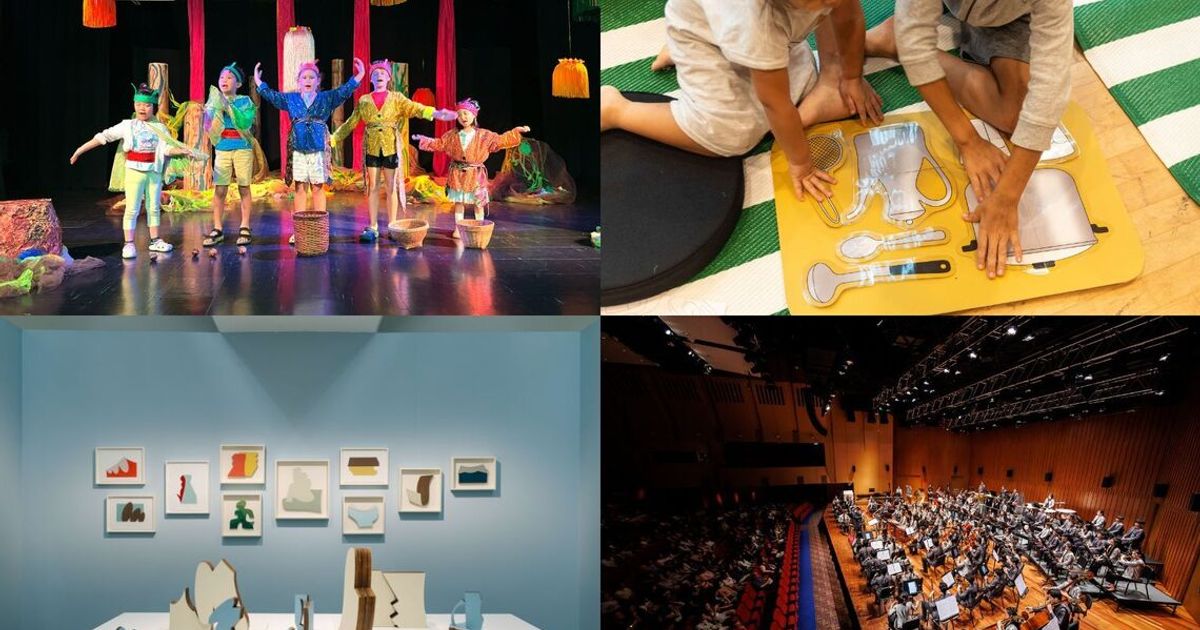
State policy in Singapore has long operated on the premise that cultural sensibility can be planned, measured, and systematically installed. When school holiday calendars open, domestic administrative platforms move swiftly to organise discretionary hours into structured developmental exercises. Publicly coordinated aggregators such as Catch.sg channel household leisure toward vetted cultural encounters, spanning the Singapore National Youth Chinese Orchestra to workshops at STPI and ACT 3 Drama Academy, alongside commercial activities involving Lego and kitchen pursuits. This programmatic mobilisation treats children's holiday recreation not as an idle interval, but as an operational arena for capability development.
Historically, modern Singapore's cultural apparatus sought to cultivate a disciplined, multilingual cohort capable of balancing rigorous technical training with state-sanctioned heritage appreciation. School holidays represent an institutional risk of unstructured idleness that policy planners prefer to counter through organised engagement. Extracurricular arts exposure functions as an informal instrument of statecraft, familiarising successive age brackets with technical precision and collective synchrony. Directing families toward the Singapore National Youth Chinese Orchestra preserves traditional Chinese performance genres by securing youthful audiences early, thereby insulating institutional art forms against demographic drift and global digital distraction.
The Codification of Leisure
Administrative efficiency in arts delivery produces an inherent structural contradiction. Unscripted creative exploration requires unsupervised experimentation, latency, and the freedom to stumble without assessment. Programmed institutional itineraries enforce defined learning targets, adult supervision, and predetermined deliverables instead. When aesthetic participation is routed exclusively through formal academies and monitored spaces, leisure ceases to be an open-ended inquiry and becomes an auxiliary branch of preparatory schooling.
Commercial providers integrate smoothly into this regulatory logic. By embedding proprietary formats like Lego into public leisure recommendations, the state apparatus effectively normalises commercial leisure products as educational inputs. Parents navigating these offerings find recreation increasingly governed by institutional timetables, fees, and pre-packaged syllabi rather than unscripted community play. Children receive sophisticated sensory and narrative inputs, yet their agency remains bounded by frameworks designed by state cultural custodians and corporate copyright owners.
Unresolved Constraints on Creative Autonomy
Across urban East Asia, educational authorities wrestle with identical questions regarding whether deliberate state curation genuinely nurtures creative independence or merely manufactures conformity. The structured pathway offered by the Singapore National Youth Chinese Orchestra successfully imparts elite acoustic literacy and ensemble discipline that fragmented private households could rarely coordinate alone. That administrative capacity is real, measurable, and technically proficient.
Yet technical execution cannot be conflated with spontaneous creative autonomy. If childhood imagination is exercised almost entirely within regulated workshops, sanctioned academies, and curated holiday calendars, participants learn compliance within systems rather than the ability to conceptualise beyond them. Singapore possesses the administrative machinery to schedule every holiday hour with purposeful cultural activity, but that institutional density leaves the capacity for self-directed, uncurated exploration strictly constrained.
Sources
Newsletter
Pacific Daily
A curated briefing from Thailand, Asia-Pacific and the world.