Starship, South Texas and the Pacific Stakes of a Reusable Rocket
SpaceX's giant rocket is being tested on the Gulf Coast, but its success would reshape satellite, research and launch ambitions across the Pacific Rim.
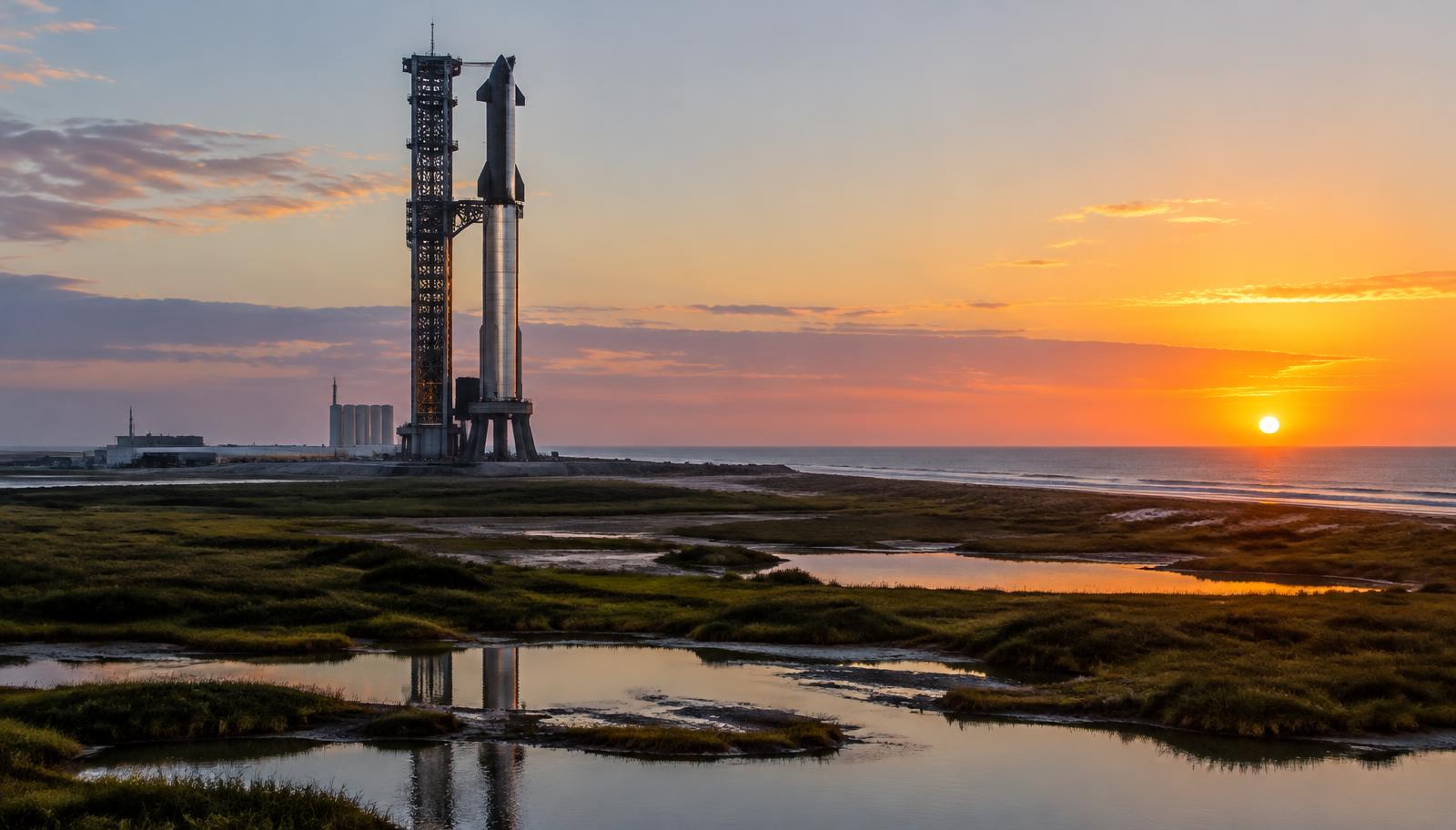
STARBASE, Texas — At dawn on the South Texas coast, a stainless steel rocket stands beside its launch tower, reflected in the tidal flats. Starship, the vehicle SpaceX is developing at its Starbase site near Boca Chica, is the largest rocket ever built, and its test campaign has become one of the most closely watched programmes in spaceflight.
Starship pairs a Super Heavy booster with an upper stage designed to be fully reusable. SpaceX's stated goal is to cut the cost of reaching orbit dramatically by recovering and reflying both stages. Test flights, licensed by the US Federal Aviation Administration, have produced dramatic successes and failures, each feeding data into the next iteration.
Why the Pacific is watching
The implications extend far beyond Texas. Across the Pacific Rim, governments and companies are investing heavily in space: Japan through JAXA and private launch start-ups, South Korea through its domestic launcher programme, Australia through a growing space agency and small-satellite industry, and New Zealand as home to an active commercial launch site on the Mahia Peninsula.
If Starship achieves routine, reusable heavy lift, it could change the economics for all of them. Large constellations of communications and Earth-observation satellites would become cheaper to deploy. Researchers could launch bigger telescopes and instruments. At the same time, national launch programmes would face tougher competition on price.
Environmental and regulatory scrutiny
Starship's development has not been without controversy. Environmental groups and some local residents have raised concerns about the impact of launches on nearby wildlife refuges and beaches, and about debris after failed flights. The FAA's licensing process includes environmental reviews, and regulators have required corrective actions after some mishaps.
There are also questions about orbital congestion. More launches mean more satellites, and Pacific nations with strong astronomy communities, including Chile on the eastern Pacific shore and observatories in Hawaii, have voiced concerns about satellite streaks affecting observations.
A new launch geography
The broader shift is geographic. As launch costs fall, space access becomes less about a few national agencies and more about commercial capacity spread across the Pacific. Ground stations in Australia, tracking networks in Japan and manufacturing in Taiwan and South Korea all form part of an increasingly integrated space supply chain.
As the sun rises over the marshes, Starship waits for its next attempt. Each test is written in Texas, but its consequences will be felt across an ocean.
Sources
Newsletter
Pacific Daily
A curated briefing from Thailand, Asia-Pacific and the world.