Singapore's Orchestra Tour of China: A Quiet Shift in Cultural Exchange
Beyond sold-out halls, the Singapore Symphony Orchestra's tour reveals a changing landscape for cultural influence in Asia.
SINGAPORE
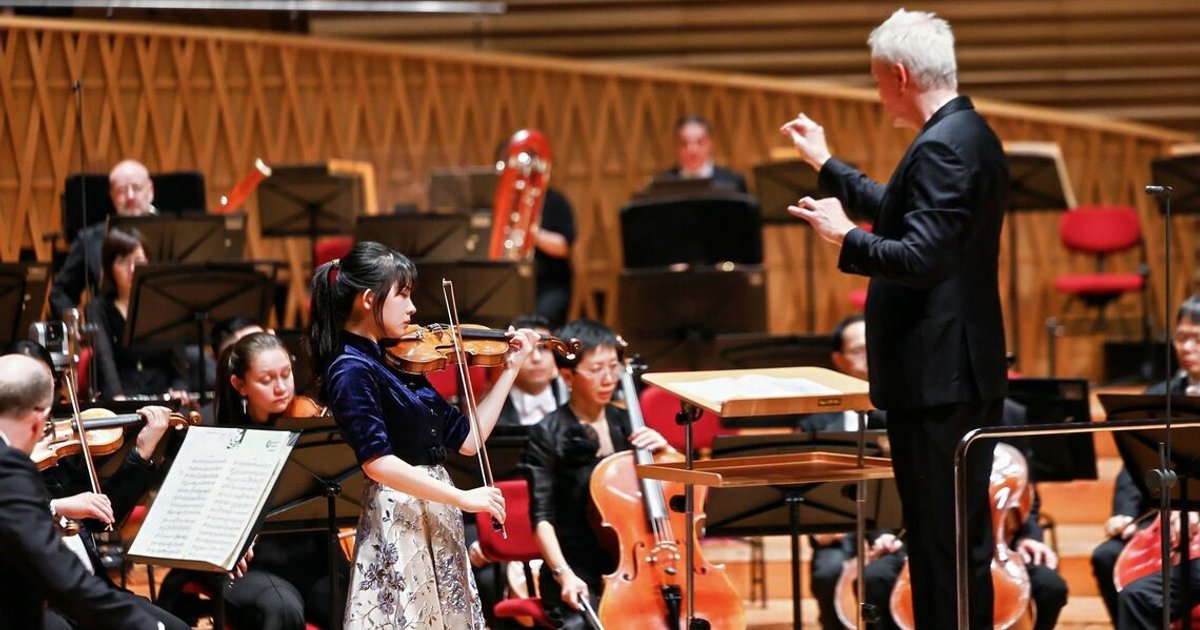
The Singapore Symphony Orchestra, led by new music director Hannu Lintu, recently began its seven-city tour of China, opening with a sold-out Shanghai concert. This tour features Singaporean violinist Chloe Chua and Wang Chenwei’s The Sisters’ Islands, with support from Temasek Foundation. Reports indicate a warm reception in Shanghai, noting that Beijing, Guangzhou, and Shenzhen concerts are already sold out, leaving tickets available only in Wuhan, Changsha, and Xiamen.
On the surface, the success of the Singapore Symphony Orchestra's tour might appear as a straightforward cultural exchange, an indication of growing artistic ties. However, the enthusiasm for the Singaporean ensemble, particularly the swift sell-out in major cities, suggests a more nuanced shift. For decades, the flow of cultural prestige in Asia often moved from larger, established global centers inwards, or from historical cultural powerhouses to their neighbors. The current reception of the SSO in China, however, hints at an evolving dynamic where influence is increasingly cultivated and recognized within the region itself, rather than solely emanating from outside it.
The presence of Singaporean violinist Chloe Chua, whose popularity is cited as a driver for strong ticket sales, underscores this internal regional pull. Her appeal, alongside the orchestra’s sound and emotional performance, resonates directly with Chinese audiences. This points to a developing appreciation for artistic expressions originating from within Asia-Pacific nations, challenging older paradigms that might have looked to Europe or North America as primary cultural arbiters. The tour is not merely an export of Singaporean art but an affirmation of its relevance and appeal to a significant regional audience, with an entity like the Temasek Foundation providing financial backing, indicating strategic national support for this cultural projection.
This movement of cultural capital within Asia mirrors broader economic realignments. Just as economic ties and investments increasingly crisscross the region, so too do the pathways of cultural exchange. The ready acceptance of Singaporean classical music and a Singaporean soloist in China, a nation with its own rich musical traditions and a burgeoning classical music scene, suggests a mutual recognition and valuing of regional artistry. It highlights how cultural diplomacy is no longer a one-way street or solely about showcasing global giants, but about fostering a vibrant, interconnected ecosystem of shared cultural experiences among Asian nations.
What remains to be understood fully is the long-term impact of such exchanges beyond individual tours. While the immediate success in ticket sales is clear, the depth of cultural imprint and reciprocal influence requires more observation. How might this tour, and similar ventures, shape future artistic collaborations, educational exchanges, or even the perception of national identities through art within the region? The support from Temasek Foundation for this international tour, indicates a conscious effort to project Singaporean cultural soft power. Yet, the genuine warmth of the reception, beyond mere political optics, suggests a spontaneous resonance with the quality of the performance itself.
The enthusiastic reception for the Singapore Symphony Orchestra's tour in China, characterized by sold-out concerts and praise for its performance, marks a moment when cultural influence is increasingly generated and celebrated within the Asia-Pacific. It is a quiet observation that the patterns of what is preserved, and what is quietly being replaced, extend even to the stage where melodies unfold, reshaping how cultural dialogues are conducted in the region.
Sources
Newsletter
Pacific Daily
A curated briefing from Thailand, Asia-Pacific and the world.