Singapore's Haze Protocols Reflect a Changing Landscape for Urban Arrivals
When the air itself becomes a barrier, the mechanisms cities deploy to protect their residents reveal the evolving demands placed on those who call them home.
SINGAPORE
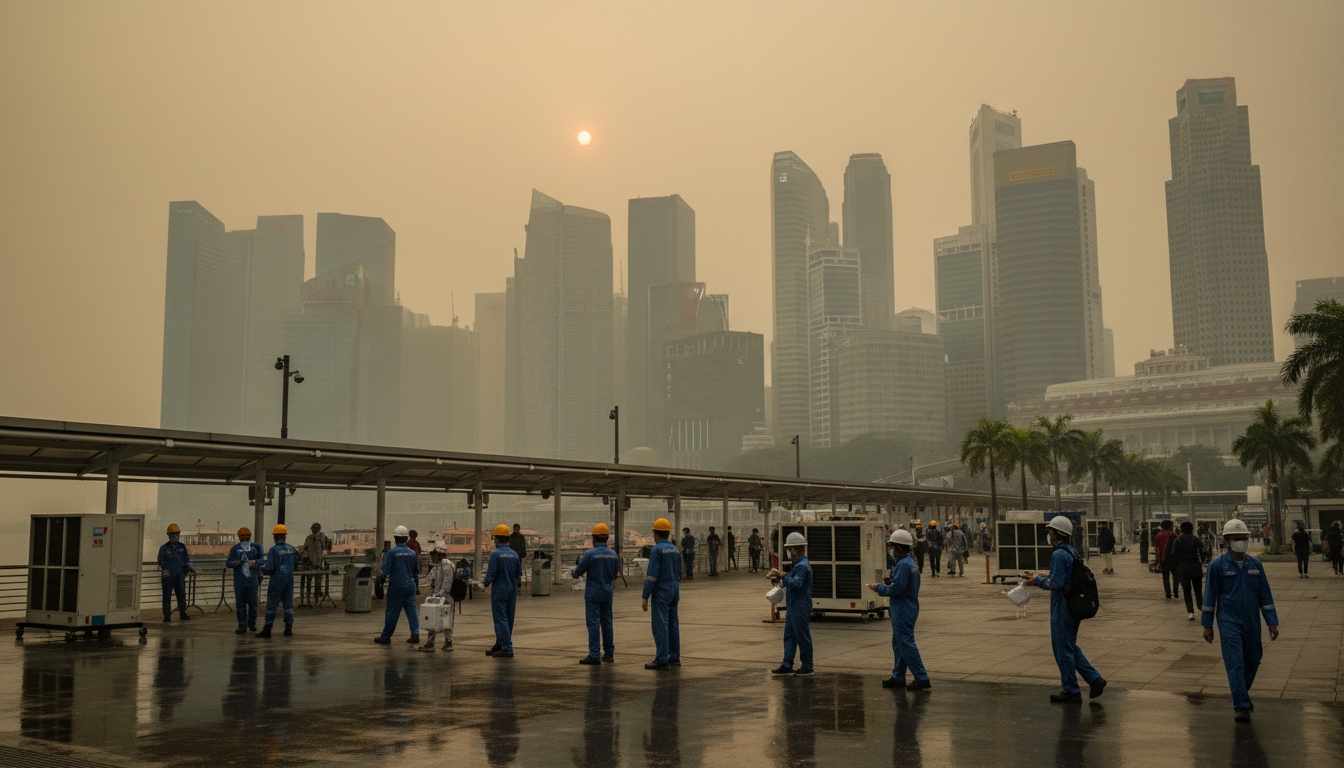
The view from central Bishan on the afternoon of Oct 9, 2026, captured more than just a cityscape; it pictured an atmosphere that has become a recurring challenge across Southeast Asia. Singapore's Haze Task Force has outlined specific conditions under which it will trigger public health measures, a practical response to a pervasive regional issue. This structured approach, however, also highlights a fundamental shift in what urban centers in the Asia-Pacific demand of their inhabitants.
The Haze Task Force indicates that N95 masks will be distributed to more vulnerable individuals once the 24-hour PSI exceeds 200. This threshold is a clear demarcation, signalling when the ambient air quality mandates a physical intervention to protect health. Beyond this, school closures will be considered if the air quality forecast for the next day suggests a 24-hour PSI above 300. These figures are not mere statistics; they are critical markers that dictate daily life, framing decisions from individual outdoor activity to public institutional function.
For those arriving in cities like Singapore, accustomed to certain environmental assumptions, these protocols alter the experience of place. The very act of breathing becomes subject to external monitoring and official directive. While a city offers opportunity and infrastructure, it simultaneously imposes new requirements, particularly regarding health vigilance and adaptability to environmental shifts. The immediate response to haze, distributing masks and considering school closures, is a protective layer. Yet, this protection comes with an implicit cost, reshaping how residents interact with their environment and one another.
One might argue that such measures, though disruptive, offer a transparent and actionable framework, providing clarity in uncertain conditions. This clarity, however, also underscores the deeper issue of air quality as a chronic regional concern, not merely an episodic event. The need for a Haze Task Force itself speaks to an enduring challenge that requires ongoing public and private adaptation. The systematic distribution of specialized masks and the possibility of school closures mean that the rhythm of urban life is increasingly contingent on atmospheric conditions.
The fact that such specific, quantifiable triggers exist for public health actions demonstrates a city's attempt to manage an environmental factor that remains largely beyond its immediate control. This asks of its residents not just resilience, but a continuous re-evaluation of daily routines and expectations. The physical scene of a hazy afternoon, documented from Bishan, becomes a visual reminder that the atmosphere itself can define the boundaries of public life, dictating where and when people can safely participate in the city's offerings. The presence of these protocols suggests that the burden of managing poor air quality is now a shared responsibility, falling on both the governing bodies that set the thresholds and the individuals who must live within them.
Sources
Newsletter
Pacific Daily
A curated briefing from Thailand, Asia-Pacific and the world.