Singapore's Emerging Cultural Crucible: A New Axis for Asia-Pacific Art
An Indian auction house's strategic move reveals more than a market expansion.
SINGAPORE
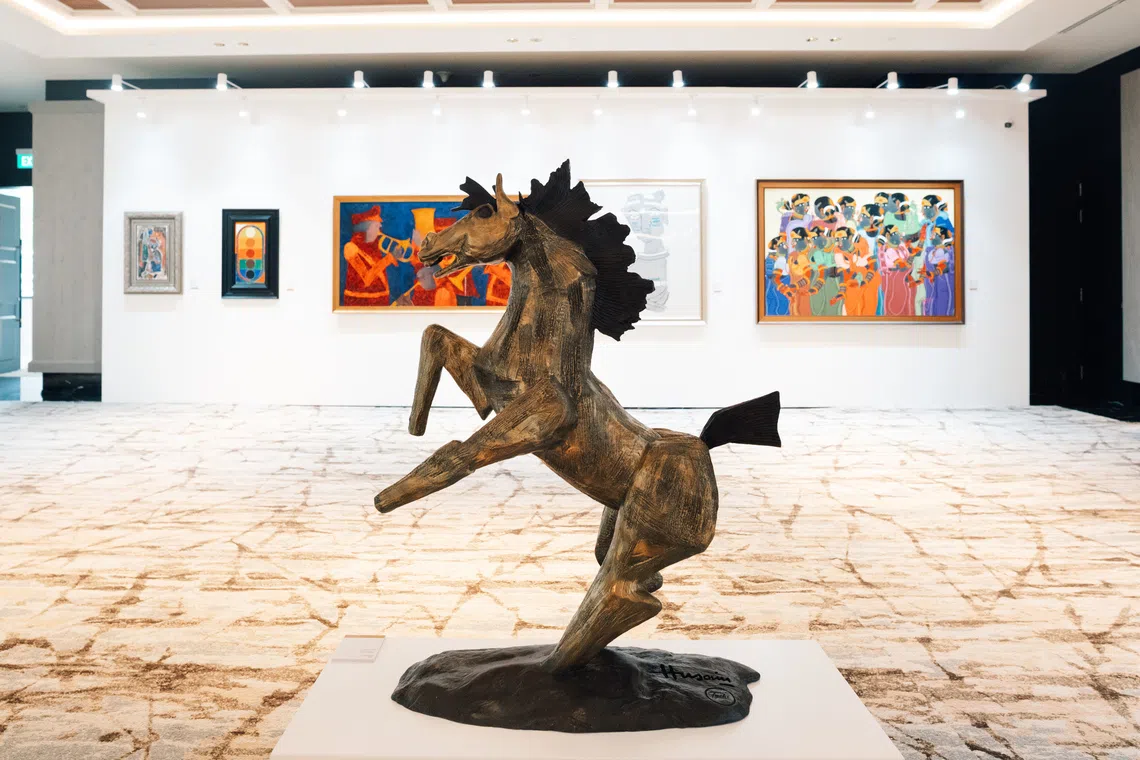
The arrival of AstaGuru, India’s leading online auction house, with its inaugural Singapore exhibition featuring works by M.F. Husain, marks a specific moment for the Asia-Pacific cultural landscape. This move, following an international office opening in London and preceding one in the US, positions Singapore not merely as another market, but as a strategic hub in a global art circuit. What this reveals is a shifting gravitational center, drawing cultural assets and commercial interests into new configurations across the region.
Singapore has long cultivated an image as a nexus for finance and technology, underscored by recent announcements like Anthropic’s office opening in October and HashKey’s interest in purchasing the Asia Pacific Exchange. Even the BBC noted Singapore's role as a 'launchpad for the future of healthcare' in the Asia-Pacific. However, the consistent influx of cultural institutions, particularly those with a commercial imperative like AstaGuru, suggests a more nuanced ambition. This isn't just about economic metrics; it points to Singapore's intentional positioning as a sophisticated cultural intermediary.
The challenge this presents to nations like Thailand is distinct. Thailand, with its rich heritage of indigenous art forms, vibrant contemporary scene, and a historical connection to international artistic exchange, could interpret Singapore's ascendance as either a competitive threat or a facilitative opportunity. If AstaGuru’s presence attracts a broader international collector base to the region, it hypothetically raises the profile and liquidity for South-east Asian artists generally. However, it also channels that attention and economic activity through Singapore, potentially centralizing the commercial narrative around a market that is not necessarily the origin point of the art itself.
The underlying tension lies in the distinction between cultural production and cultural commerce. Singapore is demonstrating an aptitude for the latter, creating a platform for exchange and valuation. While Thailand continues to be a fertile ground for the former, its engagement with global art markets has often been more organic, less centrally curated. The question, then, for Bangkok and other regional cultural centers, is how to leverage their unique artistic capital within this evolving framework. Can they draw from this concentrated attention in Singapore, or does it risk overshadowing their independent growth?
This dynamic suggests a realignment, where established cultural powers in the region must actively define their role in a network increasingly anchored by Singapore’s commercial infrastructure. The presence of AstaGuru with works by masters like M.F. Husain is not just about a successful exhibition; it is a visible signal of where value is being assessed and aggregated. It prompts a reconsideration of how cultural influence will be distributed and recognized across the diverse tapestry of the Asia-Pacific in the coming years.
Sources
Newsletter
Pacific Daily
A curated briefing from Thailand, Asia-Pacific and the world.