Singapore's Drunken Assault Sentence Points to Diverse Regional Alcohol Control
A Singapore court decision in an assault case resulting in death highlights the varied regional approaches to alcohol-related harm and public safety.
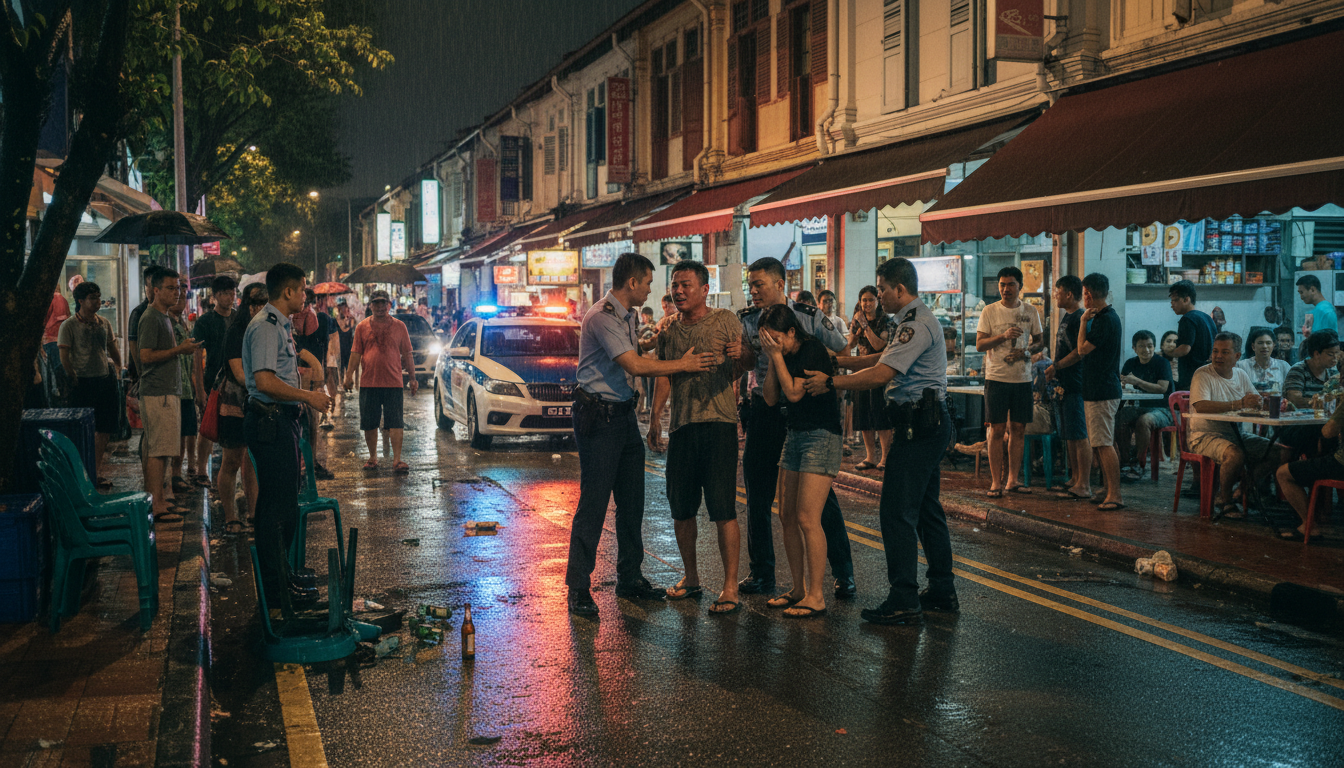
SINGAPORE
A man received a sentence of 15 years’ jail and caning in Singapore following the death of a 71-year-old man in a back alley. The victim, suffering serious head injuries from the assault, died in hospital 10 days later. This incident, linked to intoxication, brings into focus the diverse strategies for managing alcohol's societal impact across the Asia-Pacific.
While this specific legal outcome is from Singapore, known for its strict penalties, the broader questions it raises about public safety and alcohol misuse resonate regionally. The occurrence of violence or death stemming from drunkenness is not confined to one country. Such events necessitate examining how various societies address the costs associated with alcohol consumption.
Elsewhere in the region, concerns about alcohol misuse have spurred distinct policy actions. In Japan, for instance, a crackdown on drunk pilots was reported in 2018, uncovering extensive alcohol-related misconduct within the aviation industry. Earlier, a drunk driving incident in 2016 also generated controversy regarding the American military presence there, illustrating how alcohol misuse can intertwine with geopolitical sensitivities. These examples suggest a direct response to public and institutional pressures.
Conversely, some countries employ different frameworks for managing alcohol consumption. The Japan Times reported in 2026 that millions of Thais banish booze during Buddhist Lent, indicating a culturally embedded method of control. While such practices exist, their effectiveness in preventing all alcohol-related harm is less uniformly clear. Singapore's ruling, which is severe by many international measures, underscores a reliance on punitive legal frameworks to deter such occurrences.
Authorities across the Asia-Pacific region must balance the economic interests tied to alcohol sales with public health and safety. Singapore's recent judgment clarifies that the human cost of unmanaged intoxication remains significant. While individuals face legal consequences, broader costs—such as medical care, legal proceedings, and lost economic activity—are borne by public systems and ultimately by taxpayers.
Any effective policy must aim to curb alcohol-fueled violence without disproportionately affecting hospitality sectors. Until a consistent strategy emerges, one that integrates regulation, enforcement, and cultural context, incidents like these and their resulting legal responses will continue to expose persistent societal fault lines.
Sources
Newsletter
Pacific Daily
A curated briefing from Thailand, Asia-Pacific and the world.