Rooftop Sprinklers: A Regional Tactic for Urban Cooling, Not a Comprehensive Water Strategy
While new research highlights a technological solution to urban heat islands, its broader implications for water policy and infrastructure across the Asia-Pacific demand closer scrutiny.
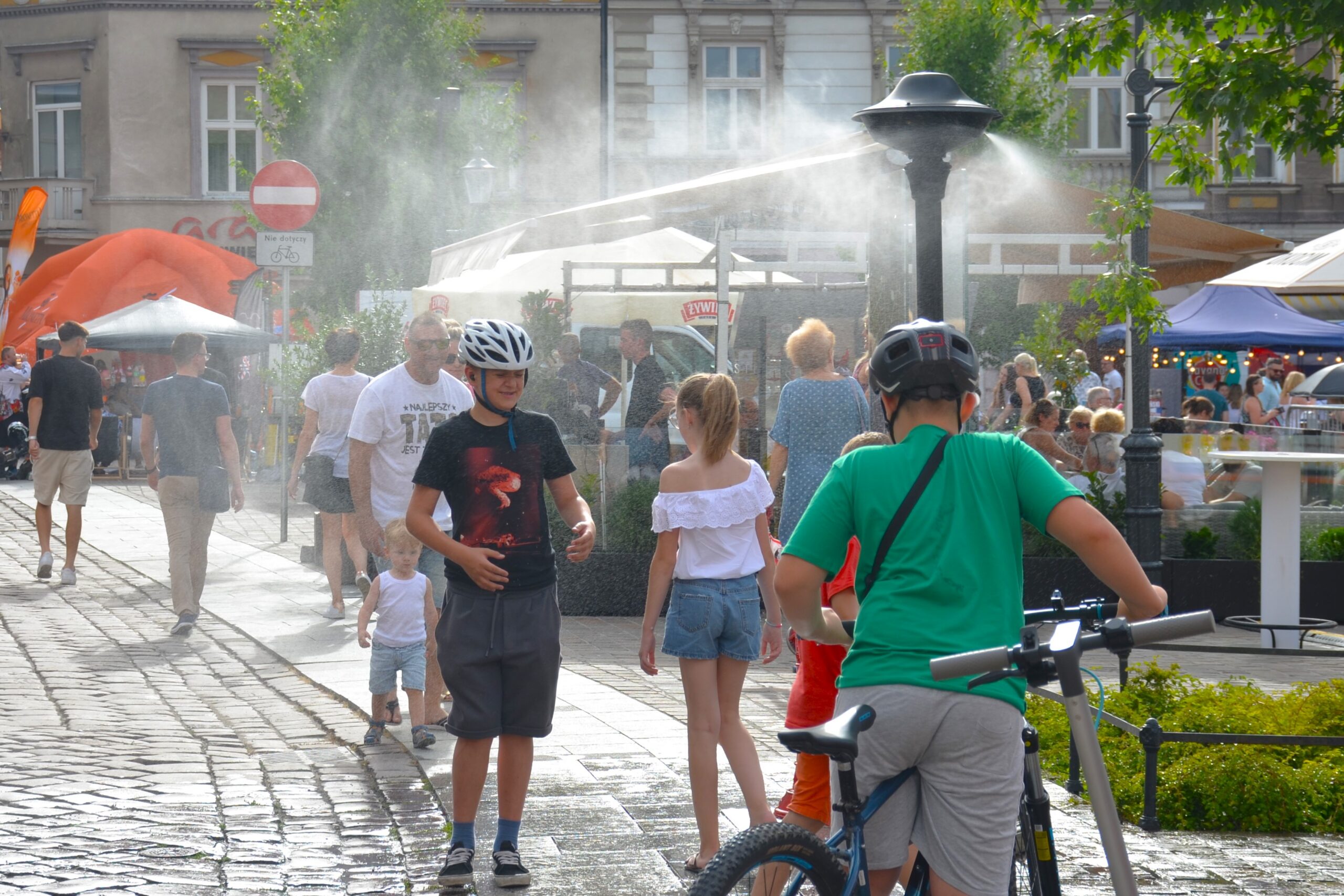
The recurring imagery of urban dwellers seeking relief from relentless heat, often amplified by city infrastructure, has become a persistent feature across the Asia-Pacific. A recent study, reported by Mongabay Asia on September 18, 2026, proposes rooftop rainwater sprinkler systems as a mechanism to cool warming cities. The underlying premise is precise: artificial replication of the cooling effect experienced when summer rain breaks urban heat. This approach, led by researcher Zhonghua Zheng, posits that widely distributed rainwater collection tanks combined with smart rooftop sprinkler systems could mitigate the urban heat island effect. While the immediate focus is on temperature reduction, the regional implications extend to water resource management and the adaptive capacity of diverse urban environments.
The historical challenge of urban heat in rapidly developing Asian cities is well-documented. Concrete and asphalt absorb solar radiation, and tall buildings obstruct air circulation, creating microclimates significantly hotter than surrounding rural areas. The Mongabay Asia report frames this as a global phenomenon, underscoring the increasing number of potentially deadly heat wave days. The proposed sprinkler system offers a technological intervention, leveraging existing hydrological cycles to address a climatic symptom. It suggests a shift from passive urban design to active, responsive infrastructure for environmental control.
Thailand's Climate Vulnerability and Water Policy
For a nation like Thailand, characterized by expansive urban centers and seasonal monsoons, such a proposal carries both promise and significant policy questions. Bangkok, with its dense development and high humidity, experiences pronounced urban heat. Integrating a system that collects rainwater for cooling could offer a localized countermeasure. However, the efficacy and scalability are tied directly to existing water infrastructure and future policy. The model’s success depends not only on the availability of rainfall but also on the capacity to collect, store, and distribute this water efficiently across a city grid. The concept inherently links urban heat mitigation with water resource planning, creating a necessary convergence for policymakers.
The broader Asia-Pacific region presents a mosaic of climatic and hydrological contexts. In one instance, a Green Building Code to secure Pakistan’s water future was urged for strict enforcement, as reported by the Associated Press Of Pakistan in 2025. This indicates a pre-existing regional awareness of the interplay between urban development, climate change, and water security. While rooftop sprinklers might alleviate heat, their widespread adoption without comprehensive water management strategies risks unintended consequences. The diversion of rainwater for cooling, however efficient, requires consideration of its potential impact on groundwater recharge, urban drainage, and even agricultural demands in peri-urban areas.
The application of advanced cooling technologies must be evaluated within existing water governance frameworks, not in isolation.
The immediate benefit of localized cooling is evident, particularly in reducing energy consumption associated with air conditioning. However, a significant constraint remains: the fundamental availability and distribution of water. While the proposed system uses rainwater, its broader implementation in periods of drought or reduced monsoon activity could strain municipal water supplies if not meticulously planned. The idea of using collected rainwater to cool urban surfaces is compelling, but its true value will be determined by its integration into holistic urban planning and water policy, rather than merely its technical feasibility.
Sources
Newsletter
Pacific Daily
A curated briefing from Thailand, Asia-Pacific and the world.