Campaign Finance Opacity Undermines Indo-Pacific Stability
The challenge of 'dark money' in a U.S. congressional race has implications for regional trust in policy commitments.
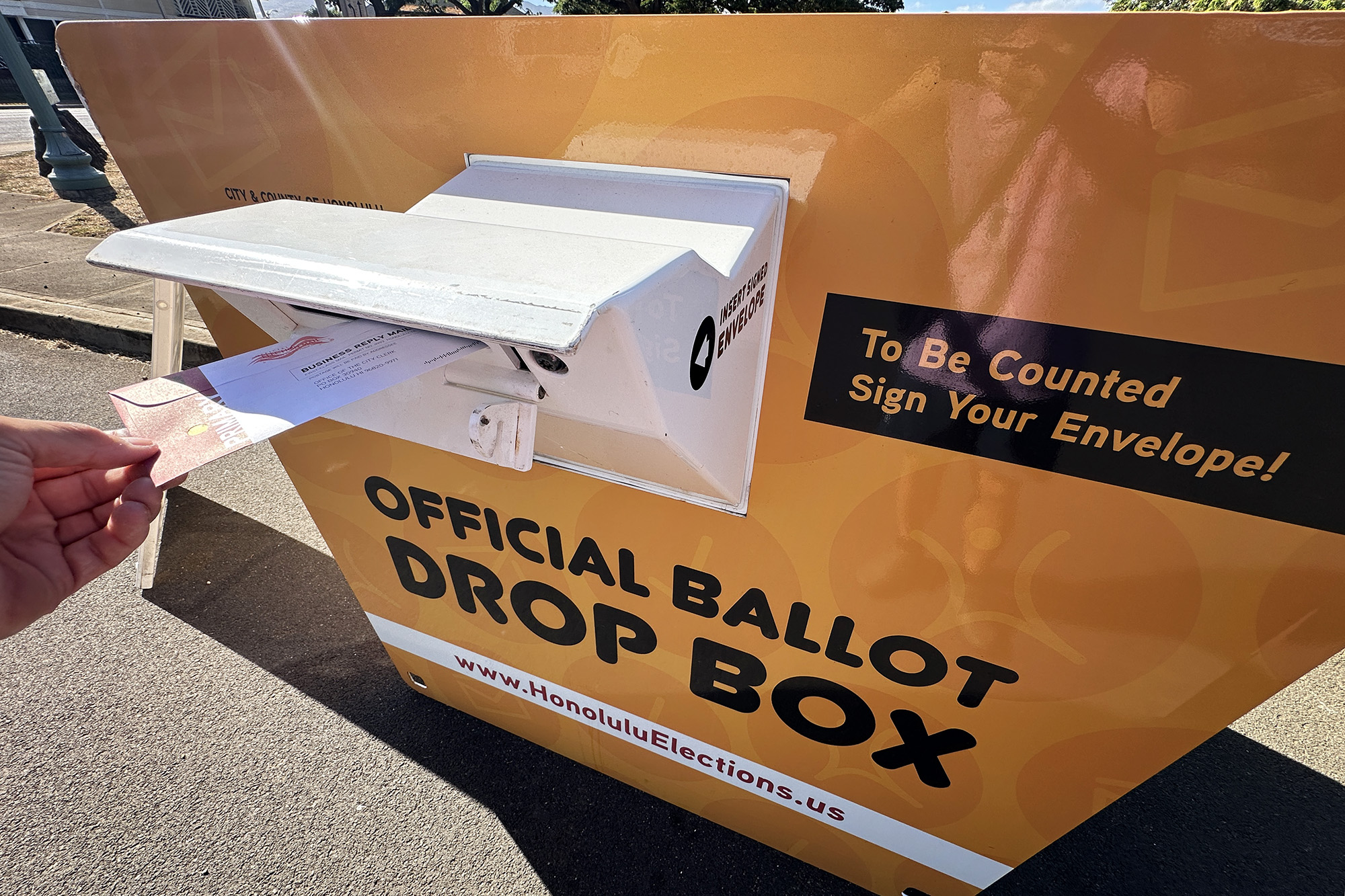
The stated concerns from U.S. Rep. Jill Tokuda regarding “outside money” in her Hawaiʻi congressional race, specifically the potential influx of funds from super PACs, highlight a systemic vulnerability beyond domestic politics. This dynamic, also acknowledged by Republican State Sen. Brenton Awa, points to a broader challenge for the Asia-Pacific region: the erosion of trust in the integrity of political processes, which can subsequently impact economic and diplomatic frameworks.
The U.S. political landscape, as evidenced by Tokuda's warning on September 20, 2026, struggles with the opacity of campaign finance. When election outcomes are influenced by funding sources that operate outside of direct campaign disclosure requirements, the perceived legitimacy of elected representatives can diminish. This creates an environment where policy decisions, particularly those impacting international relations and trade, may be viewed with skepticism, regardless of their intrinsic merit. For instance, the race to finalize Indo-Pacific trade deals has encountered snags, a phenomenon that can be exacerbated when partners question the foundational stability of leadership.
In the context of the Indo-Pacific, stability of political leadership is paramount. Negotiations and agreements, such as China’s formal application to join a Pacific Rim trade pact in 2021, require sustained commitment and an assumption of consistent national interest. However, if the mechanisms by which leaders ascend to power are seen as susceptible to undisclosed financial influence, the durability of their policy commitments becomes questionable. This issue affects not only specific trade pacts but also the foundational trust essential for multilateral cooperation on sustainability initiatives.
One counterargument suggests that campaign finance is an internal U.S. matter, distinct from international trade and diplomatic engagements. This perspective posits that the U.S. electoral system, despite its imperfections, functions independently, and its outcomes are accepted by international partners as representative. From this viewpoint, the primary concern for the Asia-Pacific should remain with the policy itself, not the means by which the policymakers were elected. The argument implies that the practicalities of trade and security, driven by state interests, will always supersede domestic political maneuvering. However, this position overlooks the interdependence between domestic political stability and external policy reliability. The perception of an election compromised by opaque funding mechanisms undermines the credibility of the mandates it produces. Without clear capital plans for political campaigns, the commitments of leaders — whether to trade agreements or environmental policies — become subject to increased scrutiny from regional partners.
The challenge is not confined to the U.S. model. The general principle holds that when financial flows into political systems lack transparency, the capacity for consistent, long-term policy formulation weakens. This directly impacts the predictability required for major economic investments and collaborative climate action across the Asia-Pacific. The unresolved tension lies in how nations can forge robust, trusting partnerships when the internal processes determining leadership are themselves subject to ongoing questions about external financial influence and accountability.
Sources
Newsletter
Pacific Daily
A curated briefing from Thailand, Asia-Pacific and the world.