Ronaldo's Dispute with Coach Jorge Jesus Highlights Professional Accountability in Elite Sports
A prominent footballer's claim of 'broken promises' from his coach underscores the challenges of managing talent and expectations within high-stakes professional settings, relevant to the evolving sports landscape in Asia-Pacific.
SINGAPORE
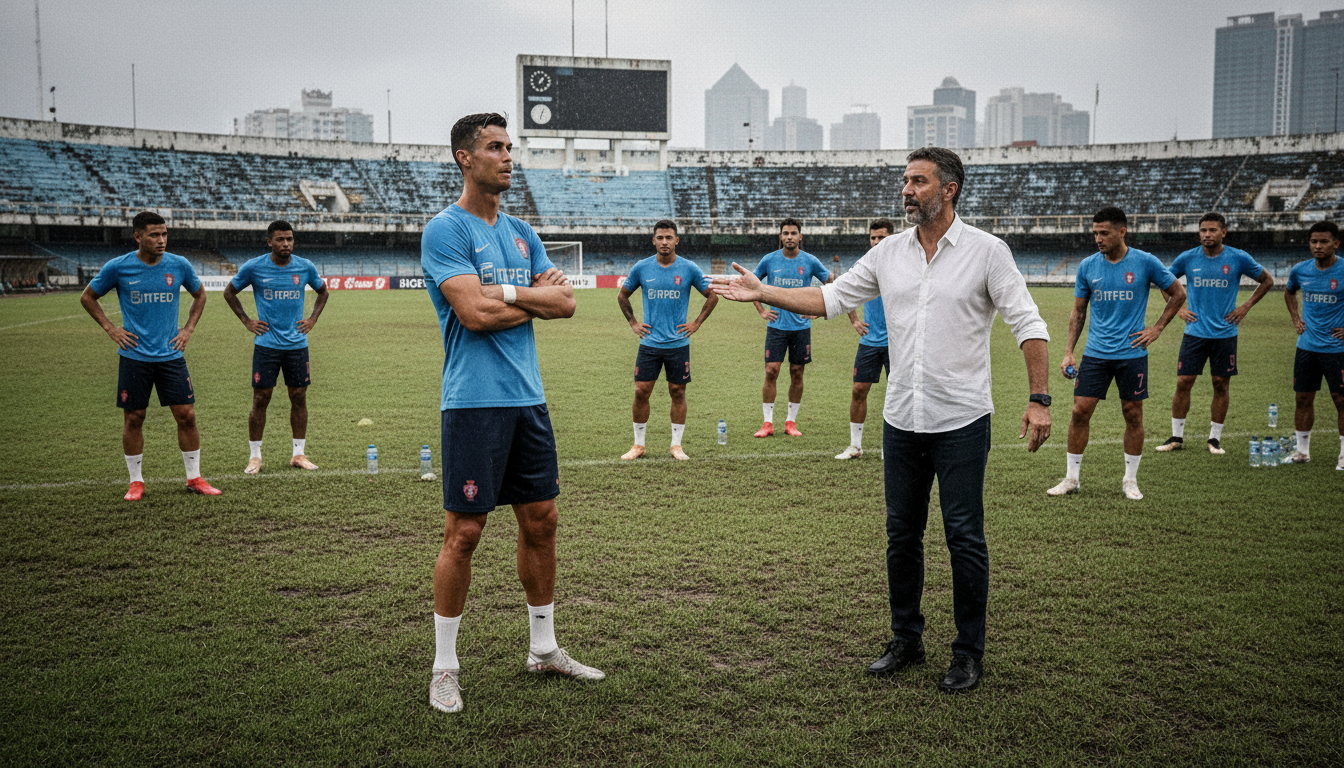
Cristiano Ronaldo's recent accusation, reported by Channel News Asia on October 6, 2026, claims coach Jorge Jesus broke promises. This assertion, made while Ronaldo left open the possibility of a return to the Portugal national team, illustrates a significant tension point within professional sports management. The disagreement appears to stem from internal team dynamics, focusing on perceived breaches of commitment between a high-profile player and his coaching staff.
Such public disputes, even when confined to a single team, reveal the delicate nature of professional relationships when personal assurances are perceived as unmet. Ronaldo's statement implies a divergence between his understanding of prior agreements and the coach's subsequent actions. This dynamic is not unique to sports; it frequently arises in sectors where individual performance is crucial within a team framework. While this immediate situation unfolds in European football, the underlying issues of trust, expectation management, and the interpretation of agreements have wider implications for professional industries, including the expanding sports and entertainment sectors across the Asia-Pacific region.
Organizations, whether in sports or corporate environments, face a constant challenge in balancing these personal and professional boundaries. Effective talent retention and optimal performance often depend on clear communication and the fulfillment of commitments. When a player of Ronaldo's stature raises such concerns, it reflects on broader management practices within the sport. His past public actions, such as throwing a reporter's microphone in 2016, and his involvement in various causes, including supporting Afghan initiatives, demonstrate his significant public profile and the weight his statements carry. The South China Morning Post reported in 2025 on the potential for a Ronaldo versus Messi encounter in the FIFA World Cup draw, further emphasizing his global reach.
For the Asia-Pacific, particularly for nations like Thailand where professional sports leagues continue to grow, this incident serves as a case study for managing high-value individual contributors. The financial stakes in sports are substantial, with major international events attracting considerable regional interest. The manner in which such disputes are resolved—whether through reconciliation, negotiation, or separation—influences player morale, team cohesion, and, ultimately, on-field performance and commercial viability. The continued uncertainty surrounding Ronaldo's potential return to the Portugal national team suggests that addressing these perceived broken promises will be central to any resolution, highlighting the importance of clear, accountable leadership in retaining and motivating top talent.
Sources
Newsletter
Pacific Daily
A curated briefing from Thailand, Asia-Pacific and the world.