Roadside Authenticity: A Culinary Detour's Structural Integrity
David Chang's approach to the unexpected challenges established travel series formats, offering an alternative model for cultural exploration that extends beyond mere consumption.
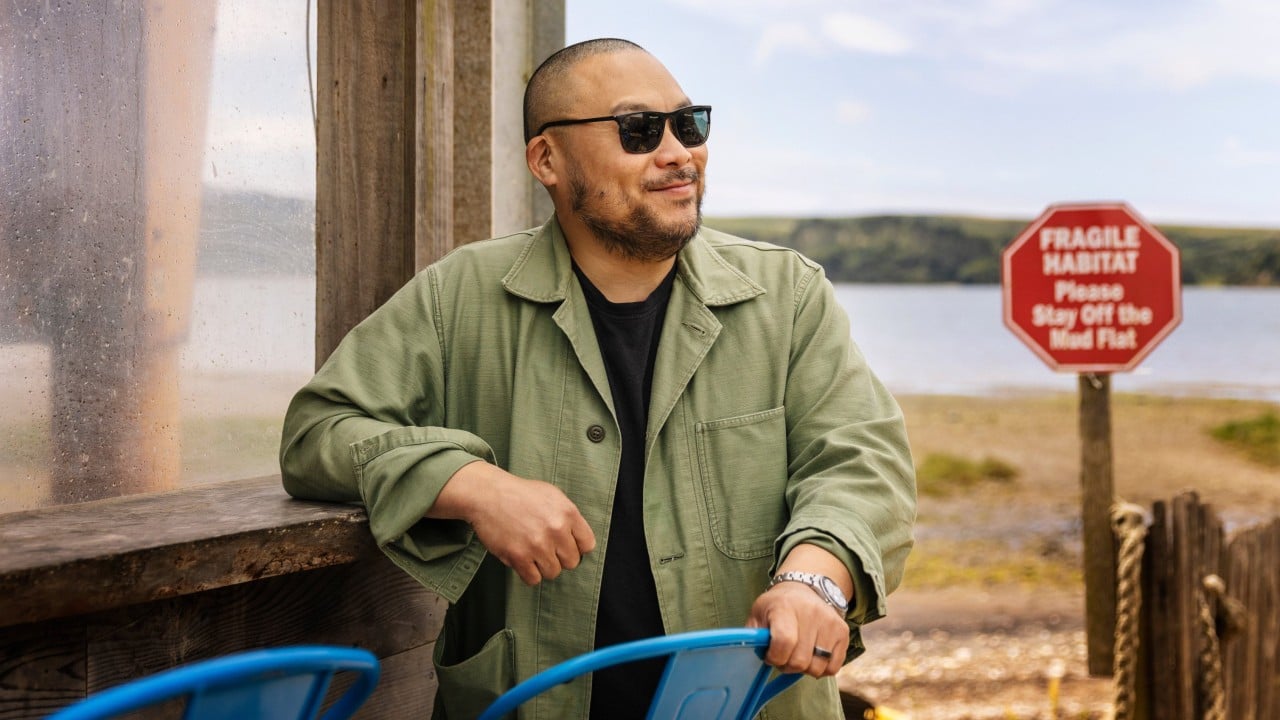
A CNN travel series documents chef David Chang's journey across the United States. During a drive to Las Vegas, the production team's planned stop was an Indian restaurant off Interstate 15 in Hesperia, California, near a windscreen repair shop. Chang, however, identified a Mexican cantina as a promising alternative, choosing to patronise both establishments. His stated desire was simply to "taste things" that looked "interesting."
This impulse to deviate from a pre-set itinerary, to embrace an unscripted spatial observation, reveals a fundamental tension in how cultural experiences are presented and consumed. The predefined narrative, which presumably aimed to showcase a specific culinary offering, was disrupted by an immediate, human-scale assessment of the environment. The cantina, not the planned Indian restaurant, first caught his eye. This suggests a search for an authenticity that arises from organic discovery rather than curated presentation.
From a design perspective, the act of seeking out a 'promising' establishment in a roadside context points to a subtle, yet crucial, indicator of human utility. The unplanned choice implies that the cantina's appearance or perceived function, perhaps its signage, its visible activity, or its overall presence, communicated a certain viability or appeal more effectively than the designated stop. It highlights how the built environment, even in its most utilitarian forms like a transport cafe or a cantina, offers cues that shape engagement and experience.
The typical travelogue often constructs an idealised journey, smoothing over spontaneous decisions and presenting a polished, curated version of reality. The insistence on exploring the unexpected, even to the "dismay" of a camera crew, underlines a resistance to this manufactured experience. This approach acknowledges that the most resonant cultural engagements often occur in the interstitial spaces, the unplanned detours where genuine human activity is observed.
While this method prioritises raw experience over structured narrative, it inherently relies on the discerning eye of the explorer. Chang's personal judgment acts as the filter, determining what is 'interesting' or 'promising.' This subjective lens, while yielding rich, unscripted moments, means the representation is always framed by his individual preferences and cultural background. The series, therefore, offers a specific, individualised interpretation of "authentic" experience rather than a neutral, comprehensive survey. It functions as a critique of over-curated content, yet depends on a new, personal curatorial instinct.
Sources
Newsletter
Pacific Daily
A curated briefing from Thailand, Asia-Pacific and the world.