Relocating Homes Highlights Resource Strain in Asia-Pacific Urban Planning
The journey of Vancouver houses to Haida Gwaii illustrates an unconventional approach to housing shortages, but sustaining such methods reveals the deeper costs of urban expansion and resource allocation across the region.
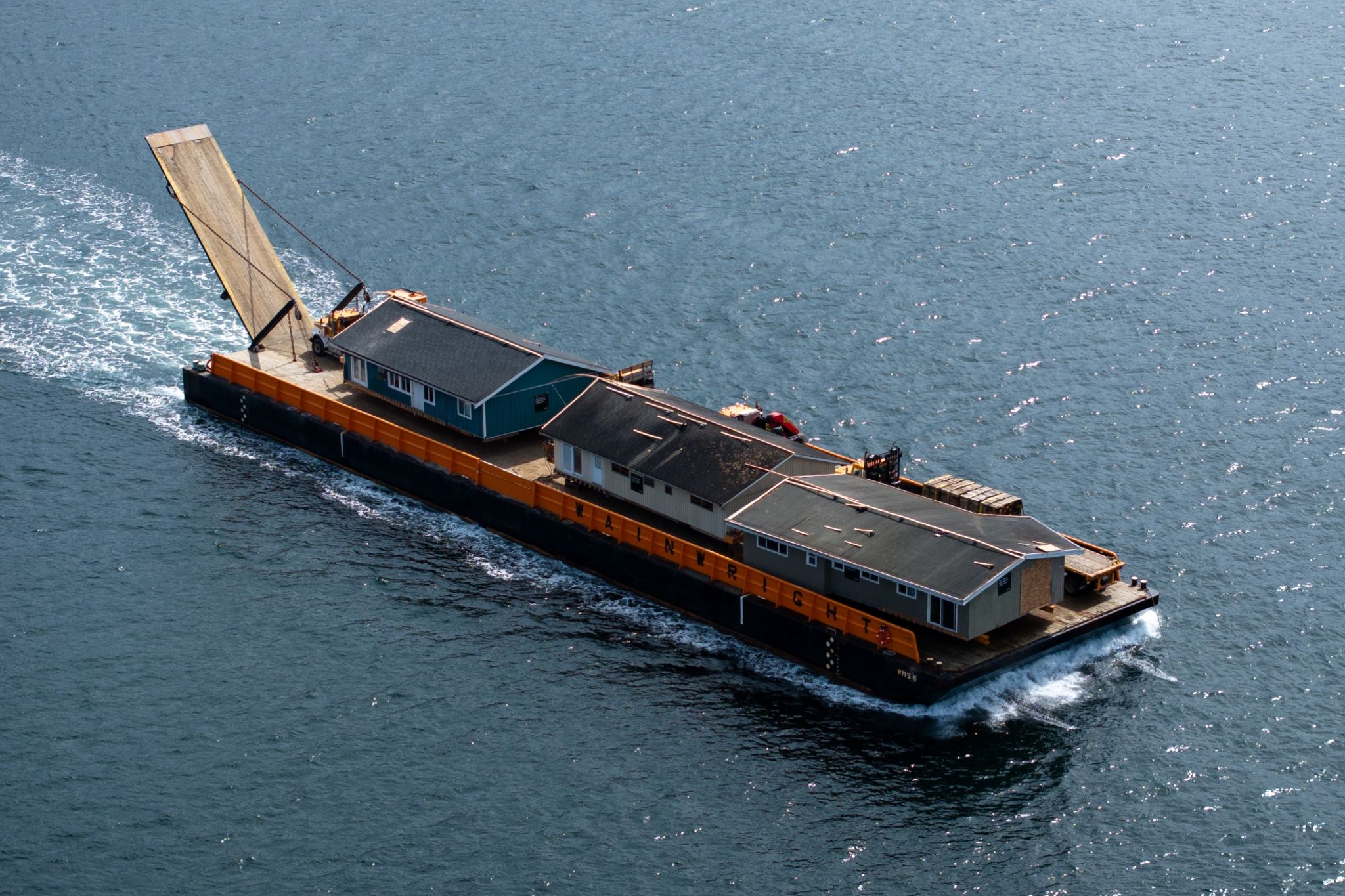
Three mid-century homes recently completed a multi-day journey via barge from Metro Vancouver to Haida Gwaii, docking on October 2. The Old Masset Village Council plans to convert these structures into triplexes for subsidized housing. Chief Councillor Donald Edgar cited a need for quicker housing solutions, noting families with ten, eleven, or twelve people living in single small houses. These properties were originally slated for demolition in Coquitlam to make way for higher-density development.
The logistical feat of transporting entire houses suggests a response to immediate housing crises, a condition not unique to Canada's west coast. Across the Asia-Pacific, rapid urbanization frequently pushes against limited land and existing infrastructure. While the explicit motive in Haida Gwaii is to address a housing deficit, the method of literally moving existing structures rather than building anew points to an underlying scarcity of accessible, affordable building materials and labor in remote areas, or the prohibitive cost of new construction in high-demand zones.
This approach also poses questions about the true cost-effectiveness and sustainability of repurposing structures over such distances. Transporting three houses on a multi-day barge journey involves significant fuel consumption and planning. While it avoids the waste of demolition and the resource extraction for new builds, the carbon footprint of such an endeavor cannot be ignored. The technique of relocation might offer an immediate solution to the Old Masset Village Council, yet it demands a specific set of circumstances to be viable: available donor homes, a waterway for transport, and a receptive destination with the capacity for conversion.
For a region like the Asia-Pacific, where urban centers are often densely populated and distant from resource-rich areas, this method presents a difficult calculus. Thailand, for instance, faces its own challenges with informal settlements and a constant demand for affordable housing in its burgeoning cities. The idea of relocating existing urban homes might seem an elegant solution to urban decay or development pressure, but the scale of need in many Asia-Pacific contexts would dwarf the capacity for such individual transfers. Furthermore, the specialized skills and equipment required for safe transport and re-establishment are not universally available.
Donald Edgar described this strategy as "a nice, fast, easy way" to house people. This assessment, however, highlights the specific pressures faced by the Old Masset Village Council. The ease and speed are relative to local alternatives, which may be non-existent or prohibitively expensive. This particular technique, while addressing immediate needs, does not resolve the broader systemic issues of housing affordability, sustainable urban planning, or equitable resource distribution that many Asia-Pacific nations confront. It underscores the ongoing tension between preserving existing housing stock and meeting the demands of a growing population with finite resources.
Sources
Newsletter
Pacific Daily
A curated briefing from Thailand, Asia-Pacific and the world.