Queensland Skiff Challenge Exposes the Friction Between Regional Ambition and Maritime Primacy
A planned campaign for the 2026-27 season tests whether technical decentralisation can truly shift competitive gravity in Pacific waters
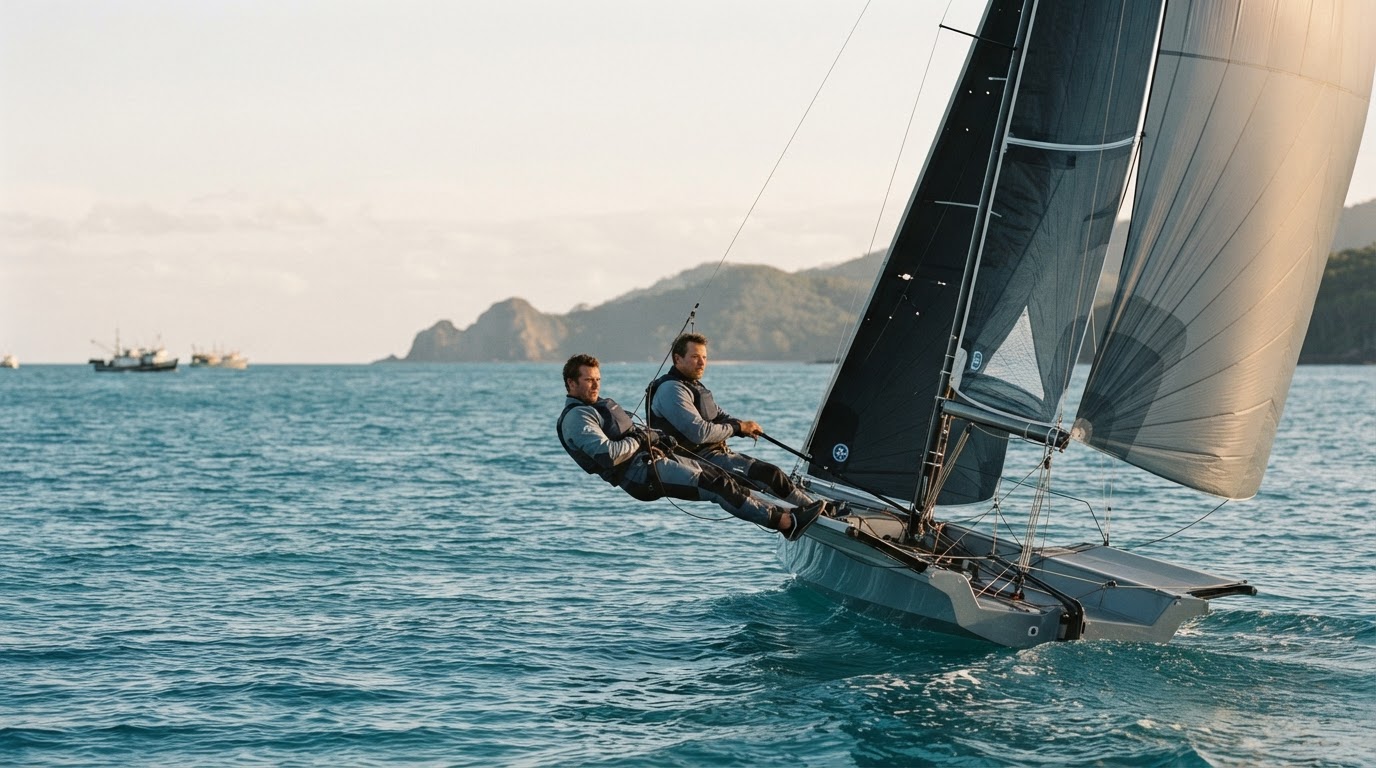
Competitive sailing campaigns rarely register as tests of regional political economy, yet maritime contests invariably mirror the distribution of industrial capital and geographic leverage. The announcement by Sail-World that Queensland is mounting a challenge in the 18ft skiffs for the 2026-27 season marks a deliberate effort to alter that balance. For decades, elite skiff racing across Australian and broader Pacific waterways has remained anchored to deeply entrenched metropolitan power bases where design traditions and institutional sponsorship concentrate.
A campaign emerging from Queensland interrupts that conventional concentration. Taking on the established class in 18ft skiffs requires substantial engineering capability, sustained institutional funding, and crews conditioned to navigate volatile open waters. When a secondary or peripheral yachting hub mobilises to contest high-performance hardware, the venture represents far more than an athletic entry. It represents an explicit assertion that regional technical capacity can rival traditional metropolitan marine centers.
Industrial Concentration and Regional Disruption
High-performance skiff classes impose severe structural discipline on contenders. The platforms are notoriously unforgiving, rewarding accumulated technical heritage, rapid hull development, and refined sail-plan adaptation. Historically, established racing centers retain dominance because naval architecture talent, dedicated boatyards, and commercial backers reinforce one another within tight geographic perimeters. An aspiring regional contender must overcome not merely competitor squads on the water, but the entire industrial ecosystem supporting them.
Queensland's entry into the 2026-27 calendar highlights how regional hubs attempt to bridge this divide. By committing to the challenge, local organisers and technical teams seek to retain skilled domestic talent rather than watching sailors and master shipwrights migrate southward toward legacy harbours. If successful, such initiatives redirect marine development expenditures into northern waters, cultivating specialized boatbuilding know-how that spills over into wider commercial marine sectors.
Yet technical ambition alone does not dismantle structural advantage. Sceptics within coastal sports administration consistently point out that challenger squads frequently struggle to sustain multi-year campaigns once early promotional momentum subsides. Developing competitive hulls and matching the speed of established fleets requires constant reinvestment across testing cycles. Without deeply diversified commercial partnerships, regional campaigns risk becoming isolated tactical exercises rather than permanent shifts in competitive gravity.
The Broader Pacific Balance
Across the wider Pacific basin, this competitive tension carries tangible resonance. Marine hubs in regional waters frequently attempt to leverage sports campaigns to market technical craftsmanship, maritime tourism, and coastal infrastructure to neighbouring Pacific markets. Proving that an 18ft skiff team from Queensland can compete at the highest tier serves as an empirical demonstration of engineering maturity.
A challenger campaign tests whether institutional backing can outlast legacy dominance.
Whether that demonstration translates into long-term commercial vitality remains governed by resource discipline. The Queensland bid scheduled across 2026 and 2027 operates under relentless logistical constraints, requiring continuous logistics coordination between distant coastal hubs and established regatta circuits. The unresolved tension lies in whether a regional bid can construct a self-sustaining technical apparatus before the compounding advantages of legacy sailing centers reassert their historical dominance.
Sources
Newsletter
Pacific Daily
A curated briefing from Thailand, Asia-Pacific and the world.