Police Killings at Porgera Gold Mine Reflect Persistent Rule of Law Gaps in Papua New Guinea
The alleged involvement of the Kumul 23 police unit in eight September deaths near a major gold mine underscores the challenges in managing resource wealth and security in Enga Province.
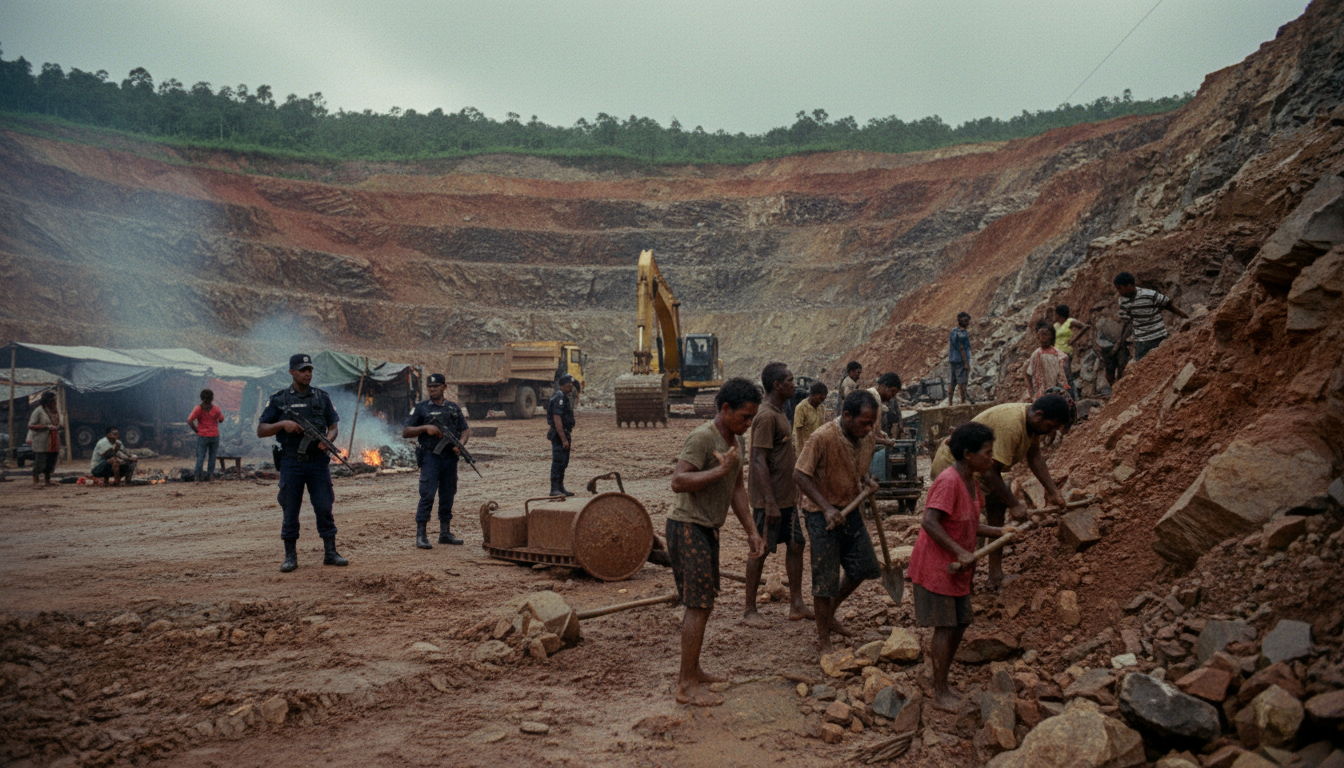
Eight people died in September near Papua New Guinea's Porgera Gold Mine, allegedly at the hands of the Kumul 23 police unit. This incident, which also involved numerous house burnings in Porgera, highlights the persistent tension between resource extraction and state authority in the Pacific. Such events suggest official efforts to manage the mine’s volatile environment continue to face significant internal obstacles. The Porgera Gold Mine has long been associated with lawlessness and violence, making the actions of a specialized police unit a critical point of concern.
While the mine generates substantial revenue, consistent reports of violence surrounding it indicate that the benefits of this economic activity do not translate into stable local governance or security for residents. The Kumul 23 unit’s alleged role in the September massacre raises questions about accountability mechanisms within Papua New Guinea's security forces. Jerry Maku’s statement that “many of our tribesmen are missing” suggests the impact extends beyond reported fatalities, affecting community trust and stability in the Porgera Valley. An elite tactical police unit remains present, reflecting an attempt to impose order, yet its alleged actions contradict the objective of reducing violence.
From a regional perspective, the Porgera incident is not isolated. Across resource-rich areas in the Asia-Pacific, valuable natural assets often correlate with increased social friction and security challenges. The underlying issue remains the state's capacity to assert rule of law fairly and effectively, especially when powerful economic interests are at play. Without transparent investigations and appropriate consequences for alleged abuses, such events risk entrenching a cycle of violence. This undermines both local development and broader national stability.
Thailand, like other Southeast Asian nations, operates within a regional economic framework that includes mineral resource trade and investment. The stability of source countries like Papua New Guinea, particularly regarding governance and human rights, influences the broader investment climate and supply chain ethics in the region. The Porgera situation demonstrates that the mere existence of a police presence does not guarantee security or justice; rather, the nature of that presence and its adherence to established legal frameworks are paramount. The long-term implications for the Porgera Gold Mine, and for Papua New Guinea's ability to attract and sustain responsible investment, hinge on how these alleged police actions are addressed.
Resolving the violence and restoring confidence in state institutions requires more than just deploying security forces. It depends on consistent accountability for alleged abuses, independent oversight of law enforcement, and addressing the root causes of lawlessness that attract illegal mining in the first place. The absence of these elements means that events like the September massacre will likely continue to recur, posing ongoing challenges to both human security and economic prospects in Enga Province.
Sources
Newsletter
Pacific Daily
A curated briefing from Thailand, Asia-Pacific and the world.