Mumbai's Airport Split: Design Versus Adoption
A delay in Mumbai's airport transition reveals a persistent gap between infrastructure planning and practical integration, offering a regional lesson for urban aviation.
SINGAPORE
The Indian civil aviation ministry's recent instruction to Adani Airport Holdings, reported by Skift on October 6, 2026, asks for a delay in moving some international flights from Mumbai’s Terminal 2 to Navi Mumbai. This intervention grants airlines and the airport operator additional time to plan the shift. However, this pause highlights a deeper challenge than mere logistics for India’s urban aviation hubs, echoing planning difficulties seen across the Asia-Pacific.
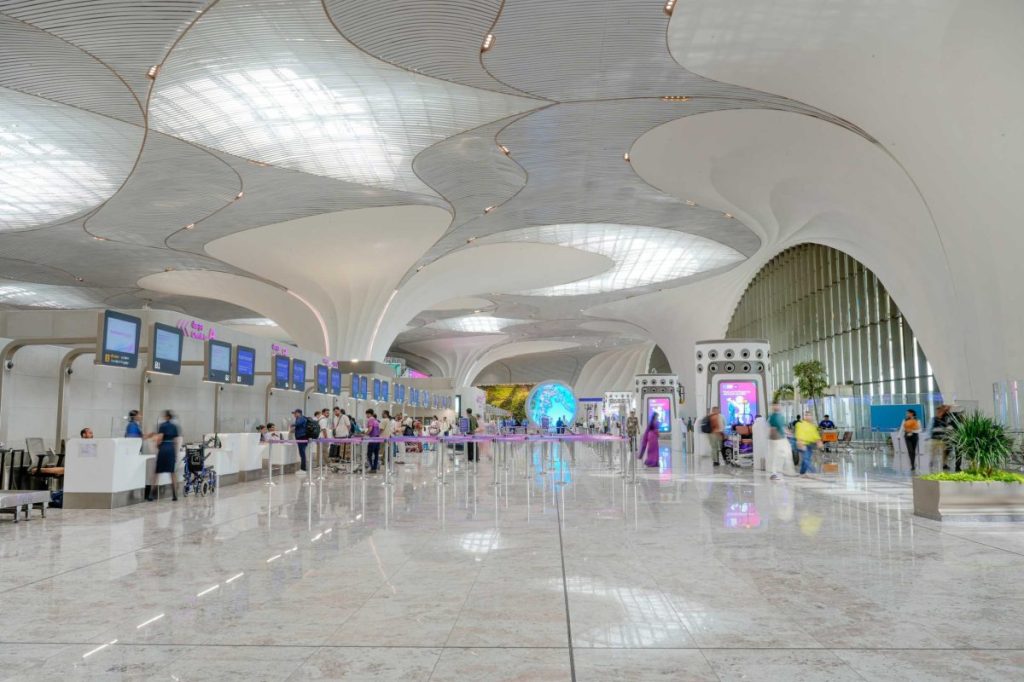
Navi Mumbai claims its new airport has capacity, infrastructure, a transit hotel, and a road network. Its stated requirement now is international passengers. Incentives for international flights at Navi Mumbai Airport aim to attract users to the new facility. Nevertheless, the existing Mumbai airport remains central to operations. Reports detail flight disruptions at Mumbai airport, alongside a specific incident where two Air India planes came face-to-face on a runway, indicating the operational pressures on the older infrastructure.
This delay, Skift notes, does not signify a reversal of the core plan. The ministry's intention to redirect air traffic persists. The real issue resides in the method of this transition and what it implies about the design philosophy behind large-scale infrastructure projects. When a new airport, constructed with significant investment, depends on regulatory intervention and financial inducements just to draw its intended users, it suggests an initial miscalculation in its integration within the existing urban and aviation ecosystem. The Hindu, on October 3, 2026, reported a conflict between the Mumbai airport and airlines regarding this shift, indicating resistance from crucial stakeholders.
This tension arises between a vision of expanded capacity and the practical reluctance of a user base to relocate. For aviation architecture, a new airport's effectiveness is not solely about runways and terminals but its seamless incorporation into the daily flow of passengers and cargo. If the new facility is perceived as an inconvenient alternative, rather than an essential improvement, its functional design—regardless of its modernity—is compromised. This dynamic is particularly pertinent in densely populated regions like Thailand, where new infrastructure must carefully balance decentralization with connectivity and convenience.
The Airport and the City
The Mumbai situation reflects a broader regional challenge: new developments often struggle for immediate adoption, despite their theoretical advantages. The central question for planners and architects across the Asia-Pacific becomes how to design for the future without severing the organic connections that sustain existing hubs. What does an entire airport complex fail to do if it cannot naturally attract its primary users? It fails to organically integrate with the urban fabric it purports to serve, instead demanding that the fabric adjust to it.
This reliance on a directed transition, rather than one driven by market forces, raises concerns about the long-term viability and operational efficiency of large infrastructure investments. Airlines face significant financial pressures, including from jet fuel costs, making them sensitive to any operational friction. An airport’s success depends on its ability to offer clear advantages in convenience, cost, or operational smoothness, not solely on its structural capacity. The unresolved constraint remains the disparity between an architectural vision of capacity and the complex human and economic ecosystem it must serve without overt compulsion. The airport's struggle is a physical manifestation of a policy decision, awaiting its practical validation. Its design demands a re-evaluation of its relationship with its intended city and the wider aviation network.
Sources
Newsletter
Pacific Daily
A curated briefing from Thailand, Asia-Pacific and the world.