Mechanical Novelty Cannot Conceal the Practical Redundancy of the Luxury Travel Watch
The horological industry continues to market complex dual-time complications to cross-border travellers who already rely on digital screens.
SINGAPORE
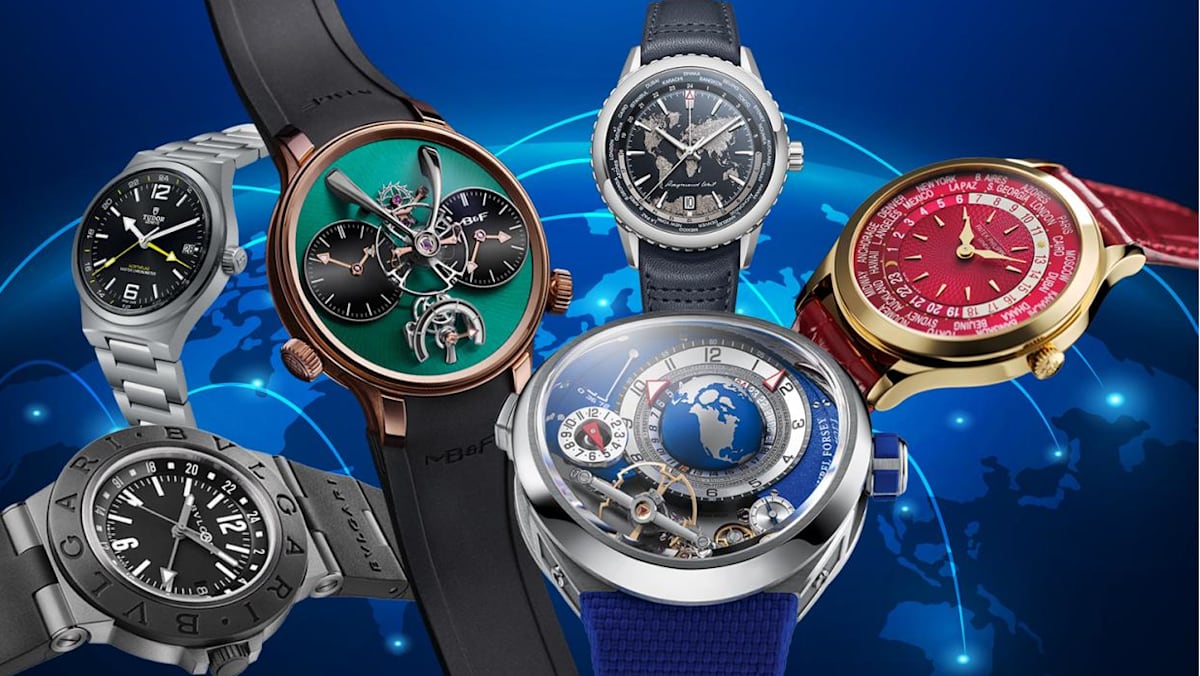
Mechanical watchmaking relies on the preservation of obsolete functions re-engineered as symbols of discernment. Channel News Asia, reporting through Aaron De Silva in November 2026, catalogued nine recent travel timepieces featuring rotating globes, playful dials, and dual-time configurations. The stated commercial proposition remains unchanged across product cycles. Mechanical ingenuity, manufacturers insist, delivers practical utility for individuals who cross time zones frequently.
That argument dissolves under basic functional scrutiny. Modern aviation and global commerce operate on coordinated digital networks where smartphones and connected terminals adjust instantly to local radio signals. A physical movement with an additional hour hand or a miniature rotating terrestrial sphere offers no operational superiority over standard consumer electronics. What it offers instead is an aesthetic performance of mobility. Buyers are invited to purchase an analogue simulation of geographical scale, converting the administrative friction of international flight into kinetic theatre.
The Commercial Mechanics of Manufactured Utility
Luxury watch brands understand that pure decorative jewellery faces distinct marketing limits among corporate and frequent-flyer demographics. Attaching a travel complication, such as a GMT display or a multi-zone world-time mechanism, provides rational cover for discretionary spending. The customer does not purchase an ornament; the customer purchases an instrument. Visual elements like colourful bezels and sculptural globes serve to differentiate standard product lines, creating segmented novelty without altering the underlying industrial economics.
Yet the utility remains entirely decorative. Setting a mechanical world timer requires manual intervention, deliberate crown operation, and an awareness of regional daylight variations that mechanical gear trains struggle to automate without immense technical fragility. The traveller juggling airport protocols gains nothing in efficiency by monitoring a physical subdial. The real product being sold is the psychological reassurance of tactile control in an era of automated, disembodied transit.
Scarcity, Novelty, and the Limits of Mechanical Appeal
There is, nevertheless, a durable commercial logic supporting this segment across the Asia-Pacific market. High-net-worth professionals in regional transit hubs maintain an appetite for physical craft precisely because modern executive life is homogenised by identical interfaces. Mechanical gears, escapements, and painted dials provide a tangible link to physical manufacturing that software cannot replicate. To dismiss these watches solely as redundant tools is to misunderstand why collectors allocate capital toward mechanical horology in the first place.
Even so, the tension between marketed utility and actual practice remains irreconcilable. When brand catalogues highlight colourful complications and rotating globes as functional gear for people who live on aeroplanes, they are circulating a polite fiction. The modern traveller uses digital infrastructure to navigate time, leaving the mechanical complication on the wrist as an expensive exercise in nostalgic engineering.
Sources
Newsletter
Pacific Daily
A curated briefing from Thailand, Asia-Pacific and the world.