Why Emeralds Are Winning Over Asia's New Luxury Buyers
In Kuala Lumpur, Singapore and Bangkok, coloured gems are challenging the diamond's monopoly on meaning, and provenance is the deciding factor.
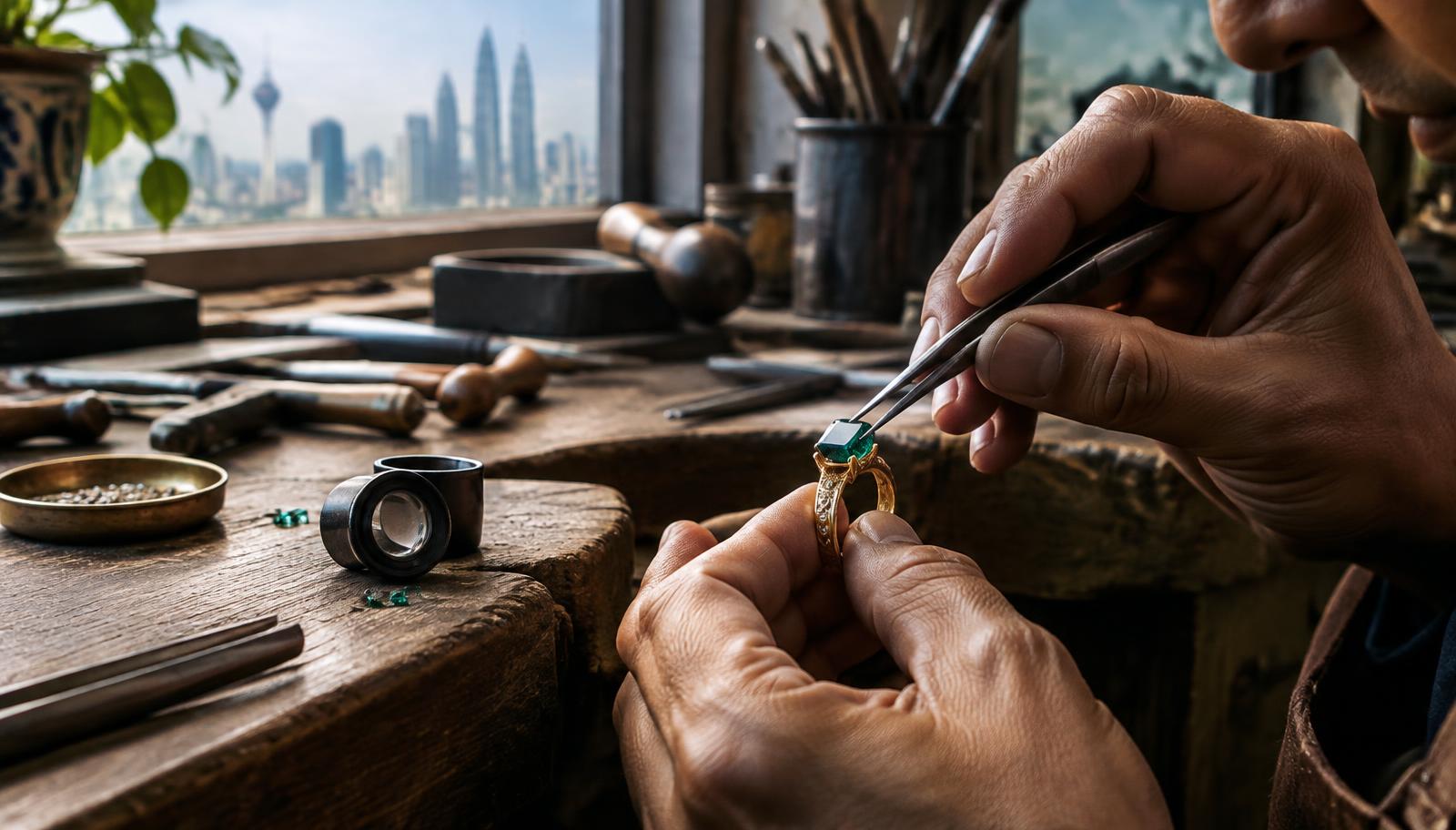
KUALA LUMPUR — In a small workshop above a jewellery street in Kuala Lumpur, a setter leans over a ring with a loupe, easing a rectangular green stone into four gold claws. The stone is an emerald, and it represents a shift that jewellers across Southeast Asia have noticed: younger luxury buyers are increasingly choosing colour over the classic white diamond.
The reasons are partly aesthetic. Emeralds, with their deep green and visible inclusions that gemmologists poetically call the jardin, feel individual in a way that a near-flawless diamond does not. Social media has rewarded distinctive pieces, and celebrities across Asia have worn coloured gems on red carpets and at weddings, helping to normalise them as heirloom choices.
There is also a cultural thread. Green carries positive associations in many Asian traditions, linked to growth, prosperity and protection. In Malaysia, emerald jewellery has long featured in Malay, Chinese and Indian family collections. In Thailand, Bangkok's Chanthaburi-linked gem trade has made the country one of the world's great centres for cutting and dealing coloured stones.
The provenance question
For serious buyers, the critical issue is where a stone comes from and how it was treated. Most emeralds are mined in Colombia, Zambia and Brazil, and nearly all are treated with oils or resins to improve clarity. That is accepted practice, but it must be disclosed. Laboratories such as the Gemological Institute of America grade origin and treatment, and many high-end buyers now insist on a report before purchase.
Ethical sourcing has moved from niche concern to mainstream expectation. Industry bodies such as the Responsible Jewellery Council have developed standards for mining, labour and supply chains, and some miners offer traceability from mine to finished piece. In a market where synthetic and laboratory-grown stones are increasingly convincing, documentation has become part of the value.
A different kind of investment
Jewellers caution against treating gems purely as financial assets. Prices for fine emeralds have risen for top-quality, lightly treated stones, but the market is opaque, and resale can be difficult without trusted dealers. The safer motivation, they argue, is the old one: buy what you love, from someone you trust, with papers that tell its story.
For regional craftsmen, the coloured-gem revival is good news. Setting an emerald requires care because the stone can fracture under pressure, and skilled setters are valued. Workshops in Kuala Lumpur, Bangkok and Singapore have found new clients among buyers who want bespoke designs rather than mass-produced pieces from global houses.
The diamond is not going anywhere. But on Asia's jewellery streets, green is having a moment, and it is being driven by buyers who want beauty, meaning and a clear chain of custody in the same small stone.
Sources
Newsletter
Pacific Daily
A curated briefing from Thailand, Asia-Pacific and the world.