The Capital Preservation Logic of Asia's Low-Mileage Enthusiast Market
Private vehicle retention increasingly reflects wealth preservation rather than mechanical utility across Asian financial hubs.
SINGAPORE
Automotive depreciation typically accelerates the moment a combustion vehicle leaves a showroom floor. Across regional wealth centres, however, an older class of performance engineering operates under fundamentally altered financial mechanics. The ownership patterns surrounding rare performance vehicles demonstrate that personal mobility is no longer the primary utility driving specialized secondary automotive acquisitions in urban Asia.
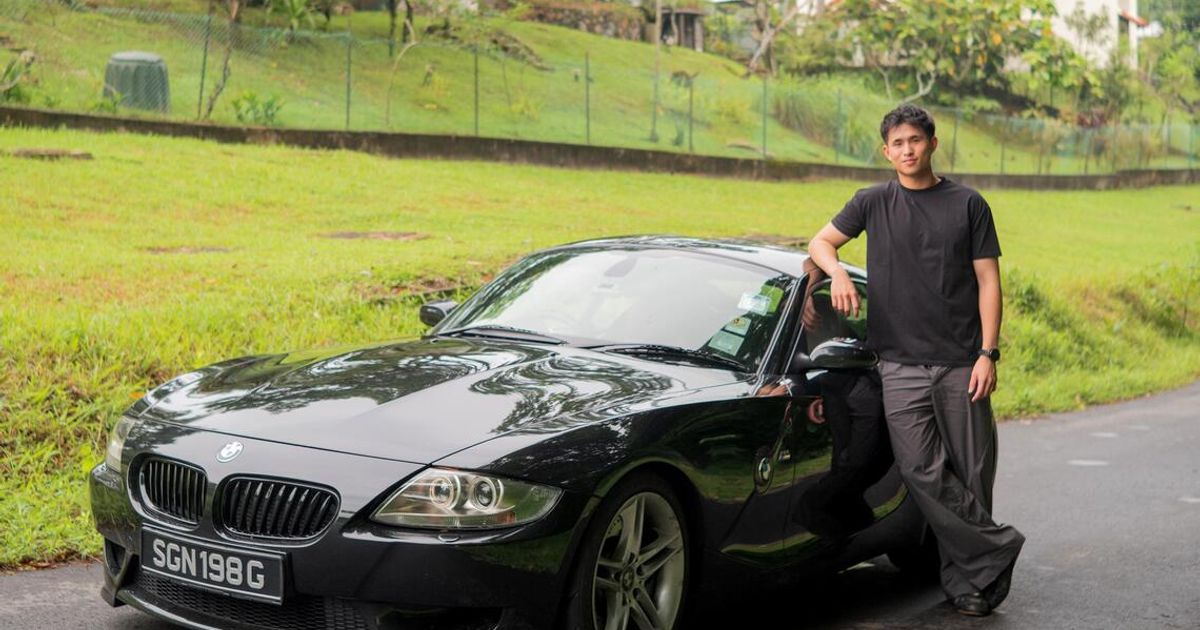
According to reporting by The Straits Times Life, Charles Foo, a 25-year-old financial consultant specialising in wealth management and high-net-worth preservation, maintains a BMW Z4 M Coupe that has logged just 34,000km. The compact two-seater, originally owned by Foo's uncle, shares its naturally aspirated powertrain with the BMW M3. Crucially, Foo also operates an enterprise trading luxury horology, illustrating how tangible asset disciplines crossover into mechanical storage.
Capital allocation through mechanical scarcity
Preservation on this scale functions as an exercise in balance-sheet management rather than transport. Singapore’s punitive certificate framework normally compels drivers to exhaust daily road utility before statutory expiration forces vehicle deregistration. Yet when manual sports platforms manufactured between 2006 and 2008 enter private collections with minimal odometer readings, economic analysis suggests their primary utility shifts decisively toward capital retention. The vehicle is maintained in static storage precisely to insulate secondary asset valuations against mechanical wear.
Physical machinery functions less as transit and more as balance-sheet protection.
Skeptics reasonably argue that performance vehicles constitute inefficient stores of value given unavoidable fluid degradation, technical upkeep and limited transactional liquidity. Unlike passive equities, maintaining a specialized 34,000km powertrain demands recurring technical expenditure alongside specialist mechanical stewardship. Furthermore, transactional depth remains narrow, dependent entirely on an insular circle of private collectors willing to underwrite illiquid physical engineering.
Divergent regional pressures
Yet this friction explains why such assets cluster within wealth advisory circles. For family offices managing estate transitions, mechanical pedigree provides defensive tangible insulation that mass-market vehicles cannot offer. Regulatory environments across Asia process this preservation instinct through contrasting fiscal filters. While Singapore imposes steep recurring costs on idle displacement, financial centres like Tokyo permit low-friction dry storage, and markets such as Hong Kong or Bangkok treat imported original inventory as protective signaling reserves against currency fluctuations.
The structural tension between urban decarbonisation mandates and combustion preservation remains fundamentally unresolved. As municipal regulators across the Asia-Pacific territory tighten road access and subsidise electric platforms, pre-2008 performance machinery will encounter strictly bounded operational parameters. Whether escalating regulatory friction will strand these high-emission powertrains entirely, or instead compound their scarcity premium among generational family estates, remains the critical unresolved question for regional collectors.
Sources
Newsletter
Pacific Daily
A curated briefing from Thailand, Asia-Pacific and the world.