Interceptions Over Riyadh Mask a Maritime Deterrence Deficit
Defensive surface-to-air batteries can protect urban airspace, but diplomatic censure cannot insulate Red Sea sea lanes and energy infrastructure from attritional pressure.
SINGAPORE
Defensive air operations over Riyadh confirm that interception capabilities remain intact, but tactical success in sovereign skies does not constitute strategic containment. Statements from the Saudi-led coalition announcing the destruction of incoming missiles and drones across central population centers demonstrate technical readiness. Yet repeated incursions against civil airports and the Aramco complex expose an enduring asymmetry. Intercepting airborne ordnance at terminal range is an operational reaction, not an elimination of offensive capacity.
International bodies have predictably responded with diplomatic reprimand. The UN Security Council condemned in the strongest terms continued and escalatory Houthi attacks against the Kingdom of Saudi Arabia, directing parallel criticism toward simultaneous assaults on commercial shipping in the Red Sea. Such statements reiterate legal norms regarding freedom of navigation and state sovereignty. They do little, however, to modify the ground reality when non-state actors possess sustained arsenals capable of challenging regional infrastructure.
Escalation Beyond the Capital
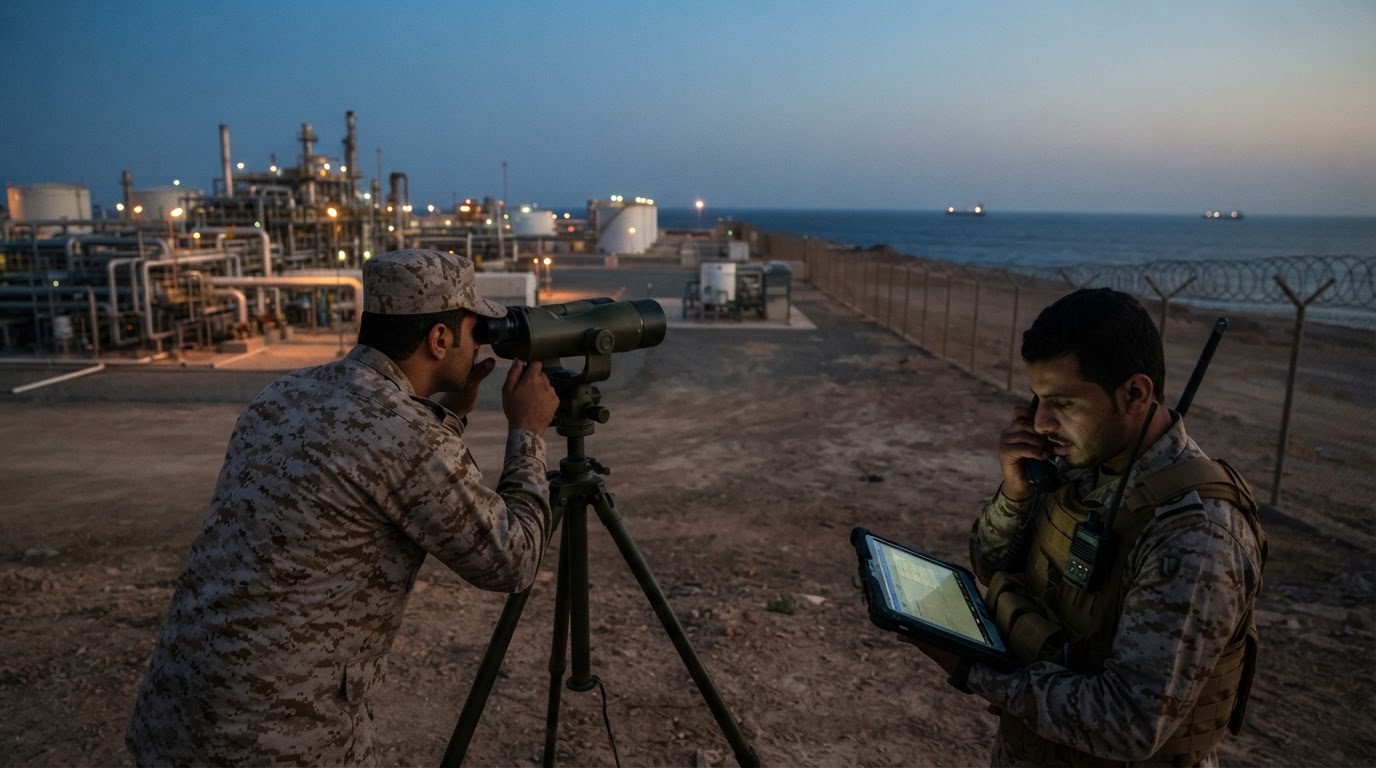
Recent confrontations illustrate how the theater of friction has expanded beyond military contact lines. Strikes directed at regional airports earlier in the week prompted a Saudi minister to promise a serious response. Shortly thereafter, weapon impacts near an Aramco facility underscored that energy networks remain primary targets alongside urban centers. Retaliatory exchanges between the Saudi coalition and Houthi forces have become cyclical, with each defensive interception answering an offensive salvo without degrading the logistical pipeline that feeds it.
The UN Security Council condemned in the strongest terms continued and escalatory Houthi attacks against the Kingdom of Saudi Arabia and criticised attacks on commercial shipping in the Red Sea.
Coalition forces have demonstrated reliable sensor coverage and interceptor deployment around Riyadh. Nevertheless, surface-to-air missile inventories face an inherent economic imbalance against mass-produced aerial systems. Sustaining interception shields over expansive geographical zones requires immense fiscal resources and leaves little margin for saturation tactics. When adversary weapons penetrate perimeter defenses to strike oil infrastructure, the deterrent effect of previous successful interceptions is functionally diminished.
The Chokepoint Dilemma
For the wider Asia-Pacific, the significance of this confrontation extends far beyond the perimeter of Gulf population centers. The dual vector of Houthi strikes—targeting both inland hubs such as Riyadh and international shipping across the Red Sea—directly intersects with Asian commercial supply lines. Maritime vessels carrying cargo and hydrocarbons through these corridors underpin major Asian economies, including China, which depend on uninterrupted passage through western maritime choke points.
Diplomatic resolutions passed in distant chambers offer minimal operational comfort to commercial fleet operators navigating these narrow corridors. When regional shipping lanes become operational target zones, transit risk premiums surge and logistical timetables unravel. Shifting cargo movements around southern maritime routes imposes severe friction on global trade, redistributing the economic penalties of Gulf instability directly onto Asian receiving ports.
Military responses and international statements treat aerial defense and maritime security as manageable crises of enforcement. This assumption misinterprets the nature of modern attritional warfare. Interception systems can protect political headquarters and commercial hubs from individual barrages, yet defensive hardware cannot enforce permanent transit security across international waterways without a decisive political settlement. The unresolved constraint remains structural: until the sources of sustained missile and drone dissemination are neutralized, regional stability across the Red Sea corridor remains hostage to an attritional contest that defensive batteries alone cannot resolve.
Sources
Newsletter
Pacific Daily
A curated briefing from Thailand, Asia-Pacific and the world.