Historic Culinary Threads Shape Bakery Margins in Asia
The potential historical link between European and East Asian baked goods invites an economic and cultural re-evaluation, particularly for the Thai market.
SINGAPORE
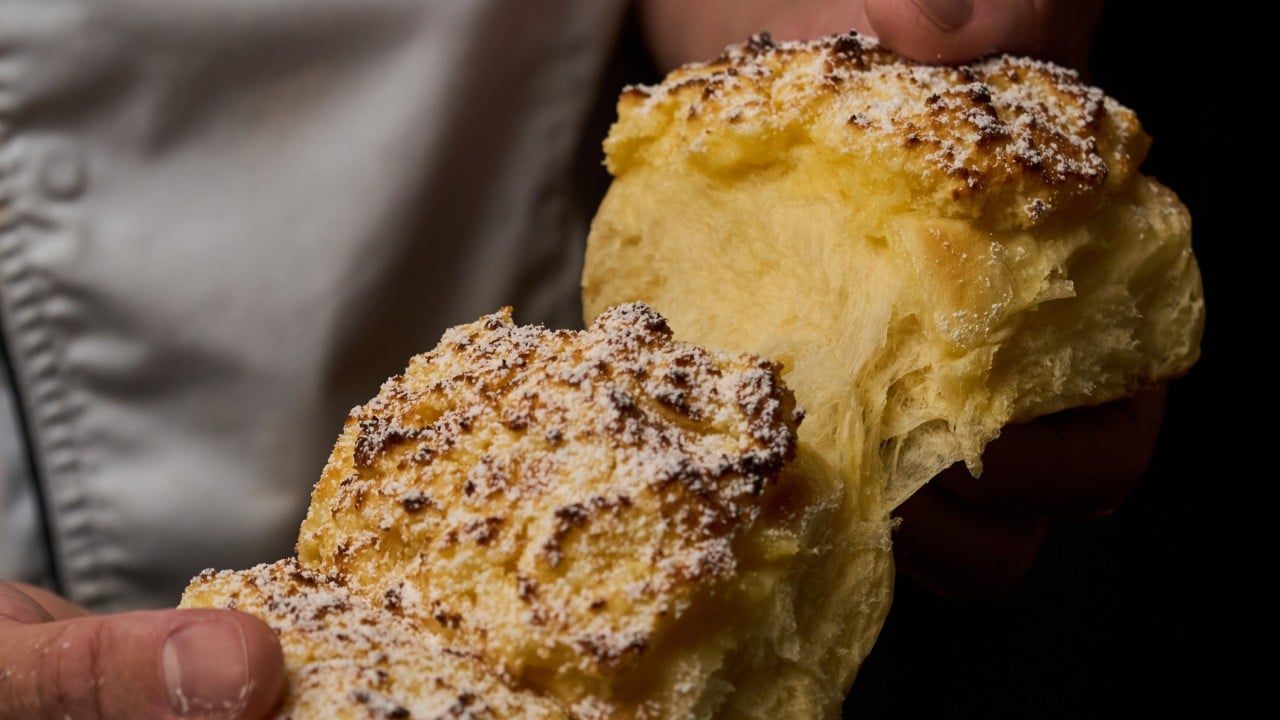
A baker's observation regarding a common treat suggests a re-examination of culinary history and its commercial implications across Asia. Francisco Oliveira, founder of Santa Nata, noted a resemblance between Hong Kong's pineapple bun and Portugal’s pao de deus. This comparison, made by Oliveira who states he has eaten pao de deus since childhood, suggests a historical connection that moves beyond casual similarity, pointing to a potential shared origin for these distinct products.
The pao de deus, translated as “bread of God,” is a brioche slathered with sugar and coconut. The pineapple bun holds a prominent place in Hong Kong's bakeries. Portuguese merchants brought breadmaking to Asia centuries ago, potentially influencing local baked goods like the pineapple bun and sha yung egg puffs. This historical exchange impacts more than cultural narratives; it implies a deeper economic interaction, one that warrants closer inspection regarding ingredient provenance and technique adaptation.
From a culinary critic's perspective, the immediate question is not solely one of origin, but of the surviving margin along the supply chain. If these foundational recipes indeed stem from a shared root, then the evolution of their ingredients and production methods in disparate markets becomes a critical point of analysis. The pao de deus recipe calls for specific flours, sugars, and fats. The pineapple bun requires its own precise components. The divergence in these supply chains over centuries could indicate distinct economic adaptations in their respective regions, affecting the cost structures of these products.
Consider Thailand. While pineapple buns are not indigenous, a vibrant bakery sector exists, with an established consumer base for European-inspired pastries and local adaptations. The potential for a re-evaluation of historical ties could influence marketing and product development. If a direct lineage to Portuguese baking can be established for some Asian baked goods, it offers a narrative. This narrative could drive new consumer interest or justify premium pricing for products that highlight this heritage. Such an argument would need support from demonstrable differences in ingredient quality or technique, rather than relying solely on a story.
Conversely, the mere assertion of a historical link does not guarantee commercial success or a shift in consumer preference. The pineapple bun's popularity in Hong Kong, for example, rests on its local cultural integration and specific taste profile. This profile may only superficially resemble its supposed ancestor. The economic value is tied to its current market positioning, not solely its historical provenance. Any claims of shared heritage would need translation into tangible consumer benefits or a distinct market offering to capture additional value.
The question for regional players, including those in Southeast Asia, becomes whether this potential historical link presents an opportunity to re-evaluate ingredient sourcing, technique preservation, or even new product lines. Manuela V. Ferro, Vice President for East Asia and Pacific at The World Bank, has addressed economic shifts in the region. This culinary observation could, on a smaller scale, reflect micro-economic changes and opportunities in local food industries. The expansion of brands like Santa Nata, incorporating pao de deus alongside pastel de nata in London, demonstrates that an identified heritage can become a commercial asset when positioned correctly. The financial mechanics, however, require more than just narrative.
Detailed historical financial data on ingredient costs and production efficiency across centuries is unavailable, limiting a precise quantitative analysis of the margin. While the cultural narrative is compelling, the financial implications for contemporary bakeries in Thailand or the wider Asia-Pacific region remain largely qualitative. The true test of this observation lies in its capacity to translate into verifiable changes in market dynamics or consumer behavior beyond anecdotal recognition of a historical connection. The practical constraint remains understanding how to turn historical culinary identity into sustained economic advantage.
Sources
Newsletter
Pacific Daily
A curated briefing from Thailand, Asia-Pacific and the world.