Fotografiska Chooses Shenzhen Concrete Over Hong Kong Space
A Swedish museum expansion exposes the shifting structural realities of cultural infrastructure across southern China
HONG KONG
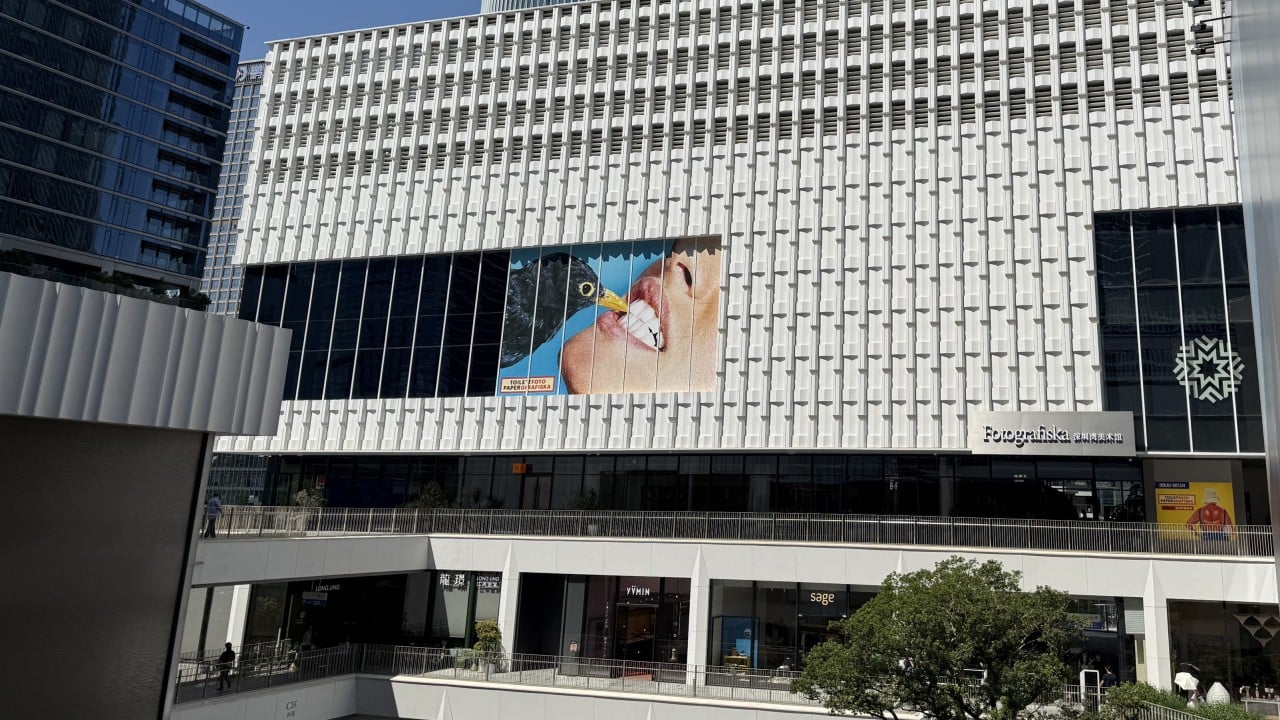
Private cultural capital demands architectural scale, yet the cities best equipped to fund contemporary art rarely possess the physical footprint to house it comfortably. Stockholm provided Swedish photography museum Fotografiska with an early template in its former customs building on the Stadsgardshamnen waterfront. Shanghai followed in 2023 by repurposing the Guang San Warehouse. Now, in October 2026, the institution has opened its newest Chinese outpost in Shenzhen, presenting a crisp white rectangular facade against a skyline defined by sleek high-rises and futuristic cultural venues.
Behind this choice sits a quiet commercial reality that cultural directors frequently hesitate to state plainly. Hong Kong once positioned itself as the mandatory conduit for international cultural institutions seeking an audience in southern China. Today, the arithmetic governing gallery footprints tells an entirely different story. Establishing an equivalent visual arts footprint in Hong Kong would be impossible under prevailing commercial property realities and structural spatial constraints. Shenzhen, conversely, supplies both purpose-built spatial volume and an administrative apparatus eager to absorb imported institutional brands into its urban fabric.
Shifting Cultural Footprints
Fotografiska did not arrive in Shenzhen by accident. Modern exhibition institutions require expansive, uninterrupted floor plans to display photographic collections alongside commercial hospitality operations. Stockholm offered maritime industrial bones at Stadsgardshamnen, and Shanghai provided historical industrial volume within the Guang San Warehouse. Shenzhen presents an entirely contemporary alternative: clean structural lines, modern urban integration, and physical scale that older metropolitan districts cannot easily replicate.
Critics of Shenzhen’s cultural rapid expansion frequently argue that newly constructed venues lack organic community ties. Skeptics point out that erecting white rectangular facades amid technological corridors does not guarantee an engaged visual arts audience. That counterargument holds weight. A photography museum transplanted from Sweden into a newly constructed commercial ecosystem faces the persistent challenge of cultivating enduring local interest rather than transient foot traffic. The institution must prove that contemporary photography resonates beyond corporate sponsorship and decorative prestige.
Yet dismissing Shenzhen’s institutional pull misses the practical calculation modern arts operators must make. High land valuations and acute spatial shortages across Hong Kong render substantial mid-tier museum developments prohibitively expensive. When an institution requires substantial square footage for gallery halls, dining spaces, and book shops, regional density ceases to be an asset. Shenzhen offers immediate urban integration where older commercial centres impose prohibitive financial friction.
The Commercial Geography of Display
This geographic pivot also signals an evolving role for mainland urban planning. Rather than relying on Hong Kong to broker international cultural prestige, Shenzhen now constructs, approves, and opens major foreign cultural venues on its own terms. The technological metropolis is no longer merely an industrial partner across the boundary; it operates as an autonomous destination capable of drawing European contemporary cultural brands directly into its modern core.
Institutions such as Fotografiska operate as hybrid commercial enterprises that depend heavily on physical space to generate auxiliary revenue. Without sufficient square footage for public events and retail, the economic model falters. The decision to bypass Hong Kong in favour of Shenzhen in October 2026 highlights how architectural availability and real-estate pragmatism now override historical prestige.
Whether Shenzhen’s sleek high-rises and planned venues can foster the historical depth found in Stockholm or Shanghai remains an open question. What remains clear is that contemporary institutions will follow structural feasibility over regional sentiment. Cultural power in southern China no longer settles where tradition expects it, but where space actively permits it to function.
Sources
Newsletter
Pacific Daily
A curated briefing from Thailand, Asia-Pacific and the world.