Distinguishing Delicacy: The Commercial Calculus of Disgust
Hong Kong's 'Disgusting Food Museum' offers a lens on regional culinary economies, where perceived value is often a function of market distance, not inherent quality.
SINGAPORE
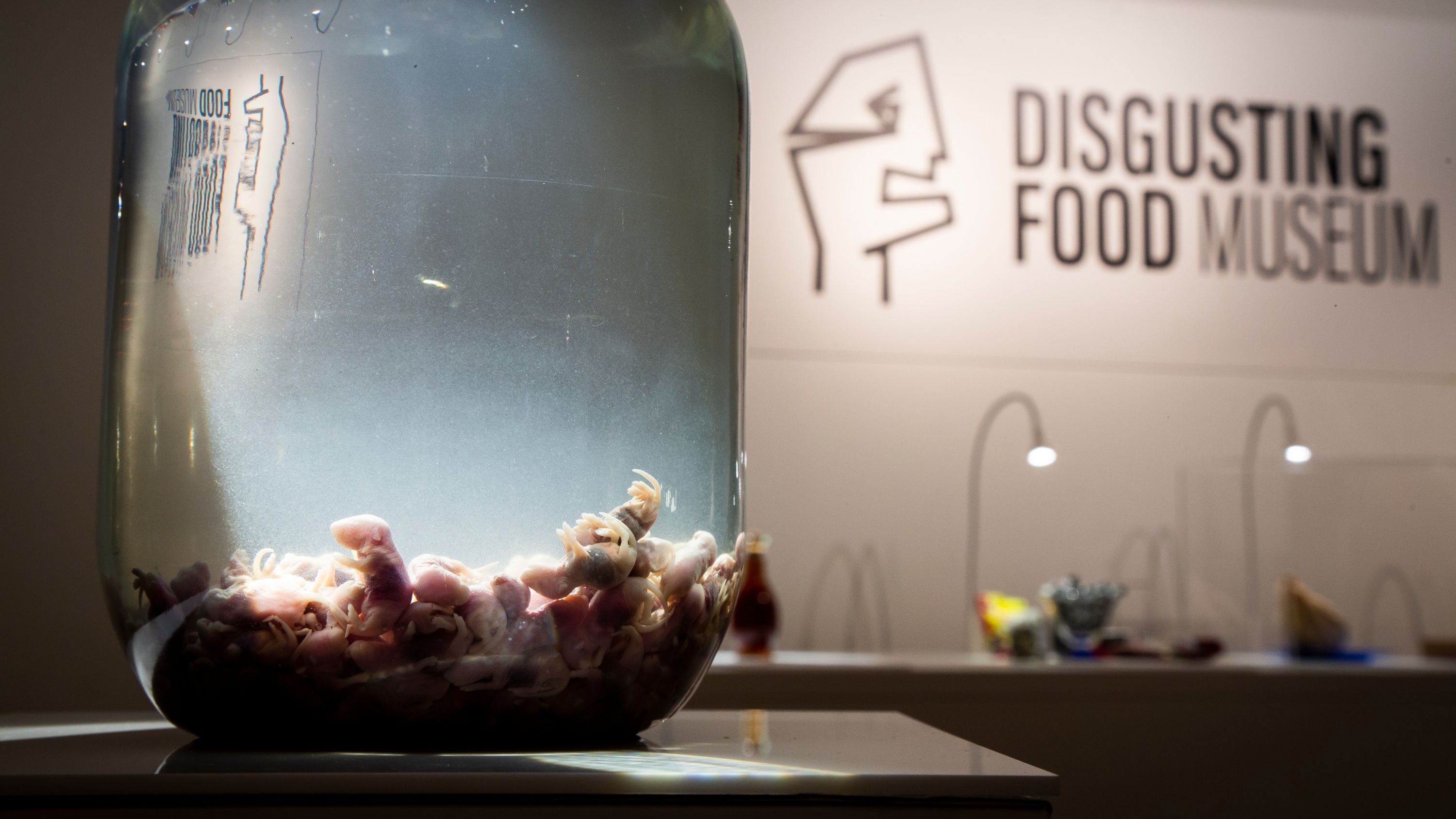
The announcement that Hong Kong will host the 'Disgusting Food Museum' on 2026-09-21 brings into focus a tension inherent in globalized food systems. This exhibition, featuring what it describes as 80 'gross foods' from 'all over the world,' operates on a premise of perceived repulsion. However, a culinary critic must consider the practicalities: who cultivates these ingredients, and what economic return is realized when they are recontextualized as a spectacle?
The museum’s arrival in a regional hub like Hong Kong is significant. It positions certain foodstuffs, many of which are staples in their locales, as objects of curiosity or even revulsion for an international audience. For instance, durian, a fruit common across Southeast Asia, often features in such displays. Its pungent aroma, a mark of ripeness and quality for many, becomes a point of 'disgust' for those unaccustomed. This rebranding, though perhaps unintended, transforms everyday commodities into cultural artifacts, allowing them to command a different kind of economic value, albeit not directly benefiting the primary producers.
Consider the implications for producers in countries like Thailand. The durian, often cultivated by smallholders, generates significant income. The 'Disgusting Food Museum' might, by its very nature, reinforce an external perspective that devalues indigenous culinary practices while simultaneously drawing attention to them. The question remains whether this attention translates into tangible benefits for the agricultural base. Is it an avenue for new markets, or merely a confirmation of a cultural divide that impacts trade? The economic margin for those who grow these foods is already often constrained, dictated by commodity prices and international demand for raw, rather than exoticized, products.
One might argue that the museum fosters cultural exchange, broadening perspectives on what constitutes edible and even desirable. The New York Times, in 2018, noted how such displays prompt reflection on 'Disgust vs. Delight.' The Washington Post, in the same year, suggested these exhibits 'make you think about why.' This interpretation posits that the exhibition serves an educational purpose, challenging preconceived notions about taste and food safety, ultimately expanding the palate of consumers. The BBC, also in 2018, framed it as a challenge: 'What's disgusting? What's a delicacy?'
However, this perspective often overlooks the material conditions of food production. While an urban museum visitor may ponder the arbitrary nature of 'disgust,' the Thai farmer cultivating insects for consumption, or the artisan fermenting seafood, does so out of tradition, resourcefulness, and economic necessity. The 'bravery' required to 'sniff them all,' as suggested by the source summary, implies a detachment from the foods' origins. The true challenge is not to overcome personal aversion, but to understand the intricate supply chains and cultural contexts that give these foods their meaning and economic viability. The spectacle of the 'disgusting' may entertain, but it does little to address the fundamental economic realities of those who produce these items, nor does it guarantee a shift in their market standing beyond mere novelty.
Sources
Newsletter
Pacific Daily
A curated briefing from Thailand, Asia-Pacific and the world.