Denials on DMZ Incident Underscore Persistent Korean Peninsula Tensions
North Korea's rejection of responsibility for the recent Demilitarized Zone mine blasts reflects a pattern of denial that complicates regional stability and international accountability.
SINGAPORE
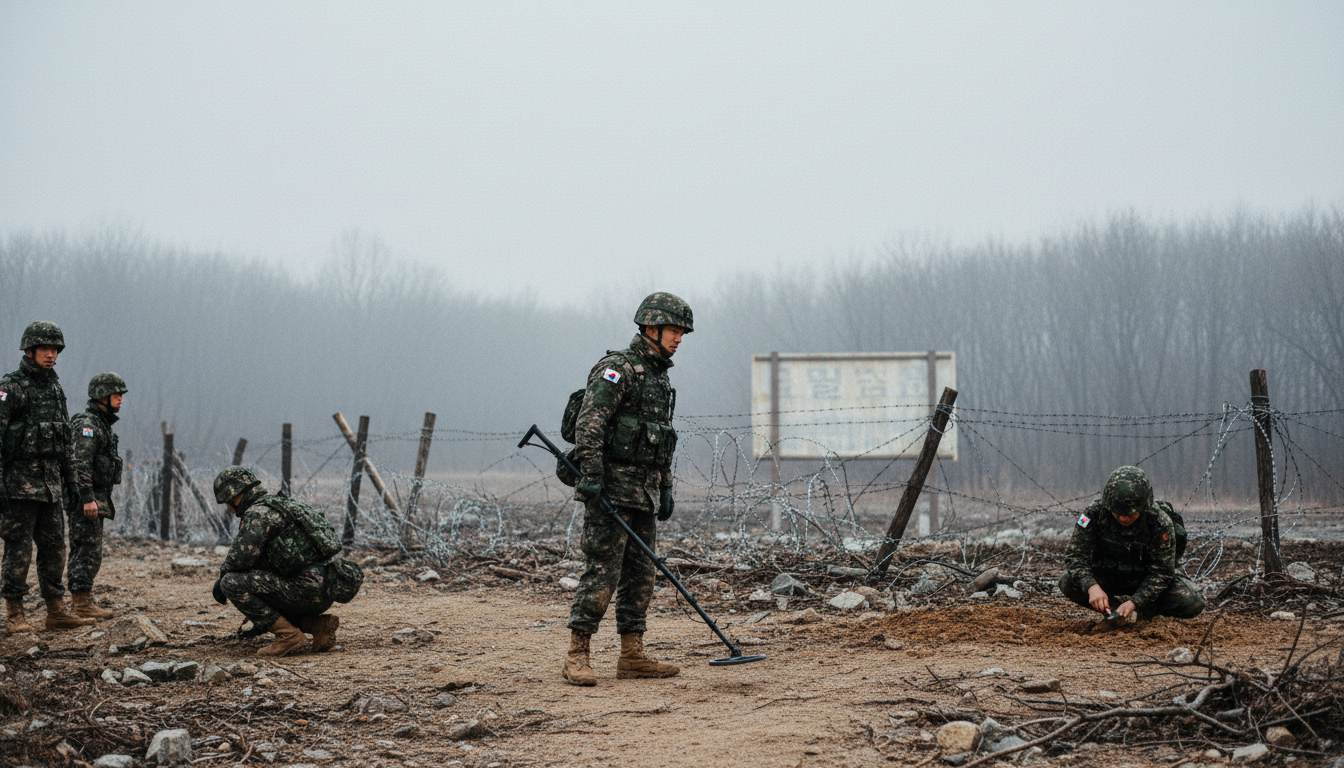
South Korea stated on September 29, 2026, that North Korea was “highly suspected” of orchestrating two explosions within the Demilitarized Zone (DMZ), labeling it “a clear violation” of their armistice agreement. This claim followed an incident that wounded South Korean soldiers. North Korea, through Kim Yo Jong, dismissed Seoul’s investigation findings as a “farce” on September 30, 2026. The United Nations Command simultaneously declared the incident a violation of the Korean War armistice.
This incident is not an isolated event but fits a discernible pattern of North Korean denials concerning actions attributed to it by South Korea or other international bodies. For instance, The Diplomat reported on January 12, 2026, that South Korea denied accusations of launching drones towards North Korea. Prior instances also include North Korea’s denials regarding military actions or border security issues. In August 2025, both the BBC and the South China Morning Post reported Kim Yo Jong denying claims about the removal of propaganda loudspeakers at the border. Similarly, in August 2025, the South China Morning Post noted North Korea denying border loudspeakers were being removed. Another instance from August 2026 saw Kim Yo-jong denying claims of sending additional troops to Russia, as reported by the South China Morning Post.
The repeated rejections of responsibility by North Korea, irrespective of evidence presented, suggest a strategic posture rather than an engagement with facts. This consistent denial mechanism complicates diplomatic efforts and international accountability frameworks. While South Korea provides an attributed claim regarding the mine blasts, North Korea’s counter-claim directly contradicts it, highlighting a fundamental informational disparity that prevents clear resolution or de-escalation based on shared understanding. The absence of a mutually accepted narrative regarding incidents along the DMZ ensures that tensions persist without transparent mechanisms for dispute resolution. The underlying data, from the perspective of external observers, indicates a series of events where one side attributes an action to the other, which is then consistently refuted.
The implications for regional security are significant. The DMZ, despite its name, remains one of the world’s most militarized borders. Incidents like the mine blasts risk escalating into broader confrontations, even if initially localized. The repeated cycle of alleged provocations and subsequent denials erodes trust, making future cooperation or even basic communication more difficult. For Thailand and other Asia-Pacific nations, persistent instability on the Korean Peninsula carries economic and security risks, potentially diverting regional focus and resources away from other pressing issues. While no direct financial data links this specific incident to wider economic impacts, sustained geopolitical risk typically dampens investment and trade flows, even in distant parts of the region. The broader Asia-Pacific region, for instance, saw increased coal-fired power output in March 2026, as reported by the Bangkok Post, indicating a focus on energy security which can be further complicated by geopolitical flashpoints.
The current situation leaves the onus on international bodies, like the United Nations Command, to navigate these conflicting claims. The armistice, intended to maintain peace, is repeatedly challenged by actions and counter-claims, necessitating continuous vigilance. The challenge lies in establishing mechanisms that can move beyond mutual accusations to verifiable facts, a task made difficult by North Korea’s consistent disavowal of attributed actions. Without a shift in this pattern, any future incident along the DMZ will likely follow a similar trajectory of accusation and denial, leaving the underlying constraint of unresolved bilateral mistrust firmly in place.
Sources
Newsletter
Pacific Daily
A curated briefing from Thailand, Asia-Pacific and the world.