Cruising Into Concrete
Royal Caribbean's move into subpolar bricks and mortar reveals the high operational cost of controlling ultra-luxury supply chains.
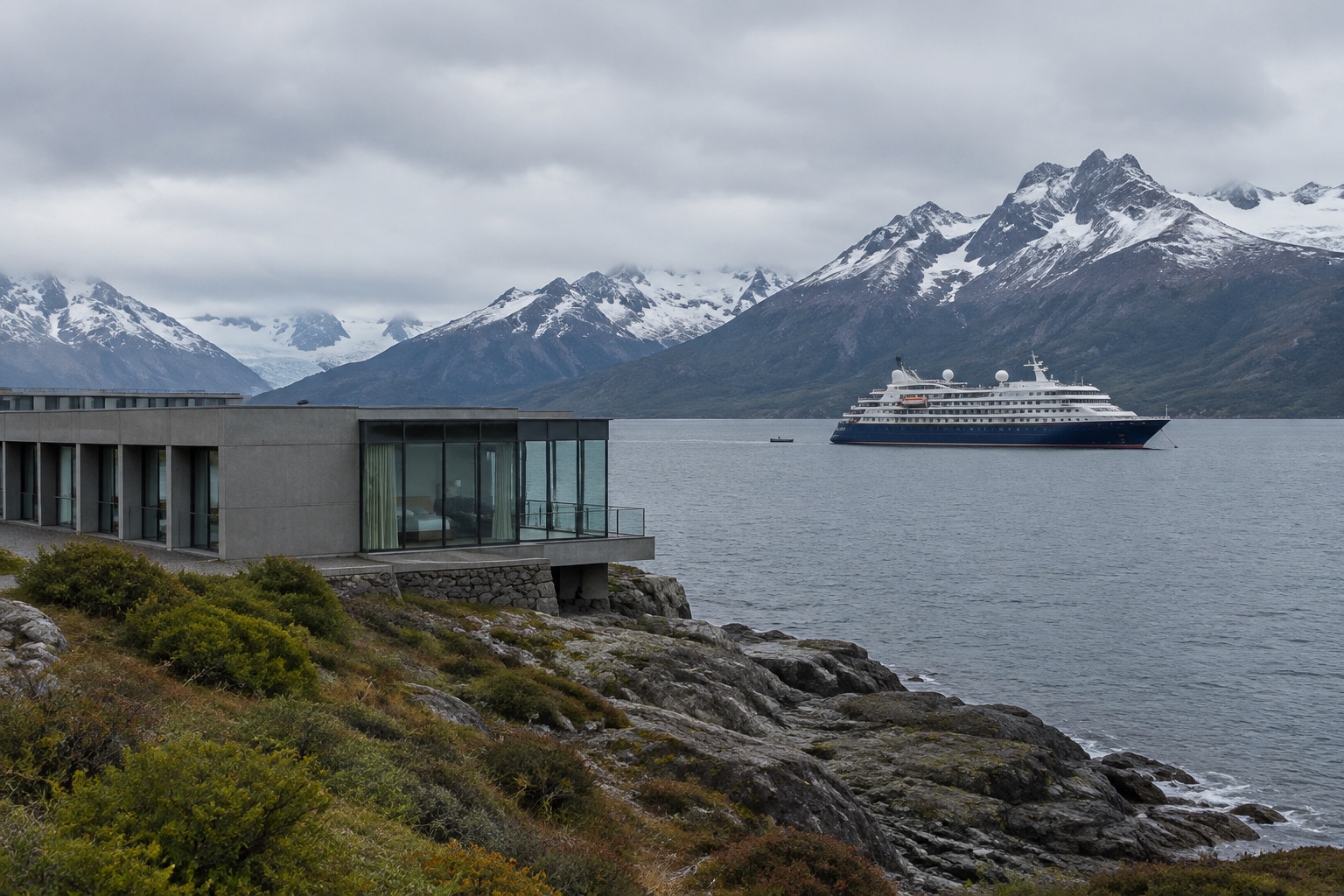
Cruise operators spend decades trying to avoid fixed land assets. Ships move toward seasonal pricing power and escape sovereign zoning laws, whereas buildings remain tethered to municipal tax codes and geographic depreciation. When Silversea and its parent company, Royal Caribbean Group, opened The Cormorant at 55 South in Puerto Williams, Chile, earlier this month, the transaction broke that maritime logic.
The 150-room property stands as the southernmost hotel development globally, constructed to anchor operations for Antarctica itineraries. According to Conrad Combrink, "The hotel is a result of us looking at the guest journey," an explanation that positions the physical property as an operational bridge rather than a standalone yield-generating asset. Passengers on the operator's Antarctica Fly Cruise programme transit through Santiago before transferring to southern Chile, creating an acute operational chokepoint at the edge of the Drake Passage.
The Cost of Bottleneck Protection
Direct hospitality ownership in remote nodes represents a calculated capital expenditure to protect high-margin voyages. Operators running polar expeditions face logistical friction when chartering third-party lodging in small frontier settlements. Room availability is scarce, service standards fluctuate, and transport delays regularly leave expensive vessel cabins sitting idle.
Developing an owned 150-key asset in Puerto Williams internalises those systemic variables. Rather than competing for seasonal blocks with rival expedition outfits, Royal Caribbean Group secures operational autonomy over boarding schedules and pre-departure staging. Premium expedition tickets price out at tens of thousands of dollars per berth, meaning a single stranded flight connection damages customer retention far beyond the carrying cost of a boutique hotel ledger.
Institutional capital typically penalises cruise conglomerates for putting balance-sheet equity into illiquid bricks and mortar. Sinking construction capital into subantarctic real estate carries elevated development premiums, specialised logistics, and short active building windows. The underlying financial calculus assumes that the hotel does not need to maximise independent occupancy rates during off-peak cycles if it fully insulates the pricing integrity of the marine fleet.
Vertical Integration at the Frontier
There is, however, an inherent financial vulnerability in using fixed property to backstop mobile leisure assets. Expedition cruising demand is vulnerable to broader consumer contractions, currency swings, and fuel volatility. If outbound ultra-luxury bookings soften, floating tonnage can be repositioned across the Pacific Rim or diverted to tropical itineraries within weeks.
A physical 150-room development at latitude 55 south cannot migrate to find secondary revenue. It remains exposed to local staffing overheads, maintenance regimes in extreme maritime climates, and persistent sovereign oversight in Chile. Vertical integration solves service fragmentation during record-setting demand cycles, yet it converts variable operating costs directly into permanent balance-sheet liabilities.
Marine hospitality groups have historically flourished by leaving terrestrial property risk to local hoteliers and municipal authorities. Royal Caribbean Group has reversed that rule to engineer an end-to-end luxury transit corridor. The success of this capital allocation will not be measured by conventional hotel RevPAR figures, but by whether complete logistical control can reliably defend expedition voyage margins against volatile frontier operating environments.
Sources
Newsletter
Pacific Daily
A curated briefing from Thailand, Asia-Pacific and the world.