Asia Pacific Hotel Acquisitions Accelerate Past Asset Price Anxiety
Transaction velocity reaching a seven-year peak indicates capital is prioritizing operational yields over balance-sheet security amid falling values.
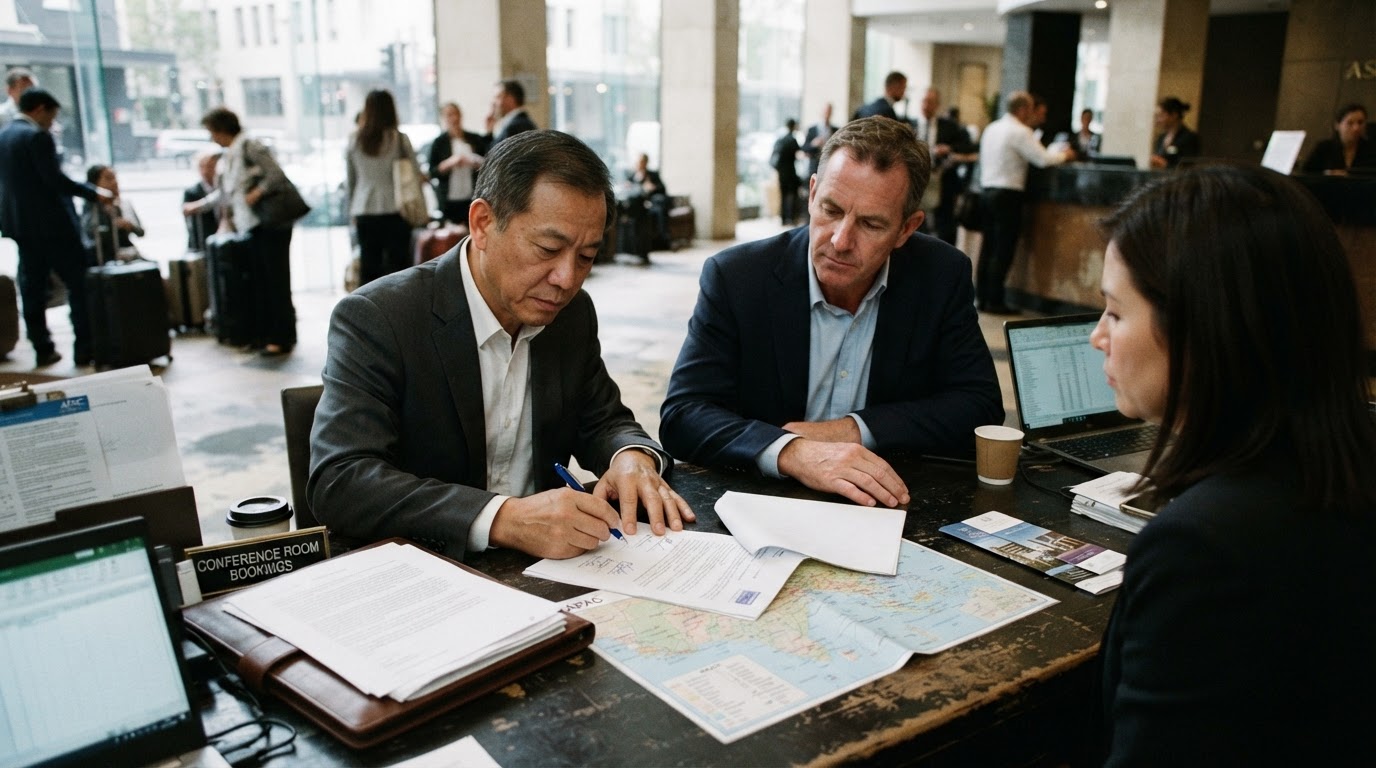
Asia Pacific hotel transaction activity has reached a seven-year high. That benchmark, reported by Stacked Homes, arrives alongside persistent market fears of falling values across regional hospitality real estate. When investment volume climbs while underlying capital valuations face structural pressure, transactional motives diverge sharply from traditional property acquisition models.
Institutional investors rarely accelerate deal execution during valuation downturns unless the pricing mechanism itself creates an urgent opening. In standard commercial property cycles, dropping appraisal figures freeze transaction pipelines. Sellers resist booking realized losses, and lenders tighten underwriting terms. In this instance, transaction volume has decoupled from valuation confidence. The current acceleration reflects a clear pivot: institutional balance sheets are moving capital into operating assets where immediate cash generation offsets paper depreciation.
Capital Allocation Under Asset Uncertainty
Acquiring hospitality property during a phase of falling values exposes buyers to acute balance-sheet compression. If secondary market pricing deteriorates further, newly acquired properties risk debt covenants and trigger equity write-downs. Such risks typically suppress bidding pools.
Yet capital allocators are accepting that precise vulnerability. The counterargument to aggressive deployment rests on conventional risk aversion: conservative managers preserve liquidity until asset values find an absolute floor. Waiting for price discovery, however, carries its own opportunity cost in an environment where cash yields from hospitality assets outperform passive real estate holdings. Buyers entering the market at a seven-year volume peak are clearly discounting future capital appreciation. Their investment thesis depends almost entirely on gross operating revenues absorbing adverse valuation adjustments.
Sellers, conversely, face a distinct operational calculus. Owners managing legacy hospitality assets under heavy financing burdens recognize that liquidity windows can close abruptly. Selling into current demand allows institutional vendors to shore up reserves before broader balance-sheet adjustments become mandatory. For distressed or over-leveraged entities, executing deals despite falling values provides balance-sheet repair that outweighs equity dilution.
The Yield Arbitrage Constraint
Regional market dynamics across the Pacific rim amplify these competing pressures. Hotel properties operate as active commercial businesses, not static leasing envelopes. Room rates and service revenues can adjust rapidly, offering an inflation buffer that conventional office or industrial leases cannot match. This operating flexibility makes hospitality a preferred parking ground for capital seeking yield, even as baseline property valuations contract.
That strategy carries a rigid operational limit. High transaction volumes cannot indefinitely mask fundamental asset impairment. If operating margins narrow while valuation declines persist, the yields that justified initial acquisitions erode. Capital deployed at current volume levels relies on continuous revenue performance to service underlying debt obligations.
The long-term viability of this seven-year transaction surge now depends on whether operational income can outpace balance-sheet contraction. Investors have traded capital stability for immediate operational cash flow. Until valuation benchmarks stabilize across the region, that trade remains exposed to the eventual cost of refinancing and secondary market liquidity.
Sources
Newsletter
Pacific Daily
A curated briefing from Thailand, Asia-Pacific and the world.