Bio-Engineered Botany: A Green Shield for Asia-Pacific's Future?
MIT's self-defending plants could redefine food security and agricultural resilience in our vulnerable region.
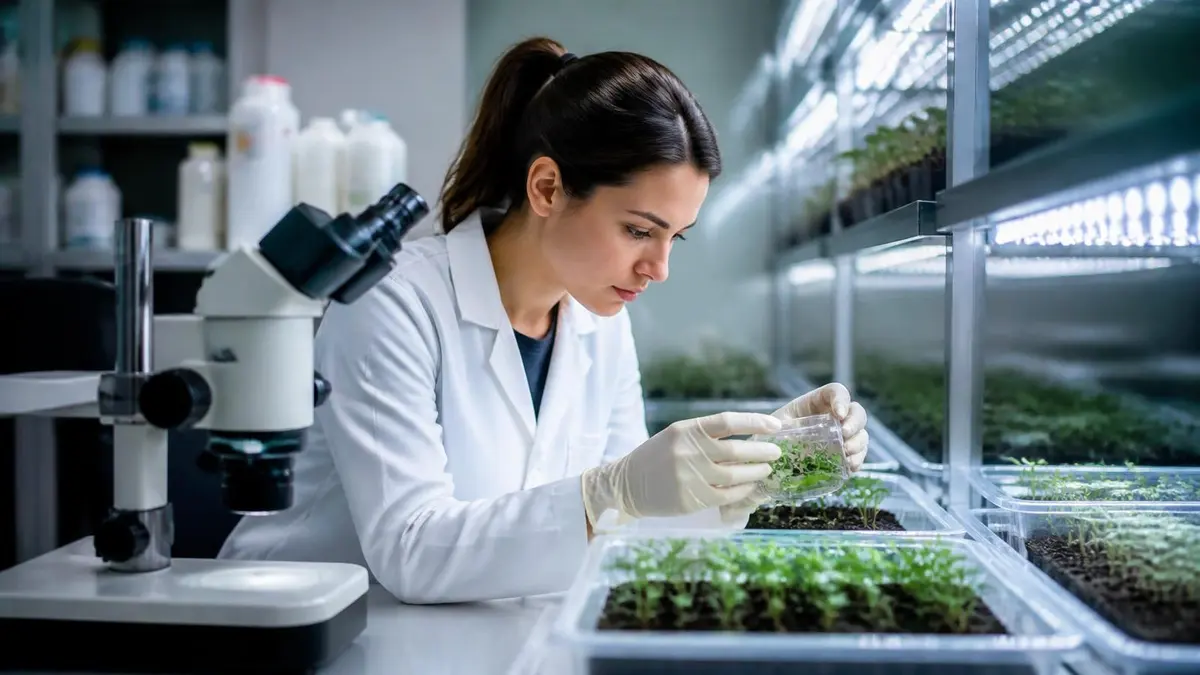
From the lush rice paddies of the Mekong Delta to the sprawling palm oil plantations of Malaysia, the Asia-Pacific region is the world's agricultural heartland, yet also its most vulnerable. Climate change, evolving pests, and unpredictable weather patterns are not theoretical concerns here; they are daily realities threatening livelihoods and food security. That’s why the recent breakthrough from MIT, detailing the engineering of bacteria to program plants for self-defence, isn't just a fascinating scientific endeavor—it's a potential game-changer that demands our immediate attention.
The core of MIT's innovation, published in Nature Chemical Biology, lies in crafting bacteria that act as biological signal-senders. These microscopic allies could allow plants to 'sense and respond' to threats like drought or insect attacks, essentially giving them an internal alarm system and a protective toolkit. Imagine a rice plant, proactively stiffening its cell walls against a fungal invasion, or a mango tree, automatically activating drought-resistant genes as soil moisture dwindles. This isn't genetic modification in the traditional sense, but a more nuanced, 'sentient' approach to botanical resilience. It shifts the paradigm from reactive intervention to proactive biological intelligence.
A New Horizon for Food Security
For countries like Thailand, where agriculture forms a significant portion of GDP and employs millions, the implications are profound. Thailand’s agricultural sector, particularly its globally renowned rice production, is constantly battling against pests like brown planthoppers and the unpredictable impacts of climate change, such as prolonged droughts or intense flooding. Current solutions often involve widespread pesticide use or extensive irrigation, both with their own environmental and economic costs. If plants could mount their own defence, it could dramatically reduce chemical inputs, foster healthier ecosystems, and stabilize yields for farmers whose livelihoods hang in the balance. This isn't merely about higher profits; it's about safeguarding the very foundation of rural economies and ensuring a consistent food supply for a burgeoning population.
The adoption of such technology in the Asia-Pacific would not be without its hurdles. Regulatory frameworks would need to evolve rapidly to assess the safety and environmental impact of engineered microorganisms. Public acceptance, especially given past controversies surrounding genetically modified organisms, would require transparent communication and demonstration of benefits. Yet, the potential rewards outweigh these challenges. Picture Vietnam’s coffee industry, insulated from devastating rust diseases; or Australia’s wheat fields, more resilient to sudden shifts in temperature. This bio-engineering could be the vanguard of a new era of 'smart agriculture', fundamentally altering how we cultivate our food and manage our natural resources.
This isn't merely about higher profits; it's about safeguarding the very foundation of rural economies and ensuring a consistent food supply for a burgeoning population.
One significant forward-looking implication is the potential for localized solutions. Instead of a one-size-fits-all approach, these engineered bacteria could be tailored to specific regional challenges – a bespoke biological upgrade for the unique conditions faced by farmers in different parts of Indonesia or the Philippines. This precision agriculture, powered by microscopic guardians, offers a pathway to sustainable growth, mitigating the environmental footprint of farming while enhancing its productivity. As an 'Expat Life Correspondent' observing the pulse of this dynamic region, I see not just a scientific curiosity, but a crucial step towards a more secure, resilient, and perhaps, more verdant Asia-Pacific. The future of our food security might just be found in these tiny, programmed bacteria, offering a green shield against an increasingly uncertain world.
Sources
Newsletter
Pacific Daily
A curated briefing from Thailand, Asia-Pacific and the world.