Yoshi House: A Blueprint for Harmonious Integration in Asia's Urbanizing Landscape
AR Arquitetos' design masterfully navigates terrain, offering insights for architects facing similar challenges across the Pacific Rim.
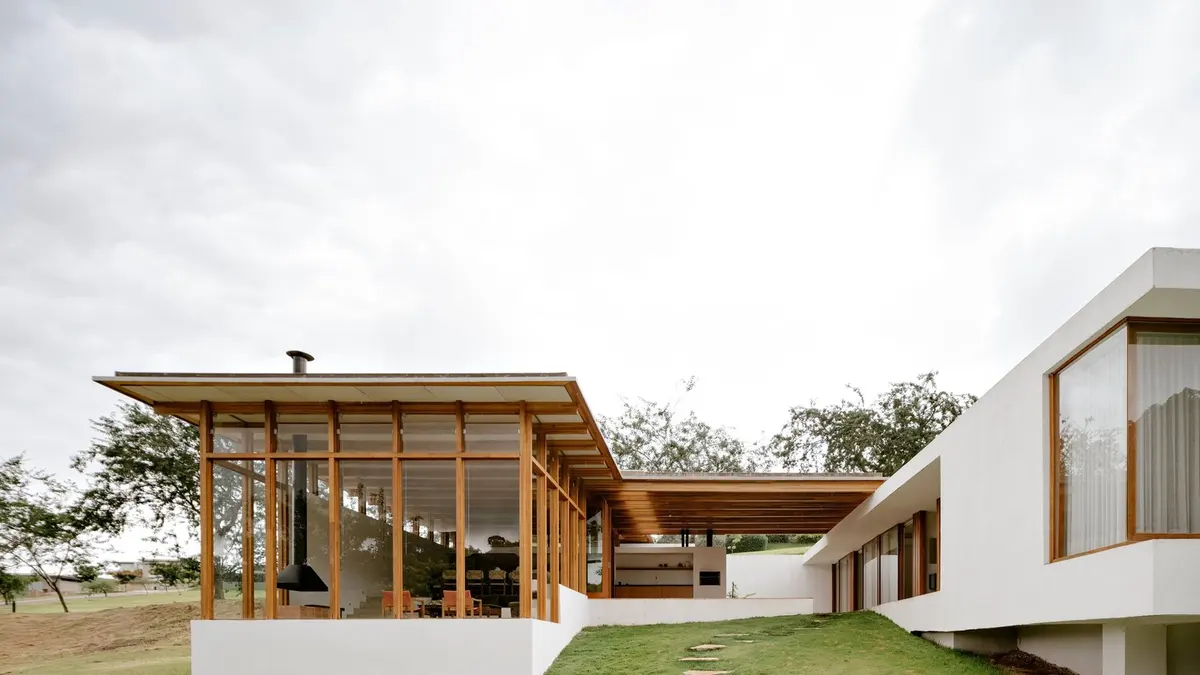
The recent spotlight on AR Arquitetos' 'Yoshi House' by ArchDaily offers more than just a glimpse into a well-designed dwelling; it presents a compelling case study for architectural ingenuity, particularly pertinent to the burgeoning metropolises and increasingly constrained landscapes of Thailand and the broader Asia-Pacific region. What might appear as a simple residential project from afar, reveals itself, upon closer inspection, to be a sophisticated dialogue with its environment, a dialogue that holds significant lessons for designers and urban planners grappling with similar challenges from Bangkok to Jakarta.
The core innovation of Yoshi House lies in its sensitive engagement with a sloping site. Instead of imposing a monolithic structure, AR Arquitetos meticulously reshaped the ground into a series of split levels crafted from solid brick. This foundational approach—creating a robust, integrated base for social areas—is a direct response to topography, maximizing usable space while minimizing disruptive excavation. This isn't just about aesthetics; it's about intelligent resource allocation and respecting the natural contours of the land. In many parts of Southeast Asia, where prime flat land is becoming a luxury and development often encroaches upon hillsides and riverbanks, this strategy offers a sustainable alternative to conventional cut-and-fill methods that can lead to erosion and habitat destruction.
The Lightness of Being: Structure and Form
What truly elevates the Yoshi House is the striking contrast between its grounded base and the seemingly weightless structure above. The summary highlights a "slender engineered wood structure" supporting a "horizontal plane of the roof," which rests "lightly and continuously at street level." This duality—a sturdy foundation meeting an airy, rhythmic upper volume—speaks volumes. It demonstrates how modern engineering, particularly with sustainable materials like engineered wood, can achieve both structural integrity and a delicate visual presence. For Thailand, with its rich tradition of timber construction and a growing emphasis on green building practices, this approach is particularly resonant. It suggests a future where buildings can be both robust against tropical elements and visually permeable, fostering a connection with the surrounding natural environment, often overlooked in dense urban settings.
Moreover, the concept of the roof resting "continuously at street level" hints at an innovative approach to urban integration, blurring the lines between private dwelling and public realm in a subtle, respectful manner. It speaks to a design philosophy that considers the building's impact not just on its inhabitants, but on the streetscape and the community at large.
A Forward-Looking Blueprint for Asia's Future Homes
Yoshi House represents a paradigm shift: building with the land, not just on it.
The forward-looking implication of Yoshi House for Thailand and the Asia-Pacific is profound. As urban centers expand and land becomes scarcer and more irregular, architects will increasingly be tasked with designing homes that are not only functional and beautiful but also deeply responsive to challenging sites. This project serves as a blueprint for a future where architectural design isn't about overpowering nature but about harmoniously integrating with it. It showcases how thoughtful design can transform perceived limitations—like a steep slope—into distinct advantages, creating unique spatial experiences while promoting environmental stewardship. It's an invitation for regional architects to embrace sophisticated structural solutions and sustainable materials to craft dwellings that are both resilient and aesthetically sensitive to their tropical contexts, laying the groundwork for a new generation of sustainable, site-specific architecture across the continent.
Sources
Newsletter
Pacific Daily
A curated briefing from Thailand, Asia-Pacific and the world.