Beyond the Harbour: Flores' Interior Weaves a New Narrative for Tourism
As visitors venture past Labuan Bajo, traditional crafts and local enterprise signal a subtle but significant shift in how regional economies adapt to the changing rhythms of travel.
SINGAPORE
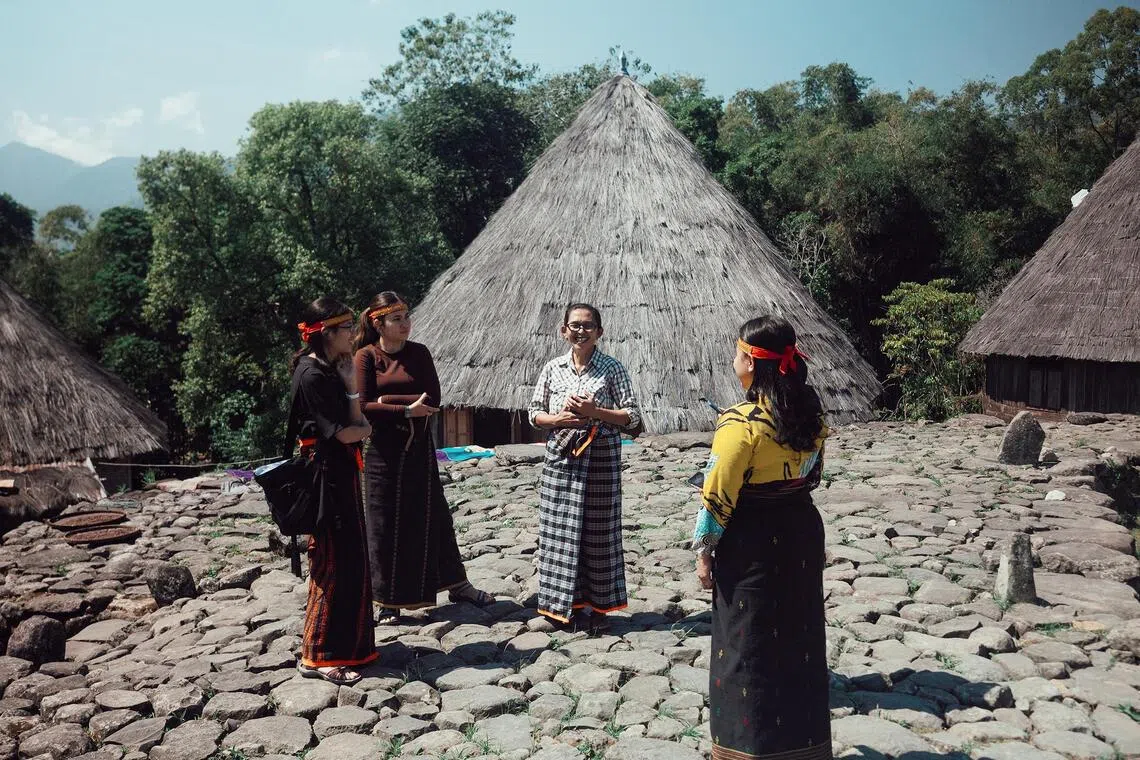
The harbour town of Labuan Bajo, often a fleeting stop for those drawn to Komodo National Park, has long been the primary image of Flores for many travellers. Yet, a shift is occurring deeper within the island, quietly reshaping how communities engage with the steady current of visitors. Beyond the immediate draw of the famed Komodo dragons, the interior of Flores, particularly around Ruteng, is increasingly becoming a destination in its own right, drawing attention to its cultural sites such as caves and villages.
This movement away from coastal gateways to the island's heart reveals more than just an expansion of itineraries; it points to a reorientation of tourist gaze. Where once the focus was on natural spectacle, there is now an emerging interest in the textured lives and tangible heritage of the local population. In Ruteng, for instance, local women entrepreneurs are demonstrably leveraging financial support from Amartha fintech. They are using these loans not for novelty, but to expand businesses rooted in tradition, selling songket sarongs and woven mats. This activity supports their families, illustrating a direct link between renewed interest in local culture and economic sustenance.
The Indonesian government's support for tourism growth in Ruteng is a recognized factor in the improving local livelihoods. This encouragement of internal exploration aligns with broader regional trends where destinations seek to diversify their appeal beyond established hotspots. The question then becomes: what habits changed first? Did travellers seek out more authentic cultural experiences, or did local communities, empowered by accessible finance and government backing, create the conditions for this shift? The evidence suggests a symbiotic emergence. Travellers, perhaps weary of homogenized experiences, are noticing the rich specificity offered by places like Ruteng. Simultaneously, local entrepreneurs are responding to and shaping this interest by making their traditional crafts and cultural narratives more visible and accessible.
This subtle repositioning of Flores from a transit point to a destination with a varied interior presents an alternative model for tourism development across the Asia-Pacific. It moves beyond the often-criticized '10 new Balis' approach, which focused on creating large-scale attractions, toward a more granular engagement with existing cultural frameworks. The success in Ruteng, driven by local women leveraging traditional skills and new financial tools, suggests that the most compelling growth narratives arise not from imposed visions, but from the organic evolution of local habits and market responses.
Yet, this pivot to interior cultural tourism is not without its tensions. While increased visitor numbers and government support are noted, the scale and sustainability of such growth in balancing authenticity with economic demand remains a continuous negotiation. The fabric of traditional life, while drawing visitors, also requires careful preservation against the very forces it attracts. The current scene in Ruteng, with its weaving women and burgeoning cultural sites, illustrates this ongoing, delicate balance between tradition and the momentum of discovery.
Sources
Newsletter
Pacific Daily
A curated briefing from Thailand, Asia-Pacific and the world.