After the Boom and the Correction, What Next for New Zealand House Prices?
Auckland's classic villas still signal the dream of ownership. Interest rates, migration and new building rules will decide how reachable it becomes.
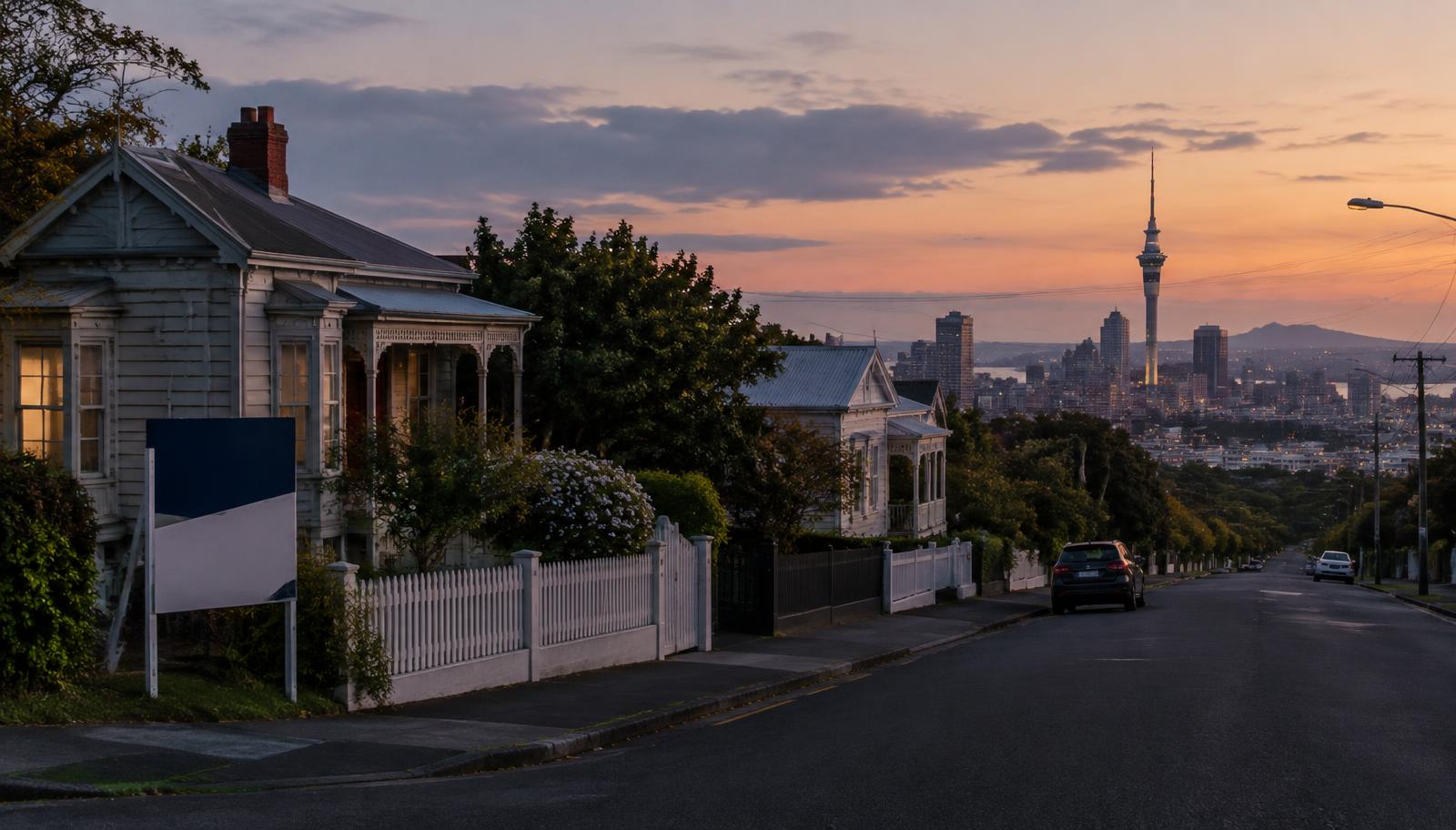
AUCKLAND — On a quiet street of weatherboard villas, a for-sale sign stands at a gate as the Sky Tower lights up in the distance. For a generation of New Zealanders, homes like these have been both the country's great wealth engine and its most painful affordability problem.
New Zealand experienced one of the developed world's sharpest house price surges during the pandemic, fuelled by record-low interest rates. As the Reserve Bank of New Zealand raised the official cash rate to fight inflation, prices fell from their peak in many regions. The question now is what shape the market takes as borrowing conditions ease.
The interest rate lever
Mortgage rates remain the most immediate driver. When the Reserve Bank lowers rates, borrowing becomes cheaper and buyer confidence tends to return. But lenders also apply debt-to-income limits and loan-to-value restrictions set by the central bank, which are designed to limit risky lending and prevent another runaway boom.
Many homeowners who fixed mortgages at low rates have faced higher repayments as those terms rolled over. That has stretched household budgets and kept some would-be sellers and buyers cautious.
Supply and planning
On the supply side, Auckland has seen a notable increase in townhouses and medium-density housing following planning reforms that allowed more homes on existing sites. Housing advocates credit these changes with helping moderate rents in parts of the city. Critics raise concerns about infrastructure, design quality and the loss of character neighbourhoods.
Migration also matters. Stats NZ data on arrivals and departures show large swings in recent years, with significant numbers of New Zealanders moving to Australia while international arrivals rose. Population flows feed directly into demand for rentals and starter homes.
Who gets in
For first-home buyers, the picture is mixed. Prices below their peak help, but deposits remain large relative to incomes, particularly in Auckland and Queenstown. Government schemes and KiwiSaver withdrawals assist some buyers, yet many still rely on family support.
The broader debate is about what housing should be: a store of wealth, or a place to live. New Zealand's answer will shape inequality, retirement savings and the future of its cities.
As night falls over the villas, the sign at the gate remains. Whoever buys it will be betting not just on a house, but on the next phase of a national obsession.
Sources
Newsletter
Pacific Daily
A curated briefing from Thailand, Asia-Pacific and the world.