A Tunnel's Brief Silence, a City's Enduring Rhythm
Localized infrastructure demands in Vancouver reflect broader currents in Asia-Pacific urban life.
SINGAPORE
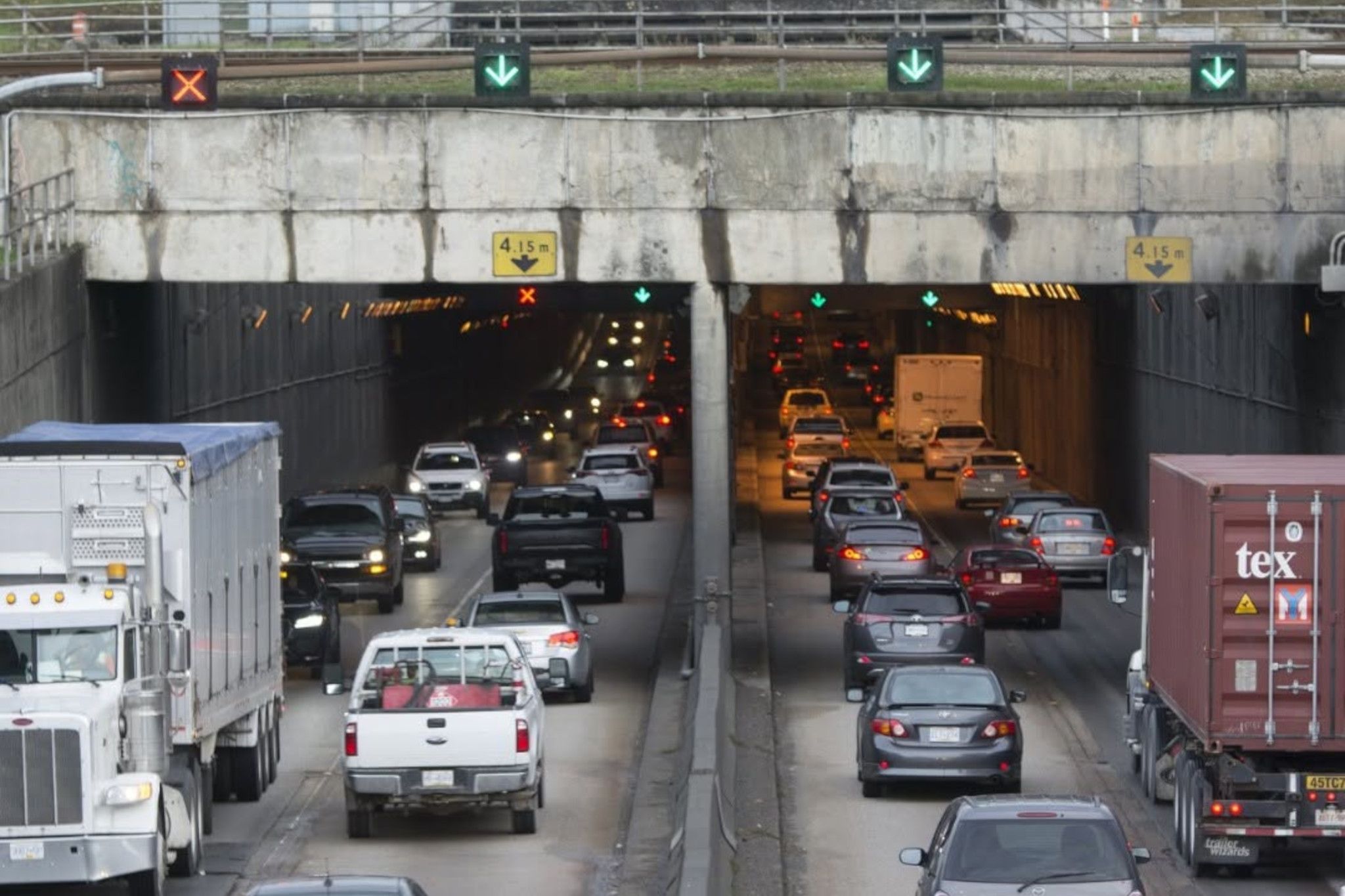
The George Massey Tunnel will undergo overnight closures, as announced by government contractor Mainroad Lower Mainland Contracting. This impacts Metro Vancouver drivers who commute through the tunnel. On Friday, September 18, the northbound lanes of Highway 99 at the Massey Tunnel are scheduled to close from 9 p.m. to 6 a.m. the next day. On Saturday, the southbound lanes will be closed from 9 p.m. to 6 a.m. on Sunday. Drivers are asked to use an alternative route, such as the Alex Fraser Bridge, and detour signs will be on site.
This incident, a temporary pause in vehicle flow, extends beyond its immediate geography. It points to a fundamental tension inherent in the urban fabric of rapidly developing regions, particularly across the Asia-Pacific: the unceasing demand on infrastructure. The tunnel, a fixed point in the landscape, undergoes its necessary periodic repair. Yet, the expectation of seamless movement persists, interrupted only by the pragmatic need for its preservation. In cities like Bangkok, where informal vendors once thronged sidewalks and commuters navigated through dense, often unpredictable networks of movement, a similar, if magnified, pressure exists.
Consider the subtle shift in urban consciousness when a familiar artery temporarily ceases to function. It is not solely the inconvenience of a detour, but the quiet acknowledgment that underlying systems are not immutable. This brief, planned interruption in Vancouver highlights the constant, often invisible, effort required to maintain urban functionality. In the Asia-Pacific, where urban populations continue to swell and infrastructure projects are often framed as grand endeavors, the day-to-day work of maintenance and repair can be overshadowed. The cultural cost emerges when the infrastructure becomes so ingrained that its upkeep is primarily noticed when it stops.
The rhythm of a city is dictated as much by its physical pathways as by human habits. When a tunnel closes overnight, the habits of commuters shift, even if momentarily. They seek new routes, adapt their timings, or perhaps choose to defer their journey. This adaptation, born of necessity, points to a broader pattern observed in many Asian megacities: citizens constantly adjust to an urban environment perpetually under construction, revision, or strain. The closure, while a practical measure, also serves as a quiet reminder of the transient nature of even robust urban systems.
Yet, a counterargument might posit that such scheduled closures are merely standard operational procedure, reflecting effective urban management rather than systemic stress. Mainroad Lower Mainland Contracting’s announcement of specific timings and alternative routes could be interpreted as a well-managed disruption, indicative of forward planning. However, this perspective overlooks the cultural observation of how societies respond to these interruptions. The disruption, however planned, still forces a renegotiation of daily routines, a subtle but persistent challenge to the expectation of uninterrupted motion. The silence of the tunnel, even for a few hours, redefines the city's pulse, altering the collective habit of movement, if only until the next sunrise.
Sources
Newsletter
Pacific Daily
A curated briefing from Thailand, Asia-Pacific and the world.