A Teen Rocker, National Pride, and the Shifting Ground of Thai Soft Power
Nene Royal's talent show run brings an unexpected opportunity for a government seeking unity amidst changing social dynamics.
SINGAPORE
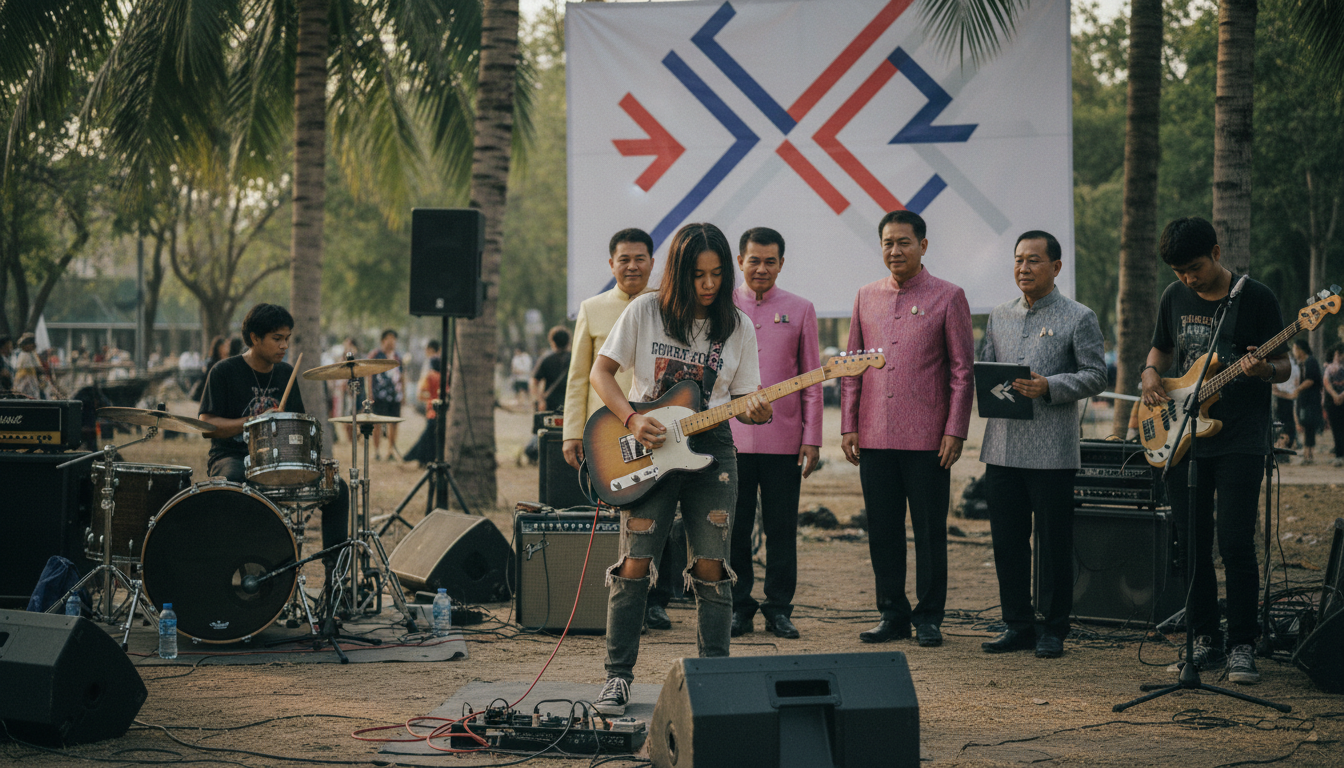
The public backing of Nene Royal, a 16-year-old Phuket rocker competing in the live finals of “America’s Got Talent,” represents more than just national pride in a young artist. The Thai government’s call for support for Rattikarn Praew Amloy, as Nene is also known, signals a recognition of popular culture as a potential vector for national unity and international influence.
Nene Royal is one of ten finalists vying for a $1 million prize, with the winner determined by online fan voting. The live show airs on NBC, reaching audiences in the US, and is broadcast in Thailand. This broad reach, combined with the government's endorsement, elevates what might otherwise be a personal achievement into a matter of national interest.
For a nation that has experienced significant internal social and political tensions in recent years, including widespread protests in Bangkok from 2020 that challenged established power structures, this embrace of a pop culture phenomenon suggests a tactical shift. Public support for entertainment figures can provide a comparatively neutral ground for collective expression, distinct from political demonstrations or royal events. The government's explicit encouragement for Thais to rally behind Nene Royal highlights a desire to foster a sense of shared purpose, even if temporary, around a widely accessible cultural touchstone. This is not unprecedented; the allowance of entertainment and sports events following the passing of a princess earlier in 2026 also demonstrated an understanding of the public's need for communal activities and distractions.
Cultural Diplomacy Beyond Tradition
The engagement with Nene Royal offers a lens into a broader approach to cultural diplomacy. Traditional forms of Thai cultural projection, often centered on heritage, cuisine, or classical arts, coexist with this modern, youth-driven phenomenon. Nene Royal, a rock musician, embodies a contemporary face of Thailand that resonates with global youth culture. The Asia-Pacific region, with its diverse and digitally-connected populations, is increasingly influenced by such 'soft power' initiatives. Success on a global stage like “America’s Got Talent” provides direct exposure to millions, potentially shaping international perceptions of Thailand more immediately than government-led campaigns.
Assessing the depth to which this can alter the public mood or mend societal fractures will require time. While the government frames Nene Royal’s journey as a unifying force, the support for an individual performer, however talented, is unlikely to address the underlying complexities of social and political sentiment. It serves as a moment of collective enthusiasm, a pause rather than a fundamental shift. The eventual outcome of Nene Royal's competition, announced on Thursday in Thailand, will measure the immediate impact of this national rallying cry, but its long-term significance rests on whether such cultural moments can build lasting bridges in a rapidly evolving social landscape.
Sources
Newsletter
Pacific Daily
A curated briefing from Thailand, Asia-Pacific and the world.