A Shifting Architecture in the Pacific: The Penrhyn Port Negotiation
The proposed port upgrade in the northern Cook Islands, with its explicit military dimension, signals a structural realignment of strategic presence, influencing regional power balances.
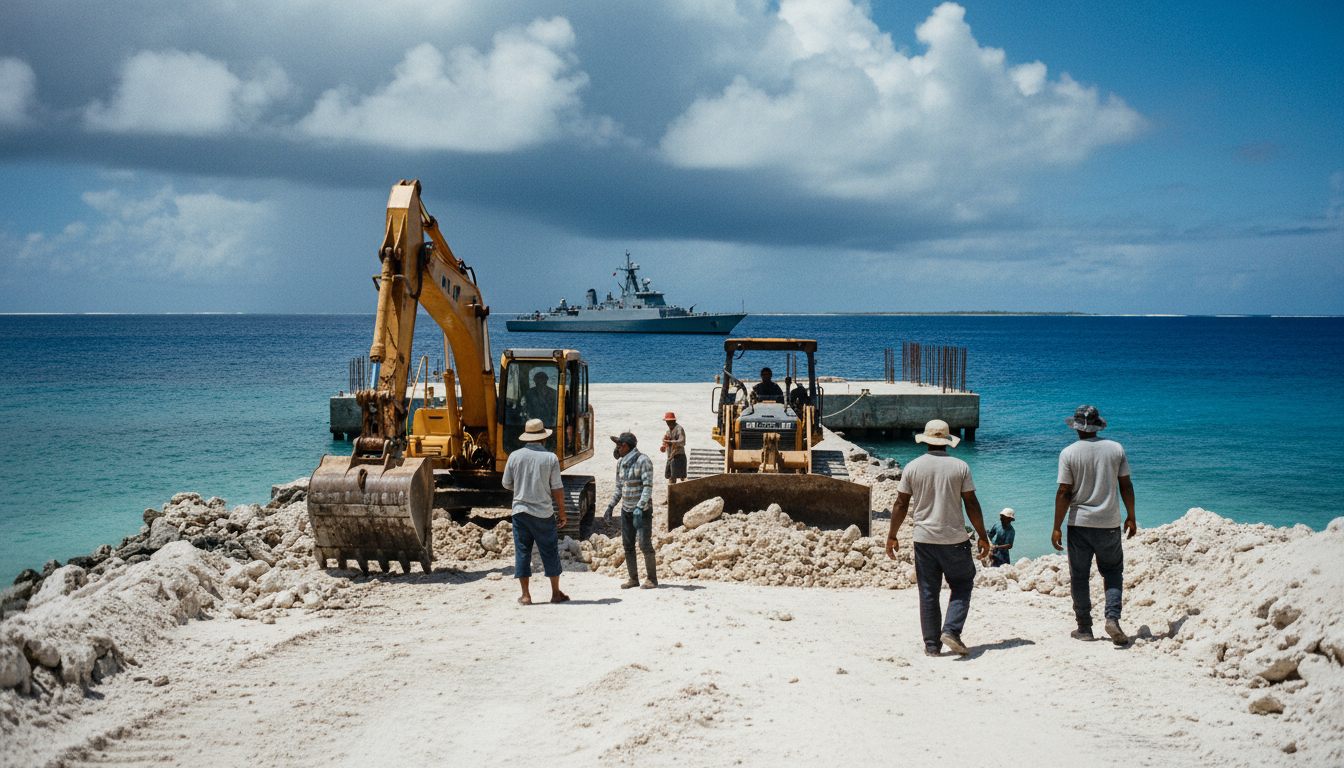
The United States is engaged in negotiations for a military presence at a planned port upgrade on Penrhyn Island in the northern Cook Islands. This development, which involves a joint funding commitment of NZ$101 million with New Zealand, represents a functional recalibration of regional strategic infrastructure, extending beyond a mere development aid initiative.
US Ambassador to the Cook Islands, Jared Novelly, stated on September 16, 2026, that a US military presence at the port would constitute “an extreme maritime benefit.” This assessment, articulated by a key diplomatic representative, indicates an intent that transcends civilian port functionalities. The financial contributions—US$50 million (approximately NZ$84 million) from the United States and NZ$17.5 million (approximately US$10 million) from New Zealand—are directed towards a facility situated near a former US World War II airfield. This historical context underscores a continuity of strategic interest in the northern Cook Islands, reflecting an enduring geographical imperative for logistical support and potential power projection. The project's announcement by Cook Islands Prime Minister Mark Brown, New Zealand Foreign Minister Winston Peters, and US Deputy Secretary of State Christopher Landau during the Pacific Islands Forum Leaders Meeting in Palau earlier in the month highlights the coordinated diplomatic efforts preceding this functional change.
The re-establishment of infrastructure with an explicit military potential, even when framed as a benefit, denotes a shift in capability. This interest in Penrhyn parallels reports of discussions regarding enhanced US military presence in other strategic locations. This pattern, observed across geographically disparate regions, suggests a broader US strategy to augment forward logistical and operational capacities. For the Asia-Pacific, such a move in the Cook Islands does not merely enhance maritime security; it extends the operational reach of a major power deeper into the Pacific Island states. The explicit negotiation of military presence, rather than incidental access, points to a more comprehensive strategic repositioning in the wider Pacific.
However, the full scope of this military presence remains subject to negotiation, as Ambassador Novelly affirmed. The specific terms of access and the nature of operations have not been detailed. While the development provides a tangible physical asset, the long-term strategic consequence for regional stability hinges on the operational doctrines that will govern this presence. The stated intent is to enhance maritime benefits, yet the underlying capability will be military. The implications for nations like Thailand necessitate a recalculation of regional power balances and the potential for increased great-power competition. The question of how such dual-use infrastructure will be managed by the Cook Islands, a sovereign nation, represents a constraint that remains unresolved.
Sources
Newsletter
Pacific Daily
A curated briefing from Thailand, Asia-Pacific and the world.