The enduring architecture of belief in the Asia-Pacific
A Thai filmmaker's nine-year journey illuminates how ancient rituals shape modern narratives and family structures.
SINGAPORE
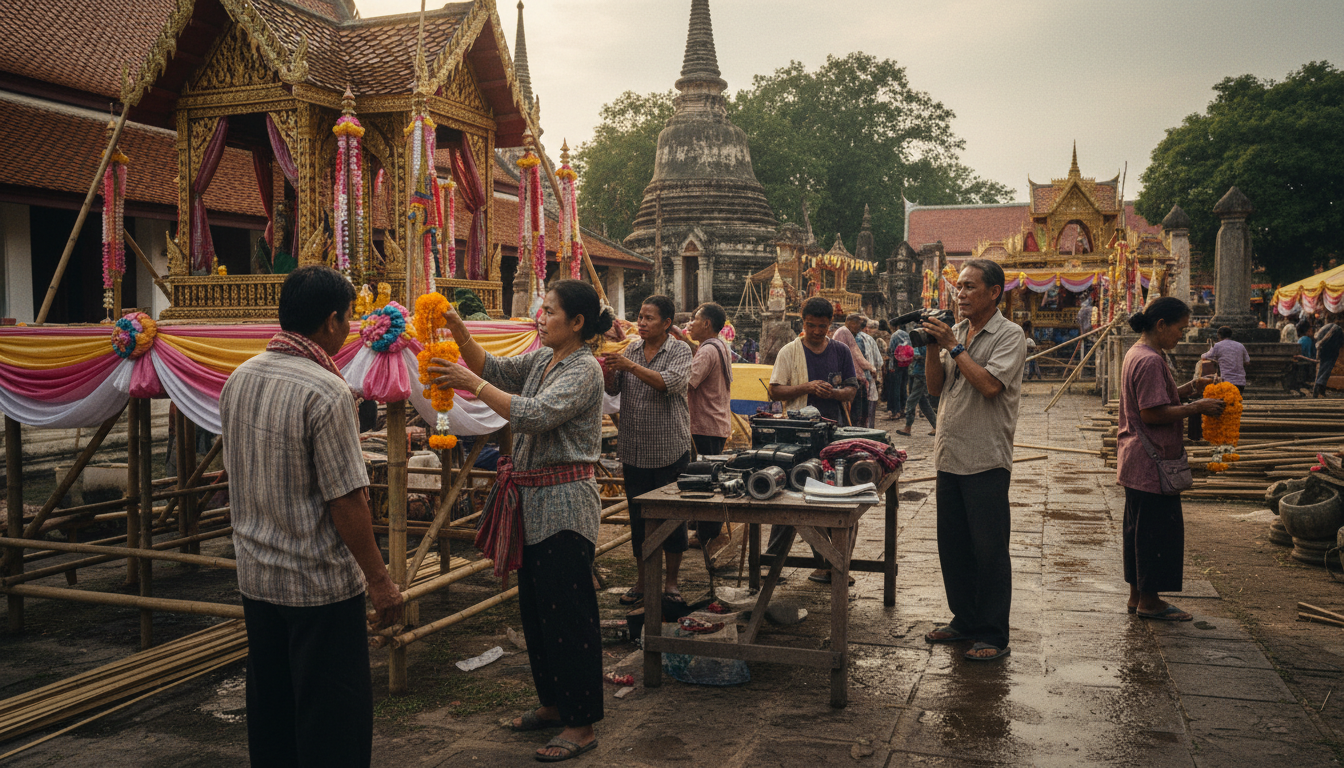
The simple instruction to make merit for a grandmother facing her birthday, a ritual spanning nine temples in a single day, carried filmmaker Sompot Chidgasornpongse for nine years. This core idea, a large family traveling together, remained; however, the surrounding details, family dynamics, and character personalities, continued to evolve, as Sompot recalled in a recent interview with Bangkok Post Life.
This prolonged creative process, centered on a journey of spiritual obligation, offers a lens into a persistent pattern across the Asia-Pacific. The premise of familial responsibility, underscored by a belief in intergenerational spiritual welfare, is not merely a cinematic device. It reflects a societal architecture where ancient practices continue to scaffold personal and collective meaning. The act of temple visits, for instance, transcends individual devotion, becoming a performance of community and care, deeply embedded in the region’s cultural fabric.
Yet, the very evolution Sompot noted — the changing details, the shifting encounters, the nuanced characterisations — hints at a tension. The core belief, the ritual of merit-making, remains foundational. But the specifics of its expression, the ways families negotiate their roles and relationships within this framework, are subject to continuous adaptation. This indicates that while the architecture of belief stands firm, its internal dwellings are constantly being reconfigured by the demands of contemporary life and individual experience. The family unit, tasked with fulfilling this spiritual journey, is not static; it is a dynamic entity, interpreting tradition through its own evolving lens.
The global stage, too, sometimes gestures towards these deeply rooted cultural significances. A 2026 visit by a political figure to Beijing’s Temple of Heaven, an event noted by The New York Times and CNA, suggests an understanding, however instrumental, of the symbolic power held by such sites. While American residential architects may concern themselves with the Forbes Best In State list, the architecture of belief, particularly in the Asia-Pacific, is constructed from more intricate, enduring materials than mere brick and mortar.
The film’s long gestation, where the *“main idea of a big family traveling together to make merit at nine temples in one day was always there,”* but *“many of the details kept changing, the situations the family encounters, the family dynamics, the characters’ personalities and nuances,”* speaks to a fundamental question this region poses to its inhabitants and observers alike: How does one reconcile an unchanging spiritual mandate with an ever-shifting human reality? The answer, as Sompot’s extended engagement with his subject suggests, lies not in resolution, but in the sustained, evolving act of navigation itself.
Sources
Newsletter
Pacific Daily
A curated briefing from Thailand, Asia-Pacific and the world.