The Invisible Architecture of Singapore's Spectacle
Beyond the track, a year-round operation reveals the urban infrastructure that underpins Singapore's major events.
SINGAPORE
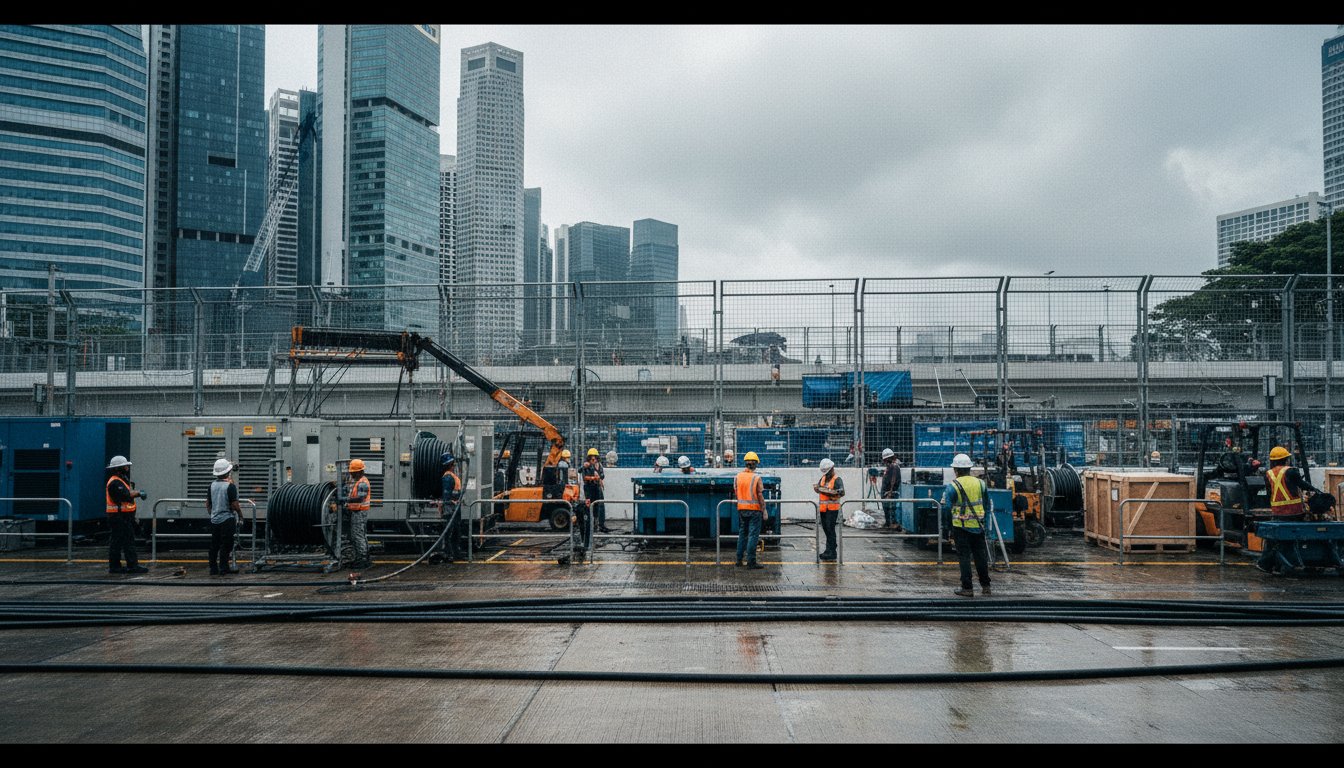
The roar of the engines and the flash of lights are a familiar spectacle in Singapore. For three days, the city-state transforms into a global stage for the Formula 1 Grand Prix. Yet, the persistent hum of activity that precedes and follows this transient event reveals a deeper truth about the city itself. This is not merely an annual race; it is a meticulously managed, year-round operation.
According to CNA Lifestyle on September 16, 2026, the Singapore F1 race involves a team working 362 days behind the scenes for what is a three-day event. This extensive preparation encompasses crowd safety, ticketing logistics, and tracking global events that could impact the race. Individuals such as Singapore GP’s director of ticketing and accreditation Clarence Lai, senior manager of event facilities Shiv Raj Panday, senior director for marketing and partnerships Sasha Rafi, and director of operations Melissa Phua are named as part of this effort. Their roles suggest a complex interplay between event management and urban infrastructure maintenance.
This level of continuous, background activity points to a specific habit: the persistent, anticipatory conditioning of a city for high-profile global engagement. The cultural signal here is not the race itself, but the unseen labor and coordination required to host it. It highlights how Singapore positions its urban spaces as platforms for global spectacle, requiring constant calibration of its systems, from transport networks to public safety protocols. The city-state’s ability to host such large-scale events, as suggested by the year-round F1 team, is not spontaneous. It is a planned outcome of sustained infrastructural and logistical investment.
However, a counterargument might suggest that such extensive preparation is merely standard practice for any major international event. Significant, long-term infrastructural investments, like a new rail system in Malaysia which had a preview run and is on track for a 2027 launch, also require continuous effort. Similarly, ongoing work in Singapore on tunnel strengthening, nearly 50% complete by February 10, 2026, is an independent, continuous effort to maintain critical urban infrastructure. These examples illustrate that long-term planning and construction are not unique to event hosting.
Yet, the F1 operation is distinct because its 362 days of work are entirely dedicated to a three-day outcome, where success is defined by the flawless execution of a singular, recurring event. The evidence suggests that Singapore has cultivated an urban metabolism where the anticipation of future spectacles dictates a constant, underlying rhythm of operational refinement. The city’s true performance lies not in the fleeting thrill of the race, but in the unseen, year-round choreography of its people and systems, readying the stage for the next global gaze. This continuous state of readiness, shaped by the demands of events like the F1 Grand Prix, reveals how the city’s identity is progressively intertwined with its capacity to host and perform.
Sources
Newsletter
Pacific Daily
A curated briefing from Thailand, Asia-Pacific and the world.