A New Uniformity in Asian Consumers' Pursuit of Personal Style
The rise of 'colour analysis' in Asia-Pacific suggests a shift from individual exploration to a standardized system for appearance.
SINGAPORE
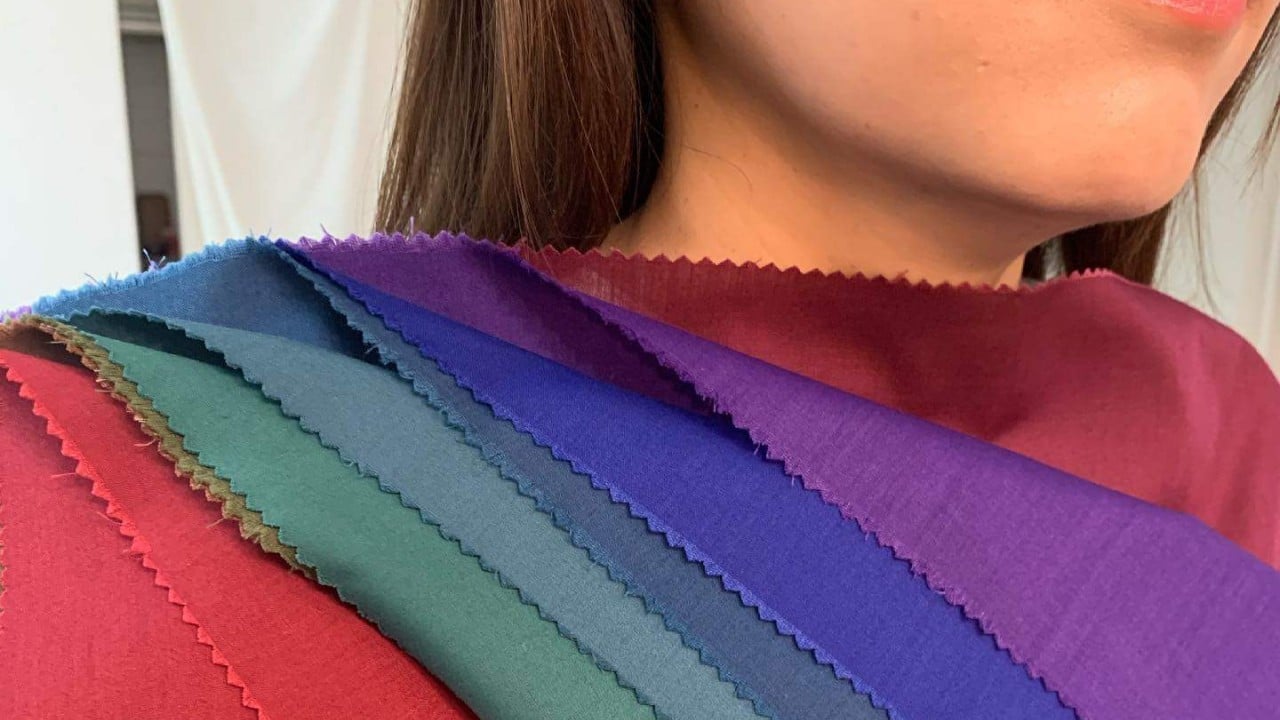
A system of personal ‘colour analysis’ has gained traction across diverse Asian cultures, most notably in South Korea. This method, which typically involves draping various hues of fabric across an individual's chest, aims to determine the shades of clothing, make-up, jewellery, and hair colour that best complement a person's natural skin, hair, and eye tones. The stated goal is to match individuals to a core season: spring, summer, autumn, or winter.
SCMP Lifestyle, in a report published on September 20, 2026, highlighted this trend, noting its popularity stems from a desire to simplify shopping choices. The system promises boundaries and guidelines for consumption, appealing to those overwhelmed by an abundance of options. This is not merely about aesthetic preference; it represents a functional approach to managing personal appearance, reducing what might be perceived as decision fatigue in a crowded market.
For many, the appeal of colour analysis lies in its promise of an 'optimised' complexion, a term suggesting improvement through adherence to a predetermined palette. The immediate implication is that individuals are outsourcing their aesthetic choices to an analytical framework. Instead of developing a personal sense of style through experimentation or cultural cues, people are turning to a diagnostic tool. This method, while offering clarity for consumers, simultaneously narrows the scope of personal expression to a set of 'best' colours.
The human cost of such a trend manifests in the subtle erosion of individual agency in self-presentation. While presented as a tool for empowerment – allowing one to 'dress their best' – it inadvertently imposes a new kind of uniformity. Consumers, instead of exploring the full spectrum of available styles and colours, are encouraged to conform to a specific seasonal archetype. The system, rather than fostering deeper personal understanding of aesthetics, provides a prescriptive solution. The focus shifts from the 'why' of a style choice to the 'what' of a recommended palette.
However, style experts, as reported by SCMP Lifestyle on the same date, advocate a different approach. They argue against conforming to a rigid palette, suggesting that proportion, texture, and personal preferences should remain central to style development. This counterargument acknowledges that an individual's aesthetic journey is more complex and personal than a seasonal classification allows. It implies that true personal style is an emergent property of individual choices and self-awareness, not a predetermined algorithm.
The widespread adoption of colour analysis points to a broader societal inclination towards efficiency and measurable outcomes, even in areas as subjective as personal style. It reflects a desire for certainty and control in an increasingly complex world of consumer choices. The practice simplifies decisions but risks simplifying the individuals making them, replacing the nuanced pursuit of personal expression with a more structured, and arguably less personal, pathway.
Sources
Newsletter
Pacific Daily
A curated briefing from Thailand, Asia-Pacific and the world.