A Fleeting Record in German Football, Enduring Questions for Asia-Pacific Policy
The rapid scoring of FC Augsburg, a record in its context, highlights a disjunction with the persistent, slower-moving challenges facing coastal regions across the Asia-Pacific.
SINGAPORE
On October 10, 2026, FC Augsburg's Robin Fellhauer scored after eight seconds against Bayern Munich at WWK Arena, marking the fastest goal in Bundesliga history. This particular event, while establishing a new record in European football, carries limited direct relevance to the Asia-Pacific region. Its immediate significance is confined to sporting records and specific outcomes on a pitch in Germany.
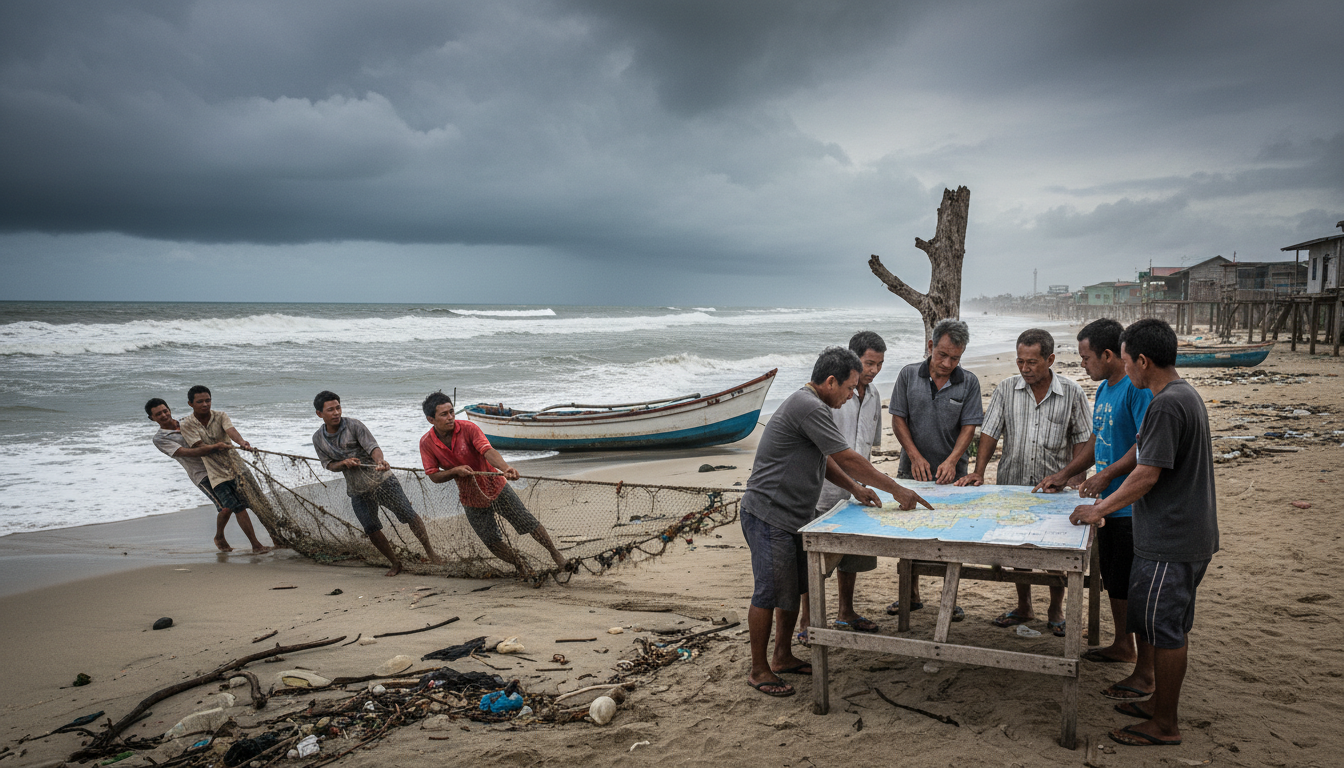
The swift establishment of a new benchmark in professional sports contrasts sharply with the protracted timelines and complex interdependencies characteristic of policy development in coastal regions. The Asia-Pacific encompasses numerous coastlines, each facing varying degrees of ecological and economic stress. These areas, critical for trade, fisheries, and human settlement, are subject to gradual shifts that rarely generate headlines with the immediacy of an eight-second goal.
Policies concerning coastal management, resource allocation, and climate adaptation in regions like Thailand, for instance, evolve slowly. They often involve diverse stakeholders, from local fishing communities to national planning bodies and international development agencies. The impacts of such policies are measured not in seconds, but in decades, reflecting a continuum of change rather than a sudden, decisive moment. This disjunction between the perceived pace of change in different domains is significant.
When examining the interplay between local needs and national directives, particularly concerning environmental management, a core question arises: which coastline pays for a policy written inland? Decisions made in capital cities, often distant from the immediate environmental realities of coastal communities, can have disproportionate effects. These effects might manifest as altered fishing rights, new limitations on coastal development, or an uneven distribution of resources for climate resilience. The challenge, therefore, lies in ensuring that the pace and focus of policy formulation align with the specific, often urgent, needs of the affected regions, rather than being solely dictated by administrative convenience or a narrow national perspective.
The fleeting nature of a sports record, though providing a moment of excitement, underscores a fundamental difference in how various types of events are perceived and addressed. The immediate reaction to a rapid goal typically involves celebration or an analysis of tactical errors. In contrast, the slower, compounding pressures on coastal environments demand sustained attention and long-term strategic responses. The difficulty in garnering similar urgency for slow-onset environmental changes, despite their profound regional implications, remains a persistent challenge for strategists and policymakers alike. This asymmetry in perception often leads to policy formulation that reacts to crises rather than pre-empts them, leaving coastal communities vulnerable to changes that are gradual but ultimately transformative.
Sources
Newsletter
Pacific Daily
A curated briefing from Thailand, Asia-Pacific and the world.