A Designer Base in Hong Kong Exposes the Fragile Bargain of Regional Fashion
Kim Jones situates his revived label in an Asian commercial capital where personal affinity meets structural uncertainty.
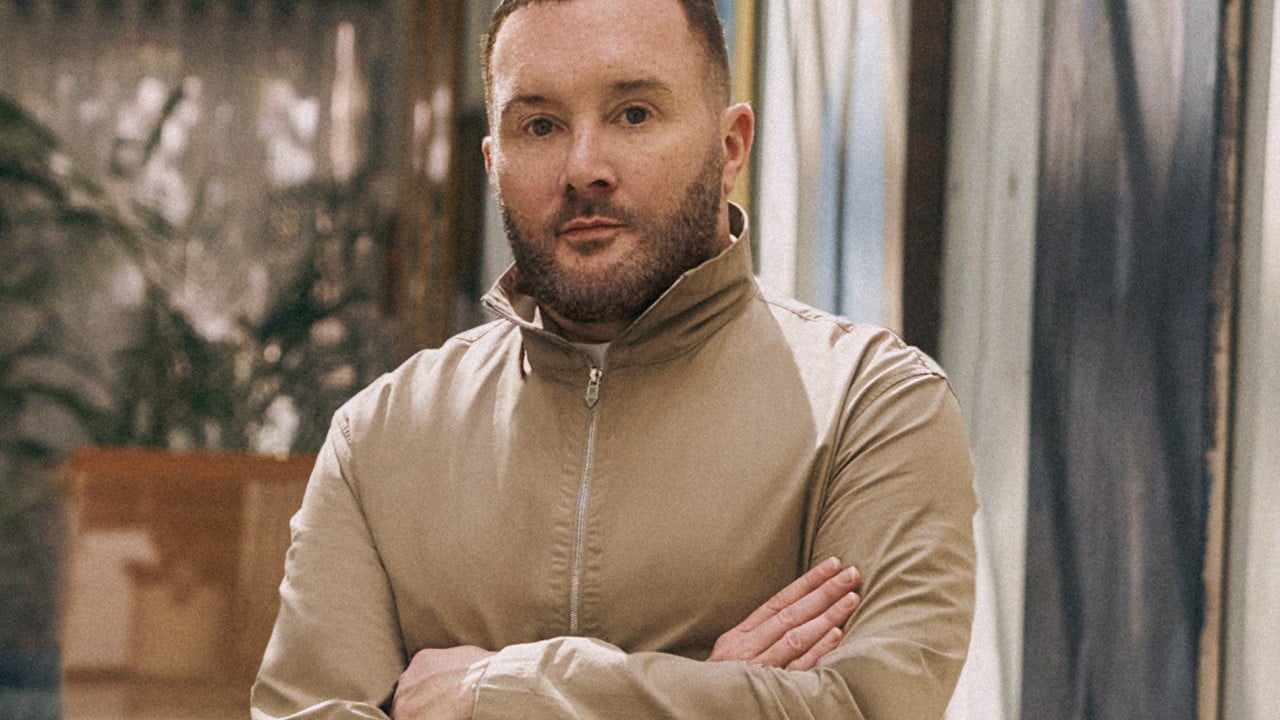
HONG KONG
International fashion ventures routinely establish their headquarters where capital gathers fastest rather than where production or creative traditions originate. When British designer Kim Jones announced Hong Kong as the base for the revival of his namesake label after nearly two decades away from running his own house, the move registered as both a commercial realignment and an idiosyncratic personal choice. The 53-year-old designer has long operated at the upper tiers of European design, yet his decision to anchor an independent venture in an Asian financial hub suggests a deliberate attempt to capture regional relevance on distinct terms.
Jones first visited Hong Kong after joining Dunhill as its creative director in 2008, visiting regularly in the late 2000s. That regular travel cemented an affinity that he often frames around unexpected local eccentricities rather than corporate convenience. The tension between institutional luxury and local geography is stark. Designers who spend decades guiding legacy European houses usually return to Paris or London when reviving their own names. Selecting an East Asian commercial outpost disrupts that conventional path, signaling that the gravity of independent high-end fashion has drifted eastward.
Shifting Creative Gravity
Yet locating a revived brand in Hong Kong brings operational contradictions that sentiment alone cannot resolve. Jones openly expressed an unorthodox attachment to the territory, remarking on the presence of wild reptiles as a defining memory of his early stays.
I love Hong Kong, the weird side of it and the fact that there are king cobras that live here, and different snakes and the sort of things which most people probably get terrified of.
Personal fascination with a territory's perimeter does not automatically insulate a fashion enterprise from commercial realities. Establishing a base in Hong Kong places a label close to Asian consumer networks, but it also tethers the house to a market undergoing complex economic transitions. Global retail groups frequently treat the city as an operational conduit rather than a generative design capital. Choosing it as a creative home base assumes that logistical access and regional proximity outweigh the traditional proximity to European fabric mills, specialized patternmakers, and historic runway calendars.
Commercial realities also demand an examination of the counterargument. Established industry figures can argue that physical geography matters far less now than it did when Jones was at Dunhill in 2008. Digital communication, dispersed supply networks, and direct-to-consumer distribution allow an independent label to function from almost any metropolitan center with robust shipping routes and capital liquidity. Proximity to affluent Asian collectors offers immediate transactional benefits that London or Paris cannot match without friction.
The Unresolved Independent Model
That argument assumes modern luxury operates purely on liquidity and digital reach. The physical architecture of fashion production tells a different story. Independent houses rely heavily on specialized artisanal labor, rapid sampling cycles, and close institutional support, elements that remain heavily concentrated in western Europe. By placing his primary platform in an Asian trading hub, Jones must prove that regional capital and market access can substitute for an established domestic manufacturing ecosystem.
What remains unsettled is whether an independent European label can truly plant permanent roots in the Asian retail ecosystem without eventually retreating to conventional distribution channels. Hong Kong offers access to the wider Asian luxury consumer base, yet it remains a place historically treated by western houses as a point of sale rather than a cradle of creation. Jones is attempting to reverse that established direction of flow. Whether his venture establishes a durable template for independent luxury outside Europe or simply remains an isolated individual experiment depends on how effectively a small label can balance high creative overhead against a shifting regional market.
Sources
Newsletter
Pacific Daily
A curated briefing from Thailand, Asia-Pacific and the world.