A Cafe Opens in a Museum, and What It Means
The quiet opening of new dining spaces within Western art institutions reflects subtle shifts in urban engagement, with implications for Asia's own cultural venues.
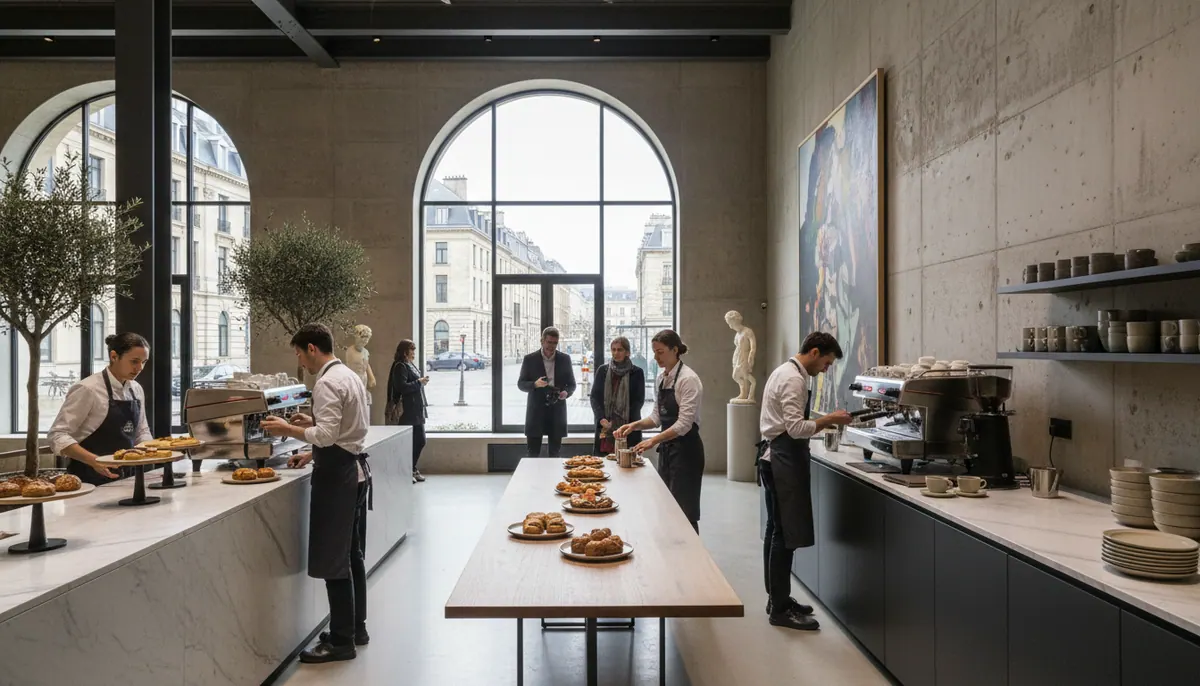
The announcement of a new cafe at MoMA PS1 and the reopening of another at the Neue Galerie, reported by Artnet News on Friday, August 21, 2026, presents a small, specific scene. On the surface, these are minor operational updates for institutions in New York City. Yet, these details, coupled with news of a Whistler exhibition arriving in Washington, D.C., offer a glimpse into how art spaces are adapting to, or perhaps shaping, evolving patterns of public interaction.
For decades, major art institutions have served as primary custodians of cultural heritage, often perceived as sanctuaries for contemplation. The inclusion, or renovation, of dining facilities might once have been viewed as a secondary amenity, a convenience for visitors. Today, however, a cafe is not merely a place to eat; it is a focal point for social rhythms, a space where the act of visiting an exhibition extends into a more prolonged, less structured engagement. The company says demand is rising for experiences that blend cultural enrichment with social opportunities, a shift that appears to be reflected in these institutional decisions. This integration suggests a redefinition of the museum visit itself, moving beyond the singular purpose of viewing art to encompass a broader lifestyle offering.
One might argue that cafes have always existed in museums, serving a practical need for refreshment. This is true, but the emphasis has shifted. The curated cafe, with its specific design and culinary offerings, now functions as an extension of the museum's brand and aesthetic, drawing in individuals who might not initially come for the art. It is an acknowledgment that public spaces, even those dedicated to high culture, must compete for attention in a fragmented urban landscape. For institutions across Asia, particularly those in rapidly developing cities like Bangkok or Ho Chi Minh City, this trend provides a framework. As new galleries and cultural centers emerge, the integration of appealing ancillary services—distinct dining, well-designed retail—can influence foot traffic and public perception as much as the collections themselves.
However, a counterpoint posits that such additions dilute the core mission of art institutions, potentially commercializing spaces meant for pure artistic encounter. The concern is that an emphasis on amenities could overshadow the art, transforming cultural sites into social hubs first and exhibition spaces second. This perspective highlights a tension between accessibility and artistic integrity, a balance that each institution must navigate. The challenge lies in enhancing visitor experience without compromising the primary educational and cultural objectives. For Asian cultural organizations, the risk is real: to emulate Western trends without thoughtful adaptation could lead to a loss of unique cultural identity in pursuit of popular appeal. The exact impact of these new spaces on visitor demographics and engagement patterns remains to be definitively understood.
In Bangkok's creative districts, for instance, a similar evolution is observable. Small, independent galleries often pair their exhibition spaces with cafes or co-working areas, recognizing that a visit is now a multi-faceted activity. The decision to open or reopen a cafe within a major Western art institution, therefore, is not just about serving coffee. It is a subtle signal about the broader role cultural venues play in contemporary urban life, a signal that resonates far beyond New York, reaching cities where similar habits are quietly forming and reforming.
Sources
Newsletter
Pacific Daily
A curated briefing from Thailand, Asia-Pacific and the world.