The Enduring Echo: Duchamp's Shadows and Asian Urban Shifts
A MoMA retrospective prompts reflection on art, permanence, and the changing cultural habits of a continent.
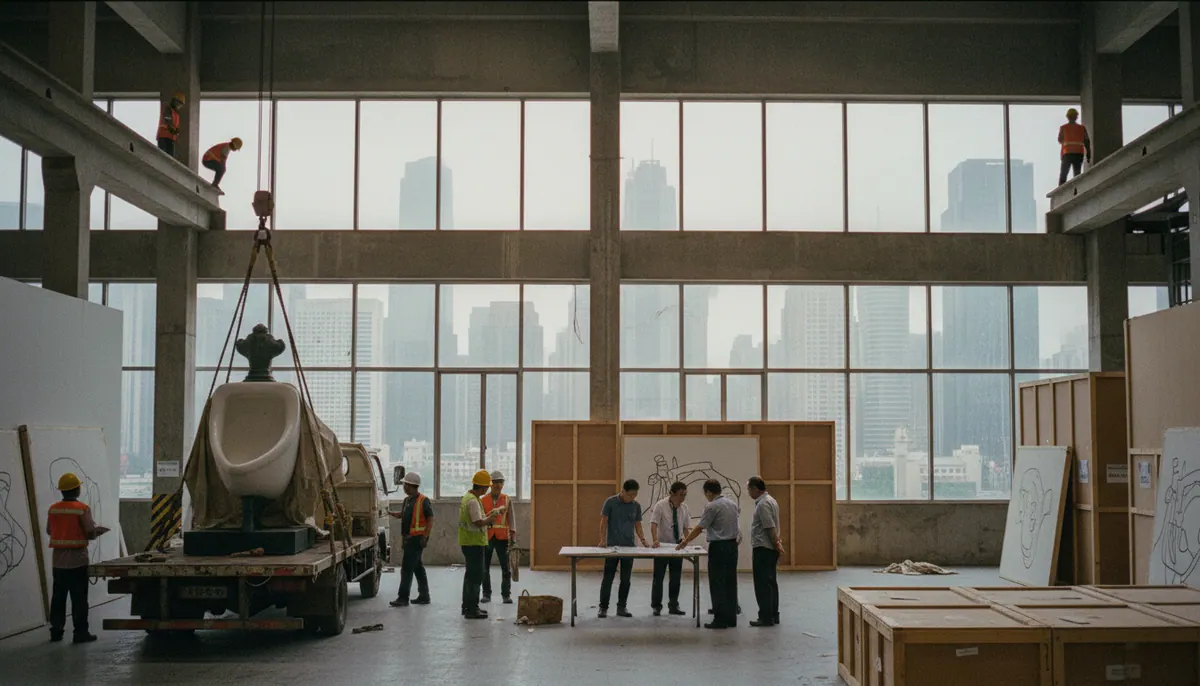
The Museum of Modern Art's extensive survey of Marcel Duchamp, documented through the painter Nolan Simon's insights on Artnet News on August 21, 2026, offers a moment to consider more than just a historical art figure. This sprawling exhibition, reaching its close, inadvertently casts a light on a subtler, yet profound, shift in how cities across Asia are engaging with and consuming culture. The sheer scale of the MoMA presentation – 77 slides detailing the artist's work – suggests an attempt at comprehensive finality, a definitive statement on a figure often associated with disruption. Yet, the habit of seeing art, of visiting institutions, is undergoing its own quiet redefinition.
In Bangkok, for instance, the recent proliferation of smaller, more intimate gallery spaces in refurbished shophouses and emerging creative districts presents a counter-narrative to the grand museum model. These spaces cultivate a different kind of cultural consumption, one less about exhaustive surveys and more about curated, often transient, experiences. When a MoMA exhibition is detailed in dozens of slides by a contemporary painter, it points to a lingering, perhaps necessary, form of mediation, a guided tour through complexity. However, the cultural signals emanating from cities like Seoul, Tokyo, and Singapore suggest a preference for immediacy and active participation over passive reception. The question then becomes: which habit changed first, and who noticed?
It is an ATTRIBUTED CLAIM from Artnet News that Nolan Simon 'dives deep' into the MoMA show, implying a thorough engagement with Duchamp's body of work. This depth is characteristic of the Western institutional approach, an exhaustive cataloging designed to create an authoritative record. But in Asia-Pacific, while large-scale exhibitions certainly exist, there is an observable pivot towards cultural activations that integrate seamlessly into daily life – pop-up art installations in public squares, interactive digital exhibits in shopping malls, or collaborative art workshops in community centers. These are often transient, less about a definitive historical statement and more about ephemeral engagement. The very act of a painter guiding viewers through 77 slides of a MoMA show, while valuable, underscores a traditional mode of engagement that younger urban populations globally, and particularly in the dynamic cities of Asia, are subtly reconfiguring.
One might argue that the global art world, epitomized by institutions like MoMA, will always dictate the terms of artistic significance, and that a major Duchamp retrospective remains a benchmark. This perspective holds that the historical weight of such figures and institutions is immutable. However, an INFERENCE can be drawn from observed consumer behavior in cities like Kuala Lumpur and Manila: the rising popularity of immersive digital art experiences and multi-sensory installations, often independent of traditional museum frameworks, suggests a growing appetite for engagement that prioritizes experience over didacticism. The fact that an exhibition is mediated through an online slide tour by a painter, rather than through direct, unmediated engagement for a global audience, indicates a gap between traditional exhibition models and evolving cultural consumption habits. The MoMA Duchamp show, in its comprehensive ambition, stands as a monument to a particular mode of artistic presentation, while the broader cultural landscape, particularly in the Asia-Pacific region, quietly reorients itself towards different forms of encounter. This creates a real, unresolved tension between institutional authority and evolving audience preference.
Sources
Newsletter
Pacific Daily
A curated briefing from Thailand, Asia-Pacific and the world.