Tiffany's Enduring Light: A Reflection on Craft and Value in Asia-Pacific
The continued global fascination with Louis Comfort Tiffany's work offers a stark contrast to some prevailing regional manufacturing trends, raising questions about the longevity of creative enterprise.
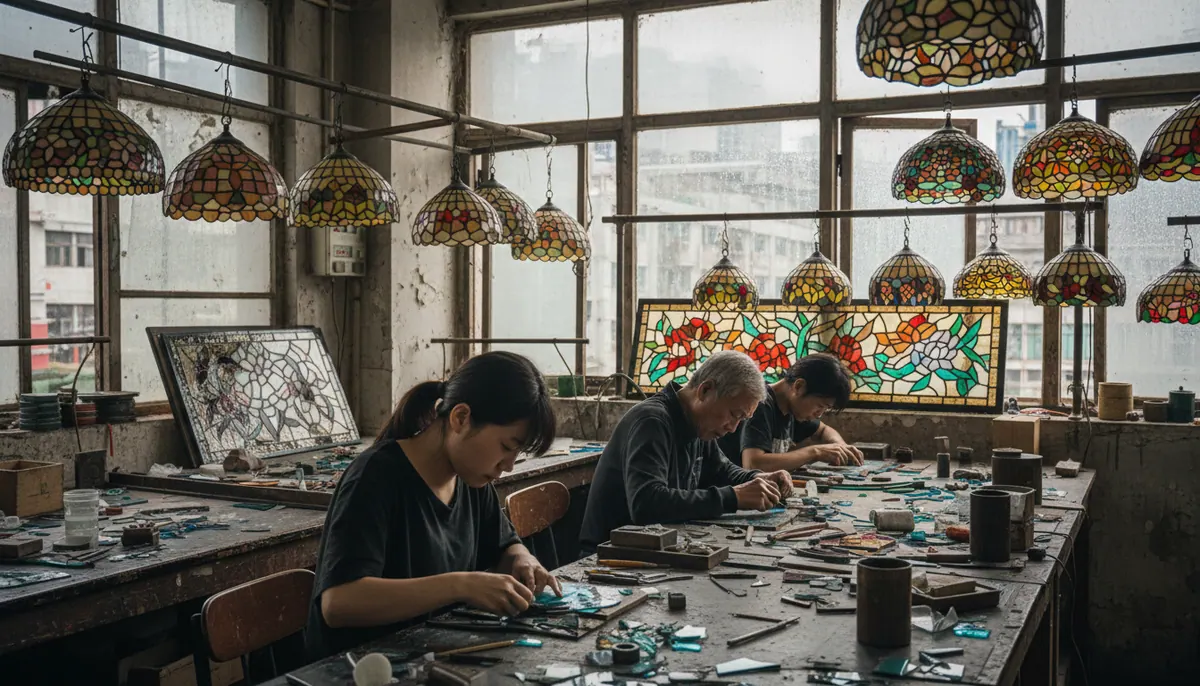
The sustained interest in the work of Louis Comfort Tiffany, evidenced by current exhibitions in New York, underscores a persistent global appreciation for craftsmanship and design that withstands the test of time. Tiffany’s expansive practice, encompassing stained glass, lamps, and decorative arts, draws collectors decades after his prime. This phenomenon invites an examination of how value is created and preserved in the arts and manufacturing sectors across Asia-Pacific, particularly concerning the long-term economic and cultural impact of differing production philosophies.
Countries in Southeast Asia, including Thailand, have long been global hubs for manufacturing, frequently driven by cost efficiencies and high-volume output. This model has fueled rapid industrial growth and employment. However, the focus on mass production often prioritizes speed and affordability over bespoke design or artisanal quality. Data from the Thai Ministry of Commerce indicates a significant proportion of exports are in sectors characterized by standardized goods and commoditized components. While this strategy has undeniable economic benefits, it raises a question: Who bears the cost of this decision day to day when the market shifts or demand for such goods wanes?
The enduring appeal of Tiffany's creations suggests that a different value proposition exists. His pieces, often individually crafted and artistically distinct, command high prices and generate lasting cultural interest. This is not merely about luxury; it is about the inherent value recognized in precision, artistic vision, and durability. In contrast, many Asian manufacturing sectors, while undeniably skilled, frequently operate as components within a larger global supply chain, with their intellectual property and design often dictated externally. This arrangement can limit the ability of local craftspeople and industries to capture the full economic benefit or foster a distinct, recognizable brand identity that appreciates over time.
There is an argument that the pursuit of artisanal quality and unique design is a niche market, too small to support the extensive labor forces characteristic of industrial economies. This perspective asserts that large-scale manufacturing provides more widespread employment and economic stability, even if individual products lack the enduring prestige of a Tiffany lamp. Furthermore, the infrastructure for mass production is already deeply entrenched in many regional economies, making a fundamental pivot challenging. Policy documents from various Asian nations often emphasize export volume and foreign direct investment into manufacturing facilities producing standardized goods, supporting this contention.
However, this viewpoint may underestimate the long-term societal costs associated with a purely volume-driven approach. When local industries primarily serve as production centers for external designs, the development of indigenous creative talent and design leadership can be stifled. This can lead to a dependency on foreign markets and design trends, making industries vulnerable to shifts in global consumption patterns or geopolitical tensions. The economic instability experienced by some export-dependent economies during global downturns illustrates this vulnerability. Additionally, the focus on transient trends can diminish the perceived value of local craft traditions, potentially eroding cultural heritage over generations. Some observers predict that as global wealth continues to accumulate in Asia, there will be an increasing demand for unique, high-quality, and locally-designed goods, shifting away from purely functional, mass-produced items. This prediction rests on the observed rise of regional luxury markets and a growing emphasis on cultural identity in consumption patterns.
The global fascination with Tiffany’s legacy serves as a compelling case study for the Asia-Pacific region. It highlights the potential for creative industries to generate profound and lasting value, economically and culturally. It suggests that while mass production has its place, investing in and nurturing distinct design, skilled artisanship, and intellectual property development offers a robust path toward sustained economic resilience and cultural enrichment. The unresolved tension lies in balancing the immediate economic gains of high-volume manufacturing with the long-term societal benefits of cultivating unique, enduring creative legacies.
Sources
Newsletter
Pacific Daily
A curated briefing from Thailand, Asia-Pacific and the world.