When State Credibility Becomes the Selling Point for Phantom School Excursions
The fallout from a cancelled China tour shows how informal educational brokers exploit family ambitions and administrative trust.
SINGAPORE
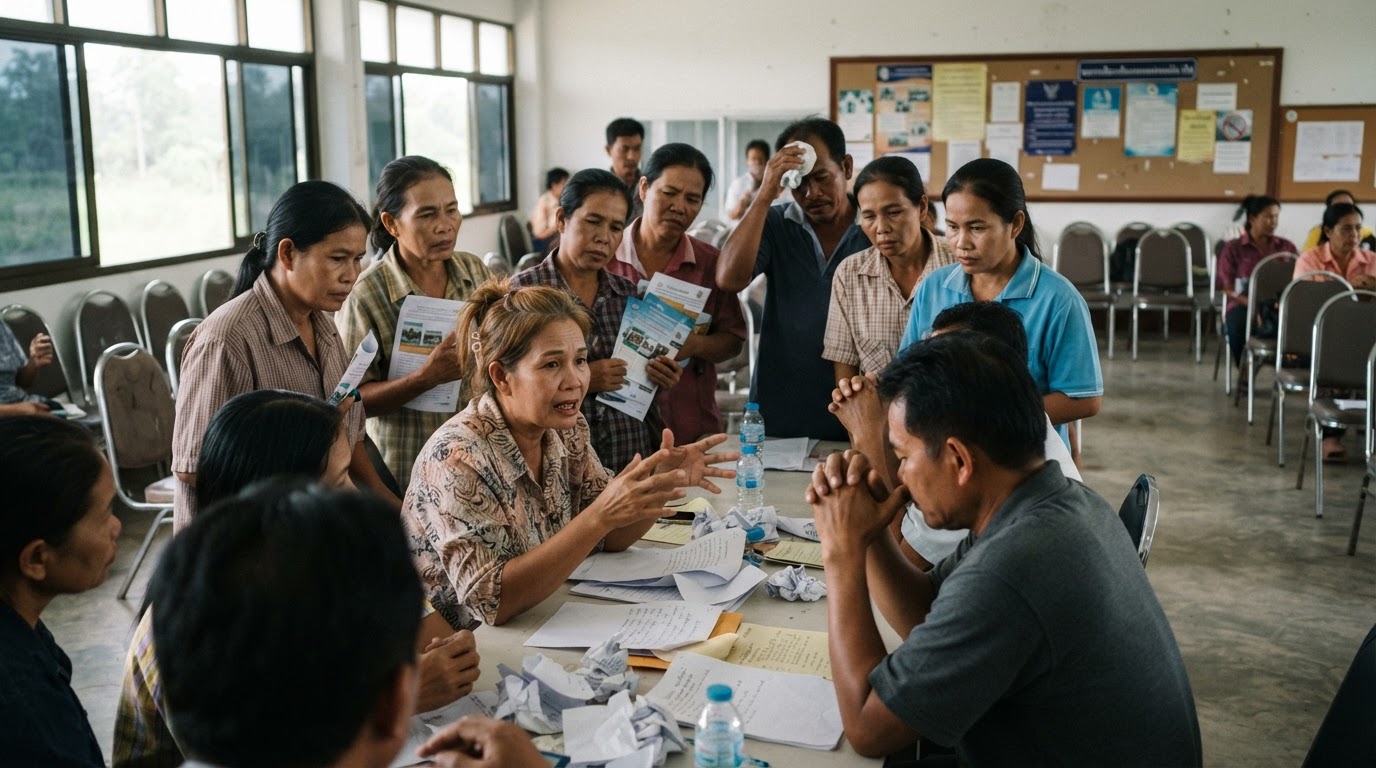
When a household commits money to an international school excursion, the transaction rarely feels like speculation. Families treat overseas travel organized through school channels as an extension of formal schooling, assuming state oversight shields them from default. That assumption collapsed on Sunday. Representatives of at least 10 students' families arrived at the Crime Suppression Division in Bangkok to submit evidence regarding an educational tour to China that never took place. The organisers, they reported, had collected payments from parents by claiming direct ties to the Office of the Basic Education Commission.
The scale expanded within days. Troubles spread across 11 schools, leaving 62 students and eight teachers stranded after money had been transferred. For working households, overseas study trips are major financial commitments, planned over months and paid from tight domestic reserves. Obec promptly denied any link to the venture. That statement ended any administrative recourse, instantly turning classroom disappointment into a police investigation.
The Cost of Institutional Trust
Educational excursions occupy an unregulated grey area inside Thailand's state school system. While central curriculum directives dictate formal academic benchmarks, international study tours depend almost entirely on commercial operators, outside travel agencies, and ad-hoc coordination by local teaching staff. When private promoters invoke the Office of the Basic Education Commission, families drop their commercial skepticism. Parents do not review business licenses or corporate credit histories; they trust the institutional authority associated with the school. What central authorities view as an unvetted private arrangement appears to parents as a vetted institutional programme. The resulting losses strike household ledgers directly, stripping away savings set aside for annual school expenses and everyday family needs.
The invocation of state authority created an artificial umbrella of security that bypassed normal commercial caution.
A common counterargument holds that state departments cannot monitor every private arrangement between families and travel operators. Proponents of this view point out that teachers frequently seek external enrichment opportunities to give pupils international exposure without drawing on tight public budgets. Under this logic, parents must exercise ordinary consumer prudence before wiring funds to third parties. Private transactions, even when discussed around school grounds, remain individual financial risks.
That defense misreads how authority functions within provincial schools. Parents do not evaluate these proposals as arms-length commercial deals. They accept them because trusted teachers participate and school channels distribute the invitations. When teaching staff sign up alongside pupils, families see institutional endorsement rather than private enterprise. The absence of clear commercial boundaries leaves junior staff and working parents equally exposed.
Closing the Regulatory Vacuum
Filing complaints at the Crime Suppression Division may track missing payments, but police enforcement cannot repair the structural oversight gap that enabled the deception. The Crime Suppression Division has the investigative power to audit transactions and identify culpable brokers. Yet criminal proceedings start only after the money has vanished and family balance sheets are strained. True financial protection requires administrative safeguards: official registries of vetted overseas study providers, standard travel contracts, and regulated escrow accounts that secure deposits until flights actually depart.
The outcome now depends on whether police can locate the funds and secure restitution for the affected families. Wider resolution, however, requires Obec to enact binding rules on how affiliated schools endorse outside study tours. Until basic education authorities establish transparent barriers between private tour promoters and classroom rosters, ordinary parents will continue risking monthly earnings on promises dressed in borrowed state credibility.
Sources
Newsletter
Pacific Daily
A curated briefing from Thailand, Asia-Pacific and the world.