The Calculated Heritage of Japanese Denim
Tsuyoshi Kikushima’s overseas expansion tests whether archival authenticity can survive retail distribution
SINGAPORE
Specialized craft commands commercial value only until wholesale distribution demands volume. When an apparel label deploys regional manufacturing prestige to justify global expansion, it exposes a structural contradiction between production discipline and inventory scale.
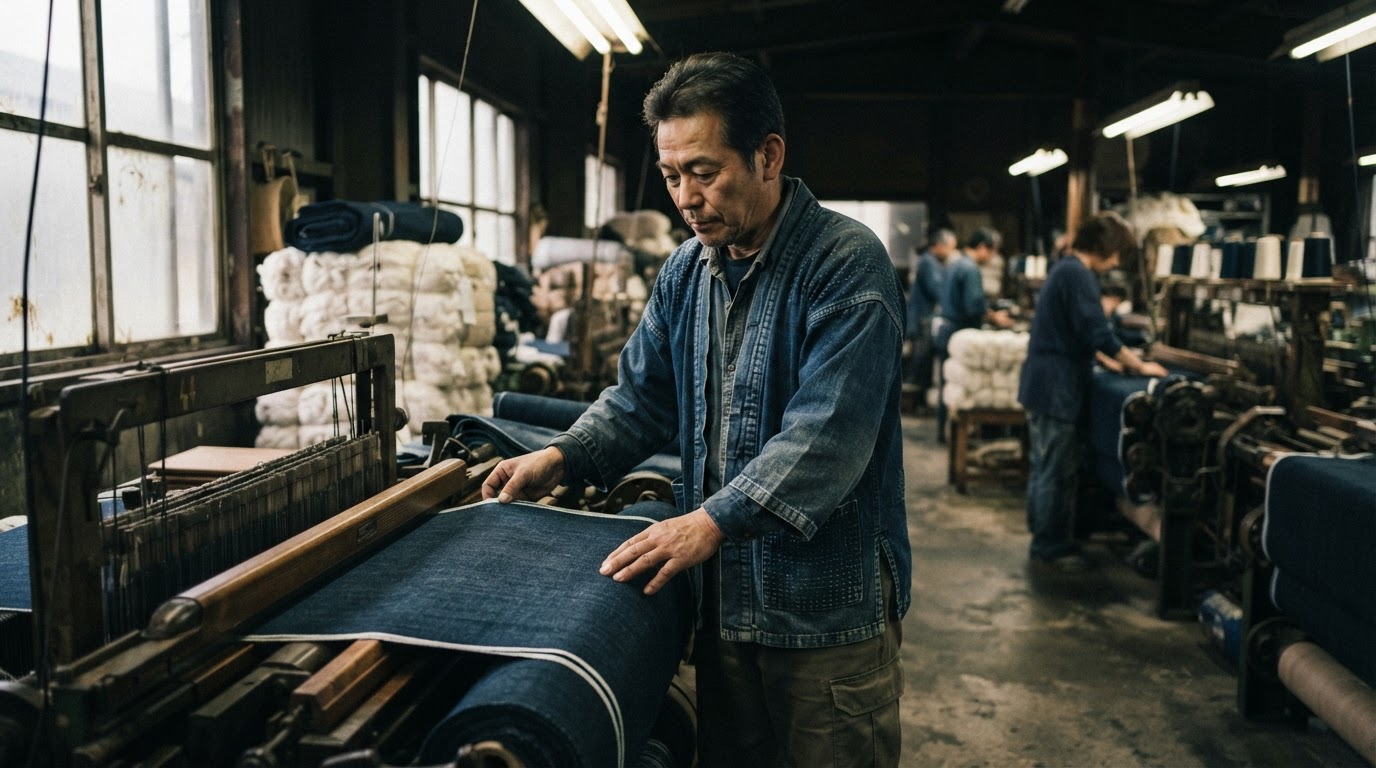
Japanese label Needby Vintage illustrates that tension as it prepares its Fall 2026 collection. Founded by Tsuyoshi Kikushima, whose background records product development and sales roles at True Religion, Red Card, and Rag & Bone, the business debuted for Spring/Summer 2026. According to trade reporting by WWD, the enterprise relies on custom Kaihara denim and experimental washes, pairing archival nineteenth-century workwear references with modified fits. Its Fall 2026 lineup introduces the Edo straight-leg jean and the Ise denim shirt, while the commercial operation actively explores retail partnerships in the United States.
Branding garment silhouettes with place names like Edo and Ise establishes an intentional historical association. It converts regional textile lineage into a marketing asset designed to differentiate garments on department store racks. In an email exchange with trade publication SJ Denim, Kikushima claimed that the debut season demonstrated the necessity of achieving natural wash effects alongside softness and revised fits. That admission points directly to market realities. Archival workwear reproductions remain rigid, unyielding garments, whereas department store retail environments require immediate physical comfort and commercial sizing.
The Commercial Calibration of Heritage
Apparel ventures operating out of Japan face an immediate operational hurdle when scaling overseas. Mill production through Kaihara offers proven technical consistency, yet that consistency relies on tight tolerances and deliberate processing speeds. Exporting those garments into United States wholesale networks forces a recalibration of priorities. The experimental wash processes that Kikushima highlights require multistage finishing that directly conflicts with the standardized quality benchmarks required by high-volume commercial purchasing orders.
Industry proponents argue that specialized construction insulates a label from market erosion. In that interpretation, selective sourcing creates structural scarcity, allowing Japanese mill credentials to protect margins against wholesale discounting cycles that regularly degrade conventional American casualwear. A specialized supply chain, according to this commercial logic, operates as its own marketing barrier.
Our debut season reinforced the importance of achieving authentic, nuanced wash effects that feel natural to the denim itself, alongside exceptional softness and contemporary fits.
That argument understates the economic friction inherent in American department store distribution. Wholesale accounts function through rigid delivery windows, volume markdowns, and unilateral cancellation clauses. When a boutique venture attempts to scale specialized fabrications, supply constraints shift from an aesthetic talking point into a severe balance-sheet liability. Kikushima’s career across commercial labels demonstrates clear familiarity with high-volume mechanics, but professional pedigree cannot resolve the physical bottlenecks of custom fabric finishing.
Distribution Pressures on Production Discipline
Expansion inevitably challenges whether material scarcity is functional or manufactured. A boutique firm can maintain complex wash treatments and custom mill allocations for a domestic audience across two seasons. Entering American retail networks introduces wholesale intermediaries whose fee structures incentivize turnover velocity rather than textile provenance.
Showroom inventory demands rapid stock rotation once placed on international sales floors. As order volumes increase toward standard wholesale minimums, the material variations that Kikushima presents as authentic finishing risk being flagged by procurement auditors as production inconsistencies rather than intentional design. Needby Vintage enters the American wholesale landscape as department stores continue to compress order lead times. The unresolved tension remains whether specialized Japanese fabrications can survive overseas volume commitments without diluting the exact finishing practices that established their initial commercial appeal.
Sources
Newsletter
Pacific Daily
A curated briefing from Thailand, Asia-Pacific and the world.