SoftBank's AI Ambition Meets Investor Caution
The delayed public listing of SB Energy underscores a widening gap between the capital demands of artificial intelligence development and market willingness to fund its underlying infrastructure at projected valuations.
SINGAPORE
SoftBank's strategic shift toward artificial intelligence (AI), characterized as "Son's AI drive," positions SB Energy as a key vehicle for generating the necessary capital. Nikkei Asia reported on October 13, 2026, that "SB Energy does SoftBank's spadework for Son's AI drive," highlighting the company's critical role in funding AI investments. This strategic alignment, however, now faces scrutiny. The anticipated public offering of SB Energy, once projected to raise USD 50 billion with Nvidia underpinning its valuation, has encountered delays.
The initial USD 50 billion valuation for SoftBank's SB Energy was supported by expectations tied to Nvidia, according to Nikkei Asia. This valuation now appears challenged. Reports indicate a broader market trend where "Data center IPO hopefuls brave tougher market as investor scrutiny grows." This environment directly impacts entities like SoftBank's SB Energy, which is seen to be delaying its IPO due to concerns over valuation. The financial commitment required for AI infrastructure, including data centers, confronts investors' increasing caution.
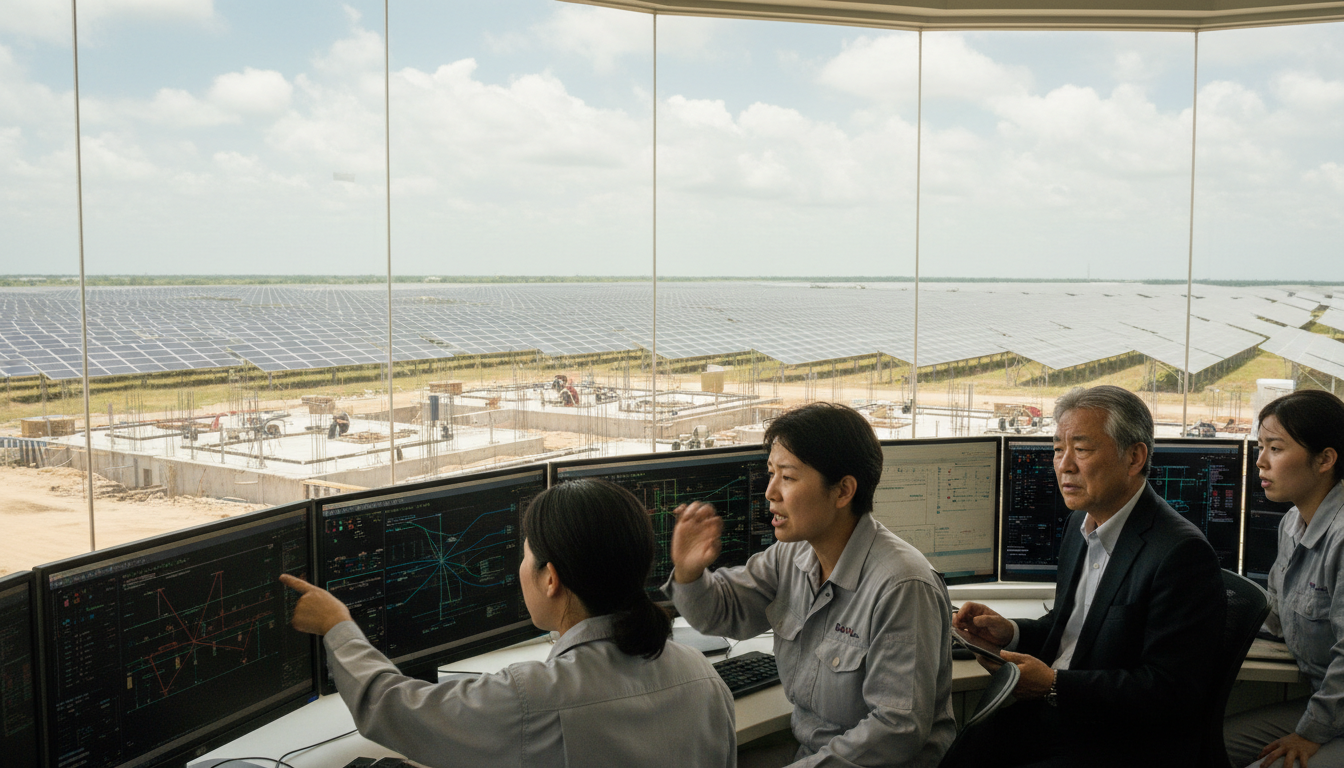
SoftBank's push into AI necessitates substantial investment in computational and data infrastructure. SB Energy's strategy involves leveraging its renewable energy assets to power these data centers, creating a synergistic model. Yet, the reported IPO delay suggests that the market may not fully endorse this projected synergy's value at present. The challenge extends beyond SoftBank. The listing delay for OpenAI also reportedly "raises stakes for SoftBank's $50bn data centre IPO," suggesting a systemic re-evaluation within the AI infrastructure sector.
This situation reveals a fundamental tension: the ambitious scope of AI development demands immense capital, but the mechanisms for securing that capital face increasing headwinds. The market's valuation concerns are not merely technical adjustments; they reflect uncertainty regarding the pace of returns on these massive infrastructure investments. While AI is frequently presented as a transformative technology, the financial commitment required for its foundational elements is subject to conventional investor risk assessments.
For the Asia-Pacific region, these developments carry significant implications. Many countries across the region are pursuing digital infrastructure expansion to support AI advancements. If prominent entities like SB Energy encounter difficulties in achieving their projected IPO valuations, it could signal to capital markets that investment in the AI ecosystem requires greater discernment. This might lead to a reassessment of public and private investment strategies for AI infrastructure, potentially altering the speed or focus of build-outs in specific areas. The ongoing constraint remains the need to sustain long-term capital allocation for critical AI infrastructure when investor confidence increasingly depends on more immediate or clearly defined returns.
Sources
Newsletter
Pacific Daily
A curated briefing from Thailand, Asia-Pacific and the world.